


In a recent interview, Pi Network founder and Head of Technology Nicolas Kokkalis shared new insights into the platform’s vision, growth, and plans for the future. With over 60 million users already mining Pi coins, the project aims to simplify crypto and make it more practical for everyday use. Here are five key takeaways from the conversation.
1. Pi Network Was Built to Address Crypto’s Complexity
According to Kokkalis, Pi Network began in response to the technical barriers that made cryptocurrency hard to use. In 2018, setting up wallets and accessing blockchain apps required skills most users didn’t have.
“We realized user interface wasn’t enough—we had to build our own cryptocurrency from scratch,” Kokkalis said.
Pi introduced a mobile-first system where users mine coins by opening the app daily. The process requires no hardware or advanced knowledge. Kokkalis described this approach as a way to make participation easier for non-experts.
2. Pi Network Offers Practical Functions Rather Than a Trading Focus
Kokkalis noted that Pi Network does not primarily serve traders. Instead, it supports everyday functions like digital payments and app interactions. The platform allows users to perform tasks such as sending funds or using apps without relying on external wallets or exchanges.

“Because of the large number of users, it makes sense to create apps that everyday people can understand,” he said.
This suggests the platform was structured to feel more like a mobile banking tool than a speculative investment interface. Pi’s use cases are focused on daily digital transactions within the app environment.
3. Identity Verification Is Central to Pi’s Infrastructure
Pi Network requires identity verification for all accounts. Kokkalis emphasized that each wallet on the network is tied to a verified user. This approach is uncommon in the broader crypto sector, where anonymity is more typical.
“Every address, every wallet, is identity-verified,” he said.
This identity-based system could appeal to users or institutions concerned about compliance or transparency. While other blockchains allow anonymous usage, Pi’s model prioritizes traceable user participation.
4. The Platform Has a Diverse Global User Base
Kokkalis said Pi’s user base spans a wide range of demographics. It includes both users familiar with crypto and individuals who had never used a digital wallet before joining the platform.
“It includes the average individual who’s heard of crypto but never knew how to set it up,” he noted.
Pi Network’s onboarding process relies heavily on personal referrals. Many users join after receiving an invitation from someone they know. This model has contributed to the platform’s scale without relying on traditional advertising.
5. Pi Network Is Backing Startups Through a $100M Fund
The project operates a venture arm, Pi Network Ventures, with $100 million allocated to startup investments. These startups are developing applications on the Pi blockchain. According to Kokkalis, this initiative allows selected teams to receive both funding and access to Pi’s existing user base.
“They get capital, but also potential access to millions of users,” he said.
The fund supports projects that want to build within Pi’s infrastructure. While many blockchains offer grants or developer programs, Pi’s approach involves direct investment into early-stage applications.
Despite high expectations, Kokkalis’s recent appearances—both in interviews and at Consensus 2025—did not include updates on Pi Coin’s listing timeline or market availability. Following the Toronto event, the coin’s off-market price reportedly dropped 25%. Many users expressed disappointment that Kokkalis avoided discussing the project’s valuation or open mainnet timeline.
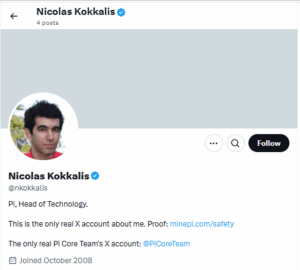
His limited public history has also come under scrutiny. Aside from four posts on his X account between 2013 and 2021, and a brief video appearance in 2022, Kokkalis had not addressed the public until May 16, 2025.
While he stressed that “mass adoption takes time,” users remain divided. Some see Pi’s cautious rollout as necessary, while others question its long-term viability without a tradable token or transparent roadmap.


