



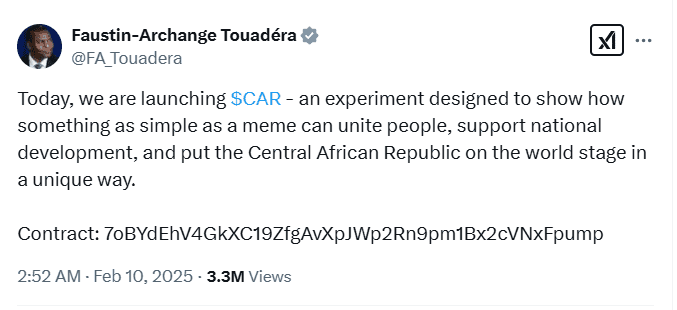
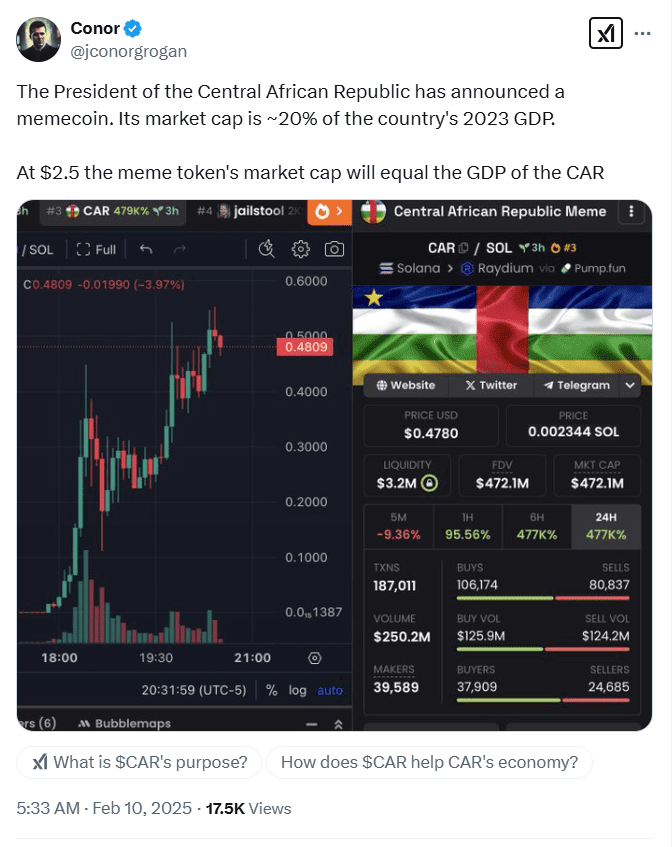
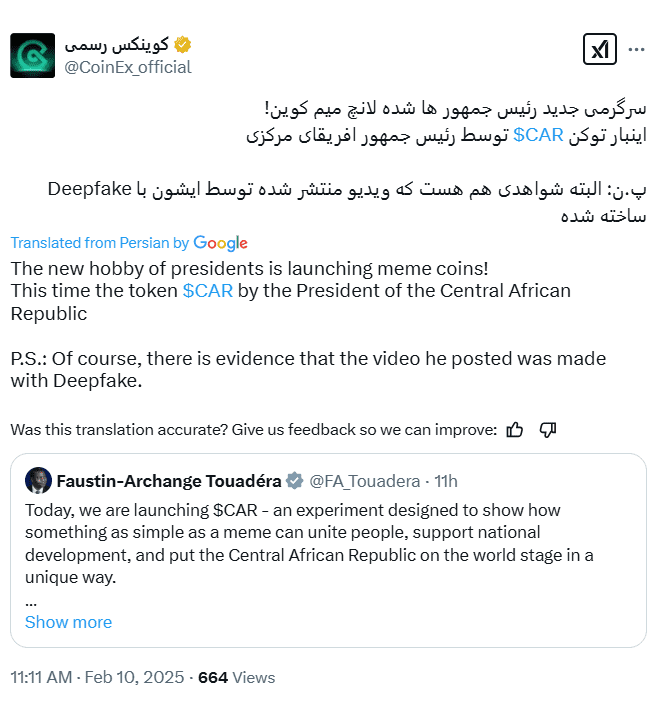
YEREVAN (CoinChapter.com) — On Feb. 9, Central African Republic (CAR) President Faustin-Archange Touadéra announced the CAR meme token launch through his official X account. The token, described as an experiment for national development, quickly reached a peak valuation of $530 million, according to DexScreener data.
The token was launched on Pump.fun, a Solana-based platform, at 10:25 PM UTC. However, doubts emerged soon after the announcement, with skepticism surrounding the President’s video statement.
Deepfake Suspicions Surround Video Announcement
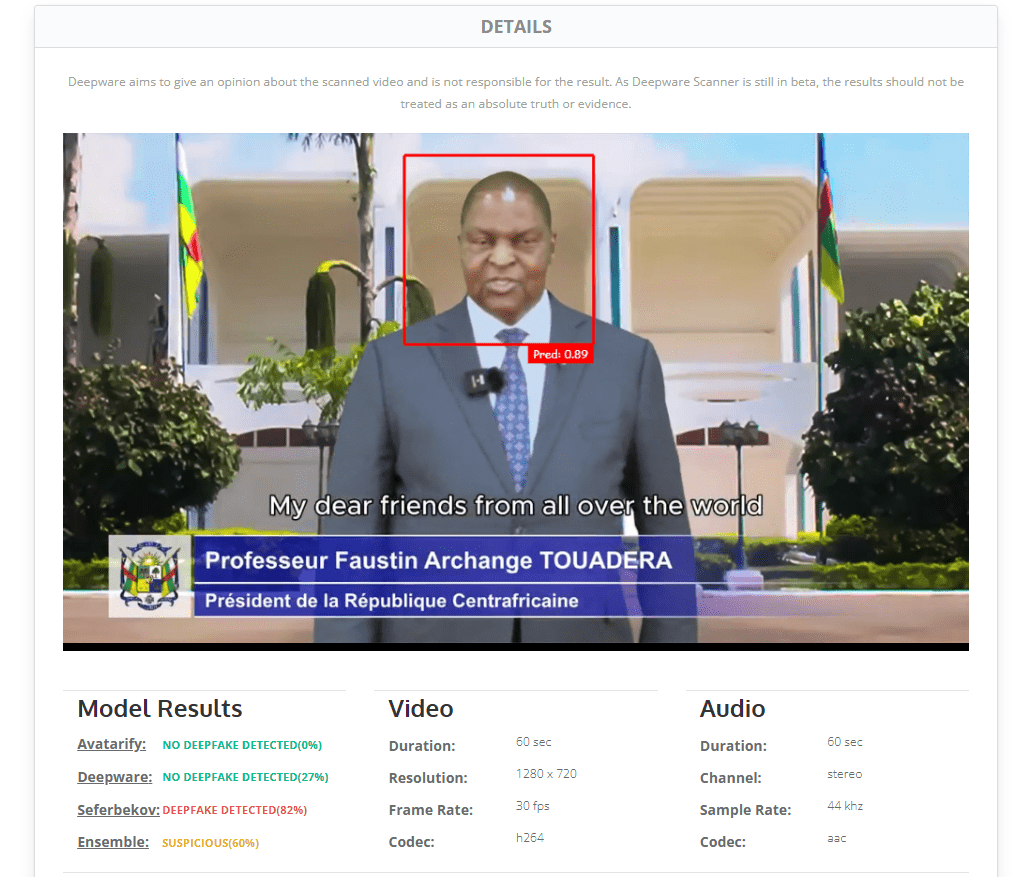
AI detection tools flagged the President’s video statement promoting the CAR meme token. One deepfake tool, Deepware, reported an 82% probability that the video was AI-generated. Meanwhile, tools like Avatrify and Deepware’s own system found no clear evidence of manipulation.
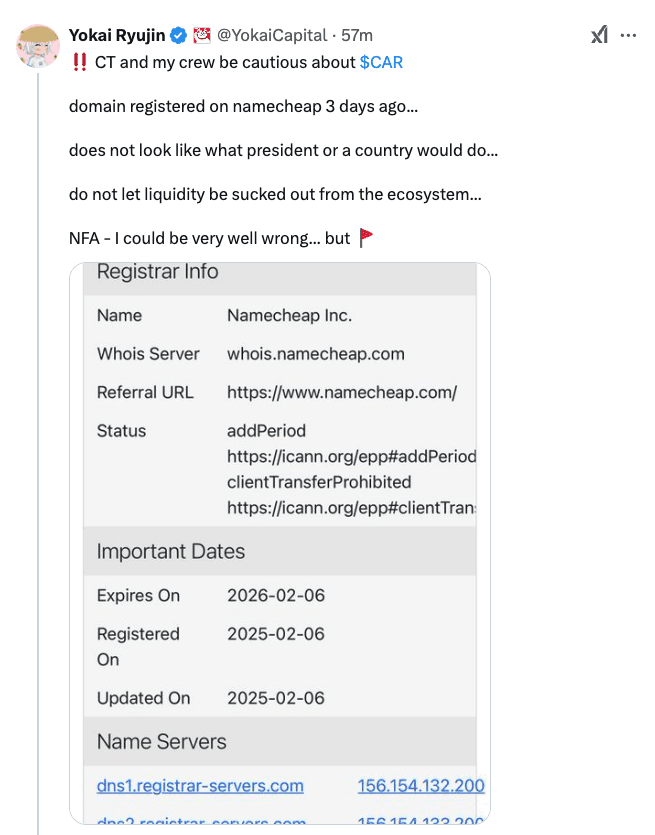
The video is hosted on the token’s website, alongside tokenomics information. Critics, including Yokai Ryujin, founder of Unrevealed XYZ, noted irregularities in the website’s domain registration. The domain was registered three days before the announcement, and Namecheap later confirmed suspending the service for abuse. Despite this, the website remained active as of Feb. 10.
CAR Meme Token’s Price Fluctuations
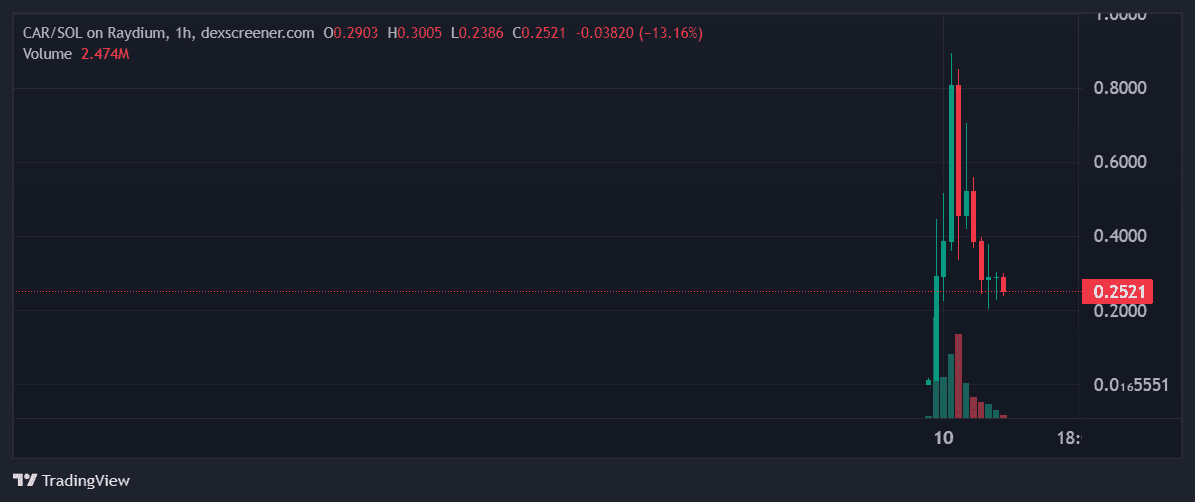
DexScreener charts show the token’s volatile price movement. The CAR meme token surged to $0.3005 before falling to $0.2521, marking a 13.16% drop in a short span.
Tokenomics Breakdown
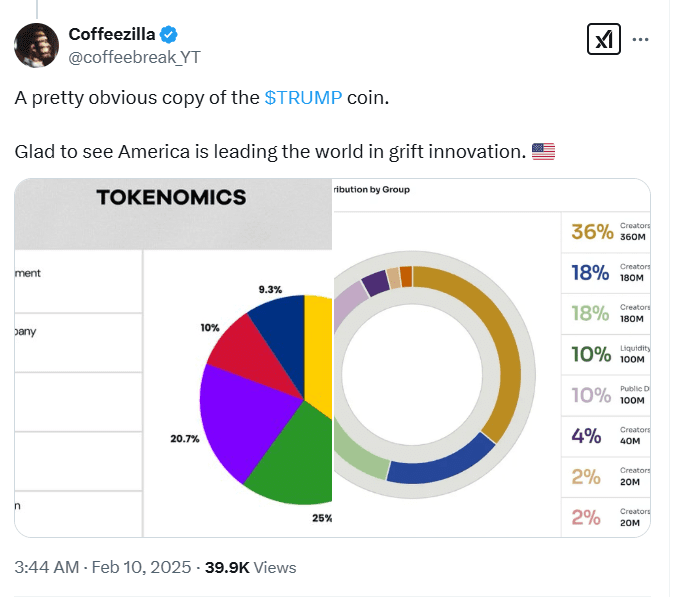
Wallet data from Solscan reveals concentrated holdings, with 33.31% of the supply in one wallet and 25% in another. Additionally, 9.81% and 8.39% are in two others, with one wallet potentially allocated for charity.
Despite a tokenomics claim that 20% of the supply would be allocated to liquidity, this allocation has not yet been added to any pool. The lack of liquidity has raised questions about the project’s operational transparency.
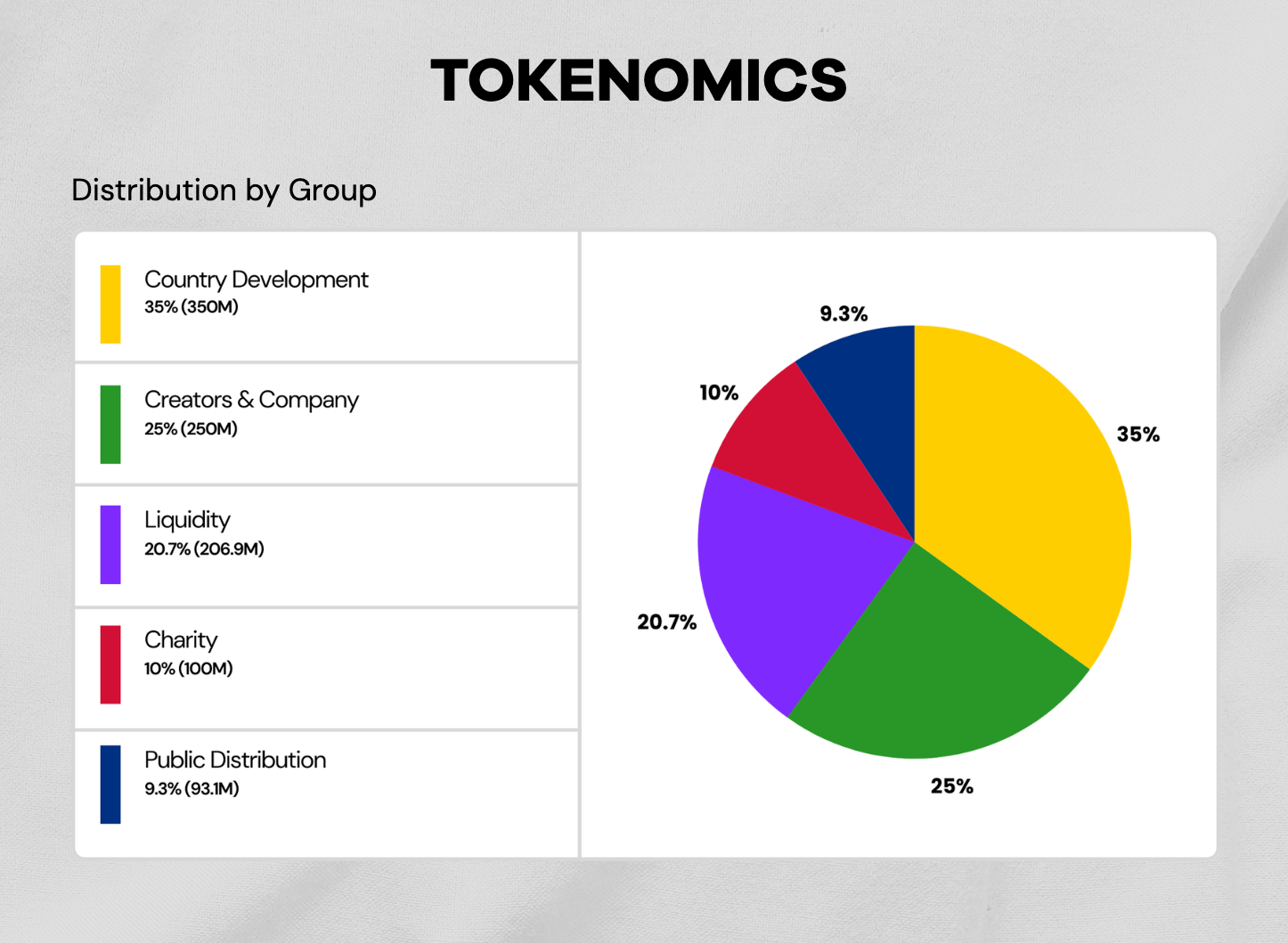
On-chain data shows that it has a total supply of 1 billion tokens, with the top four holders owning around 76% of the supply.

Community Skepticism
The community voiced concerns about the launch. Users pointed out irregularities such as the midnight timing of the announcement and the absence of a French version of the tweet, considering French is CAR’s official language. Crypto Dreamer, a pseudonymous user, remarked that the announcement did not align with typical practices of a national government.
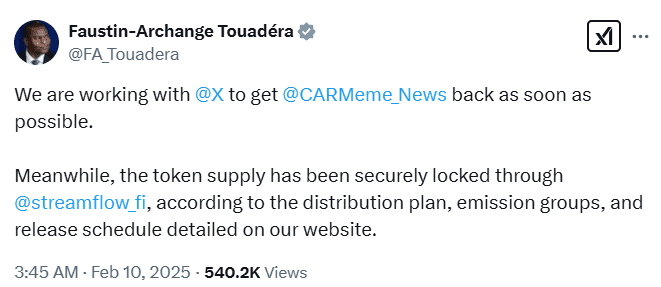
The token’s official X account, @Carmeme_news, was also suspended, which added to the controversy. In recent weeks, similar hacks and scams have been linked to official X accounts, including those of prominent Solana projects.
CAR’s Cryptocurrency History: From Bitcoin to Sango Coin and Tokenized Resources
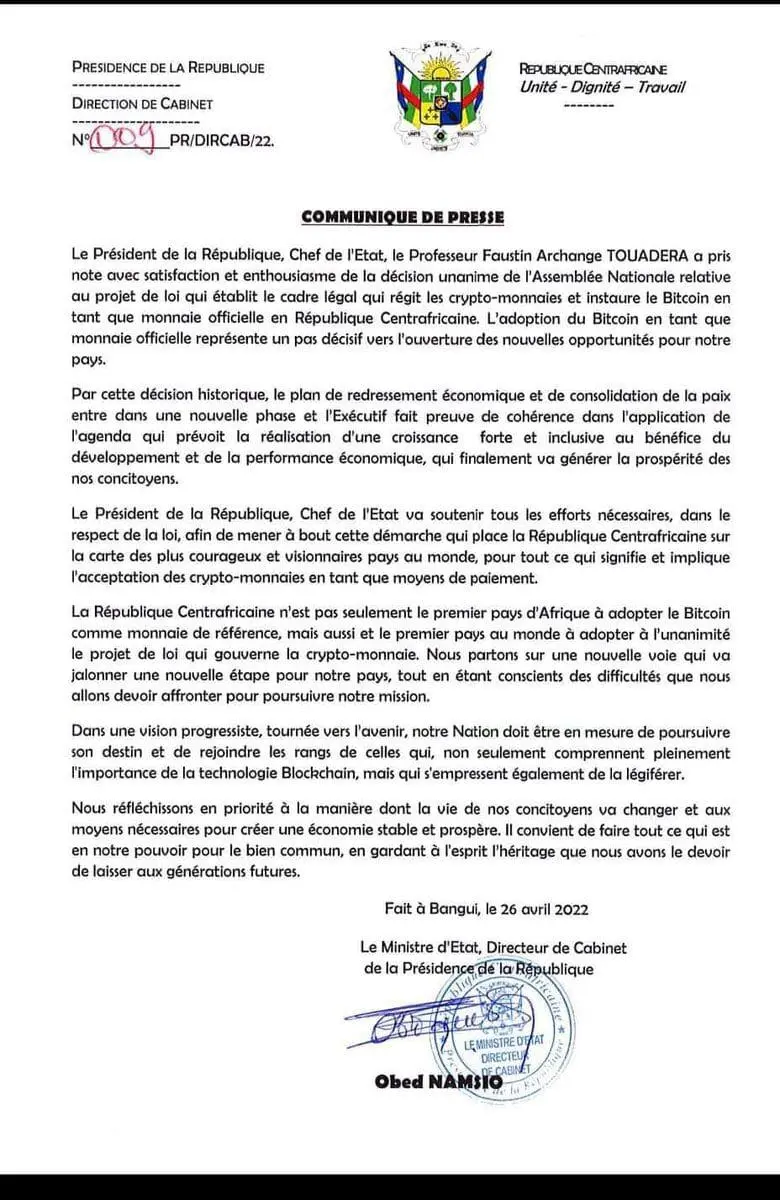
This is not the Central African Republic’s (CAR) first step into cryptocurrency. In April 2022, the CAR became the first African nation—and the second country globally after El Salvador—to adopt Bitcoin as legal tender. The government introduced Bitcoin to boost the economy, reduce reliance on the CFA franc, and expand financial access in a nation where banking services are limited. Bitcoin was positioned as a tool to promote financial independence and attract foreign investment.
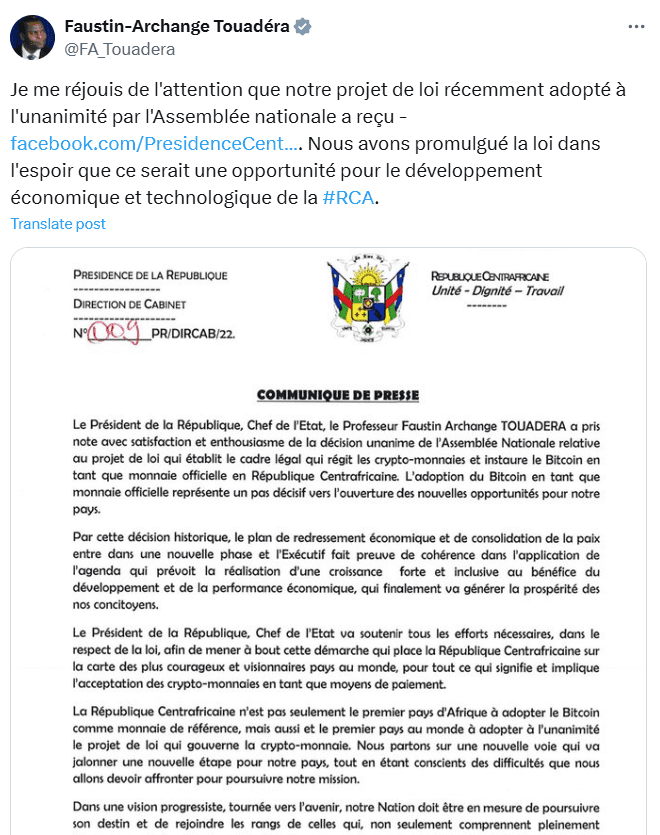
Following El Salvador’s example, the CAR aimed to replicate the benefits seen in the Central American nation, which has reported increased tourism, a resilient economy, and widespread global attention since allowing citizens to use Bitcoin for everyday transactions. However, the CAR’s economic conditions differ significantly from El Salvador’s.
Despite its vast natural resource wealth, the CAR struggles with economic mismanagement, minimal private and foreign investment, and systemic governmental challenges. By adopting Bitcoin, the nation hoped to overcome these barriers and chart a new path toward economic stability and growth.
Sango Coin: CAR’s Ambitious Crypto Project Faces Regional Pushback
Shortly after, CAR launched Sango Coin, its national cryptocurrency. The project promised benefits like granting citizenship for $60,000 worth of Sango Coins and tokenizing the country’s natural resources. CAR aimed to create a crypto-friendly hub in its capital, Bangui, and position itself as a leader in blockchain technology in Africa.
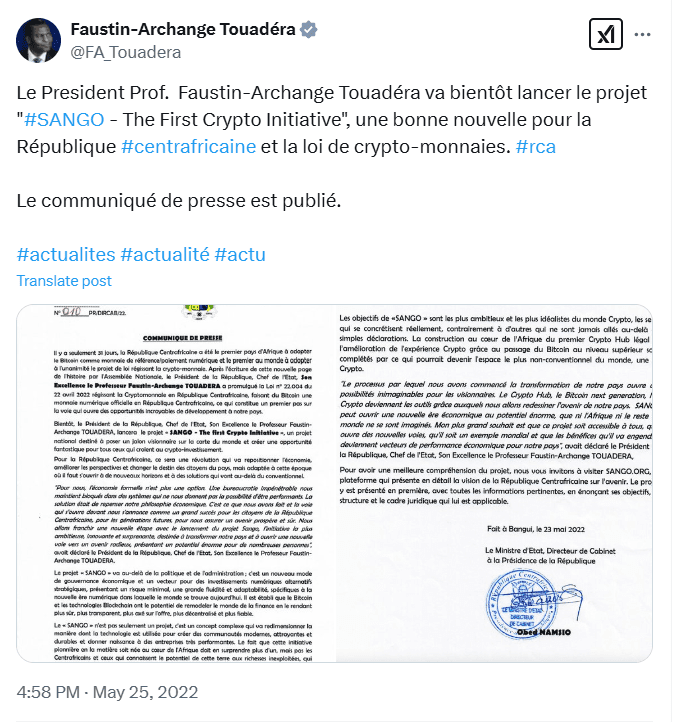
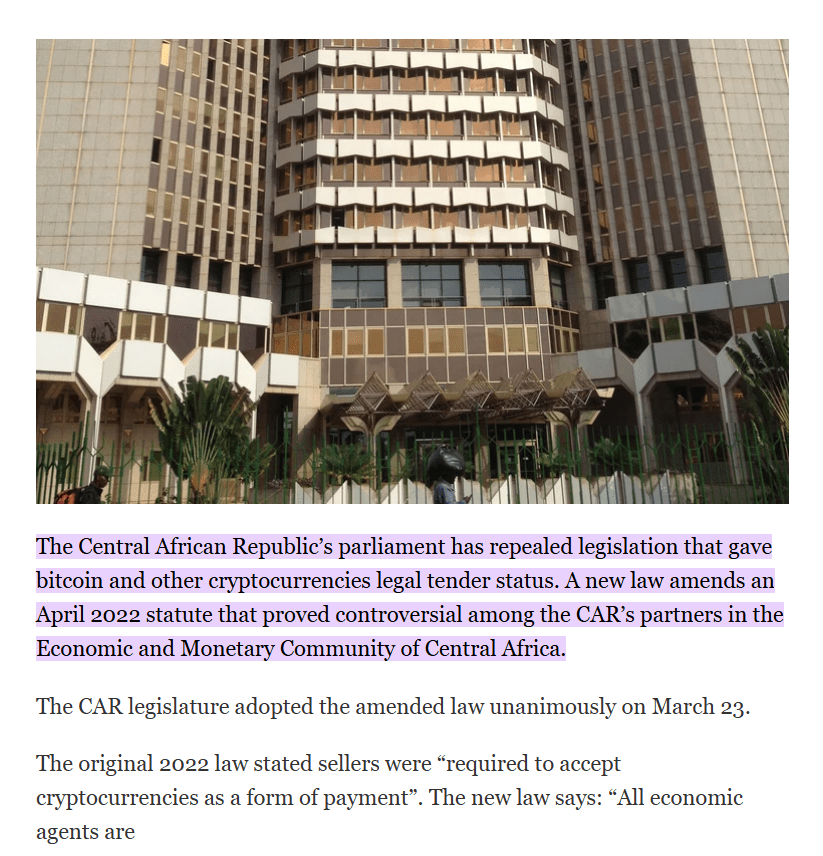
However, these plans faced many problems. The country’s regional partners in the Economic and Monetary Community of Central Africa (CEMAC) opposed the move, saying Bitcoin adoption went against their monetary rules. In March 2023, CAR repealed the law that made Bitcoin legal tender, bowing to pressure from the region. This was a major setback for its cryptocurrency plans.
The Sango Coin project also struggled. In August 2022, CAR’s constitutional court ruled that offering citizenship in exchange for cryptocurrency was unconstitutional. The project failed to attract significant foreign investment, and many questioned how useful the coin would be for the country’s citizens.
Despite setbacks, the Central African Republic (CAR) remains committed to blockchain technology. In July 2023, the government introduced plans under the Sango Project to tokenize land and natural resources, aiming to attract investment and enhance transparency in resource management.
The launch of the CAR meme token has also drawn significant attention, fueled by its rapid valuation, price fluctuations, and concerns about authenticity.


