



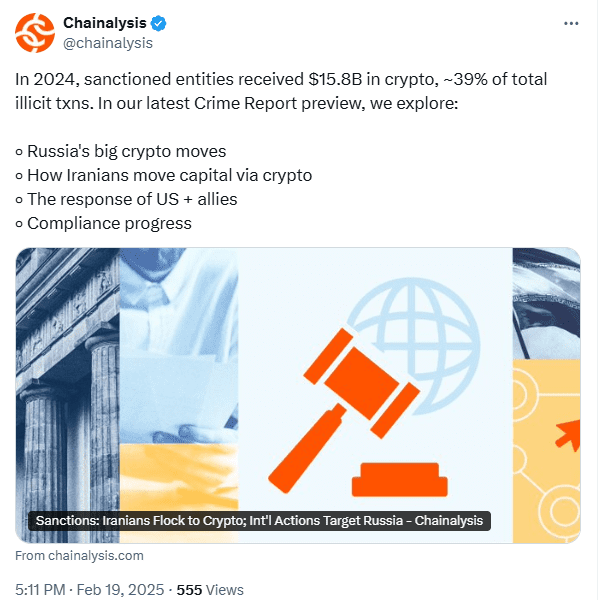
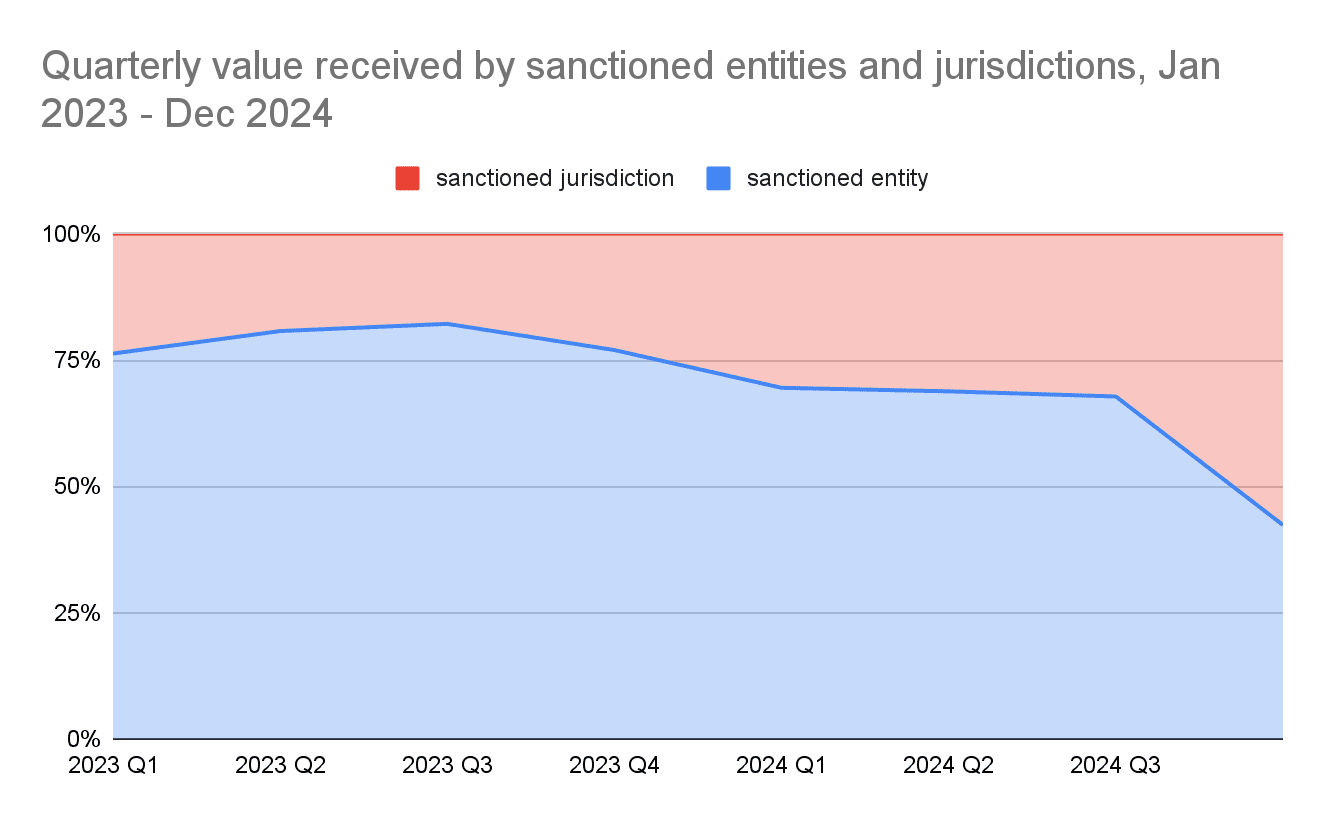
YEREVAN (CoinChapter.com) — Iran and other U.S.-sanctioned jurisdictions received approximately $16 billion in digital assets last year, representing 39% of all illicit cryptocurrency transactions, according to a new report by Chainalysis. The report highlights how Western financial restrictions have led Iran to use cryptocurrency for financial transactions.
The findings show that Iran and other sanctioned regions are using cryptocurrency to conduct trade and manage economic activities.
Iran’s Use of Cryptocurrency
Chainalysis reported that Iranian services saw a significant rise in crypto transactions linked to sanctions in 2024. The report noted that economic difficulties, inflation, and geopolitical issues contributed to this increase. While the Iranian government has control over financial systems, many individuals use cryptocurrency to protect assets and bypass restrictions.

Iranian exchanges recorded higher Bitcoin (BTC) outflows during geopolitical tensions, reflecting broader economic and political instability. Government-imposed financial restrictions have contributed to this trend. In December 2024, Iranian authorities halted withdrawals from domestic exchanges in response to the rial’s record decline. This move demonstrated the state’s ability to control financial outflows, aiming to prevent capital flight amid inflation rates of 40-50% and continued currency devaluation. Since the U.S. withdrew from the JCPOA in 2018 and reimposed sanctions on Iranian oil, the rial has lost about 90% of its value, with depreciation accelerating in 2023 and 2024.
During periods of heightened geopolitical instability, cryptocurrency outflows from Iranian exchanges surged, particularly on or immediately after conflict-related events. Google Trends data showed a significant increase in searches for “Iran Israel” on April 14 and Oct. 1, aligning with military escalations. The rial’s parallel market rate also fluctuated sharply in response to these developments.
While outflows increased across all assets, Bitcoin saw disproportionately high transaction volumes. Spikes in BTC transfers were recorded on April 9 and April 14, when reports surfaced about Iran’s potential military actions, and again in late September and early October. This suggests that individuals used Bitcoin as a hedge against geopolitical and economic instability, seeking to protect wealth from inflation and government-imposed financial restrictions.



