


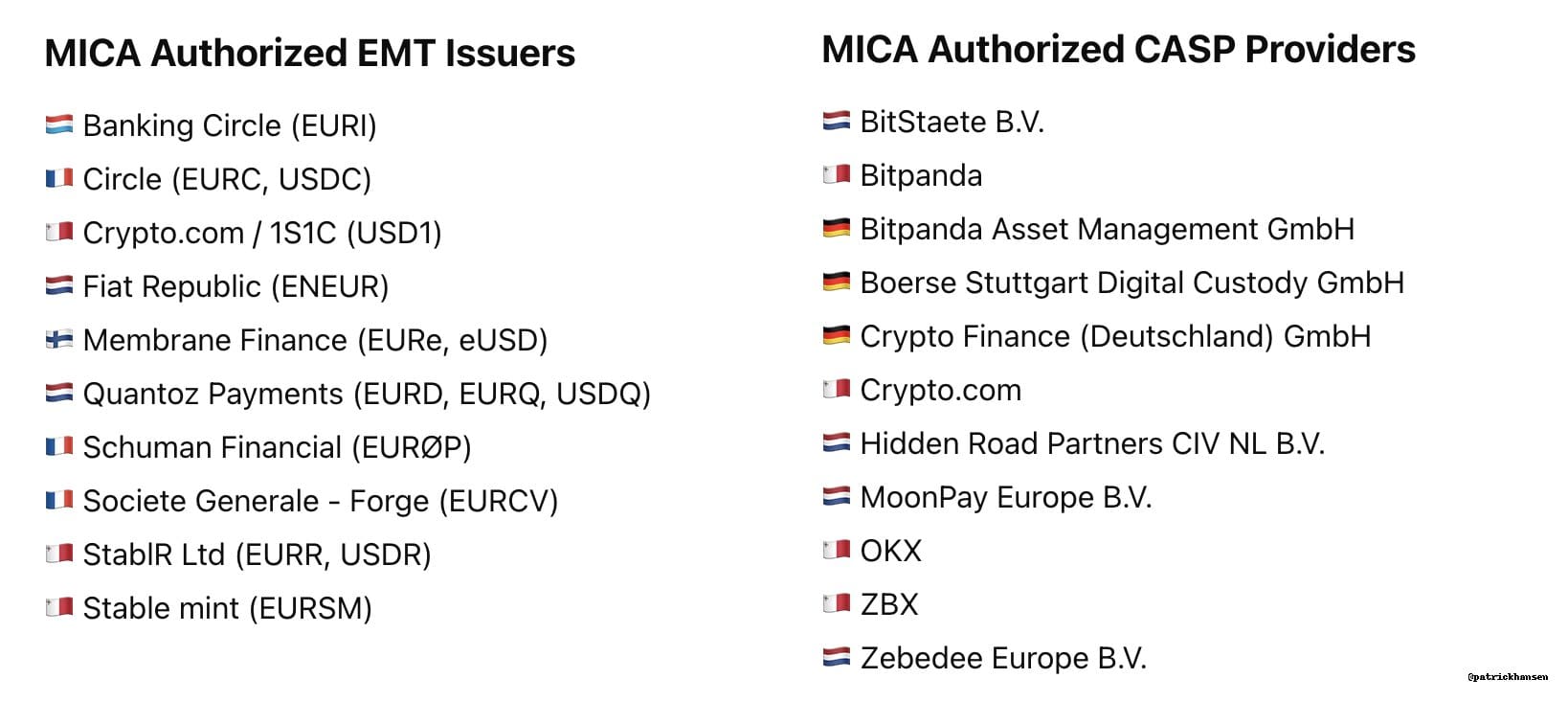
YEREVAN (CoinChapter.com) — The European Union has approved 10 stablecoin issuers under the Markets in Crypto-Assets (MiCA) framework. Patrick Hansen, senior director of EU strategy and policy at Circle, shared the list, which includes Banking Circle, Circle, Crypto.Com, Fiat Republic, Membrane Finance, Quantoz Payments, Schuman Financial, Société Générale, StabIR, and Stable Mint.
These firms have issued 10 euro-pegged stablecoins and five US dollar-pegged stablecoins in compliance with MiCA regulations. The framework sets strict rules for stablecoin issuers, requiring them to meet transparency, reserve, and compliance standards to operate within the EU.
Tether Not Included in the MiCA List
Tether, issuer of USDT, is not on the approved list. USDT remains the largest stablecoin with a market capitalization of over $141 billion.
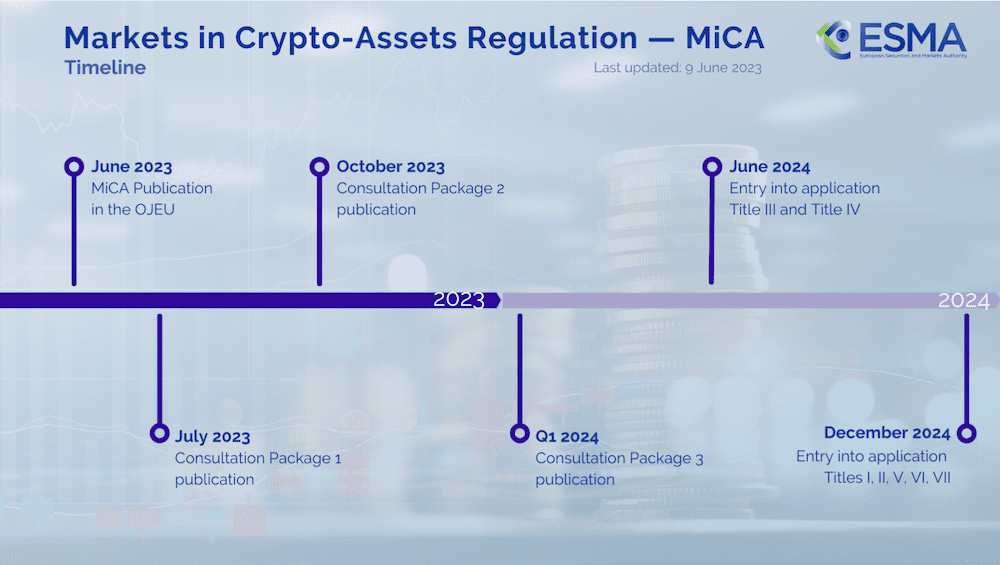
Before the December 2024 MiCA deadline, crypto platforms began delisting USDT for EU residents. Other US-pegged stablecoins that did not meet MiCA requirements are also being removed.
A Tether spokesperson commented on the situation in January 2025, stating:
“It is disappointing to see the rushed actions brought on by statements, which do little to clarify the basis for such moves.”
MiCA Regulations and Crypto Business in Europe
The EU’s regulatory framework has led to concerns about compliance costs and market restrictions. Steve Hanke, a professor and market analyst, previously highlighted overregulation as a factor impacting the EU’s economic performance compared to the United States.
Some industry experts suggest that MiCA regulations could make it harder for new stablecoin issuers to enter the market. Strict compliance requirements may also reduce competition among crypto firms operating in the region.

MiCA and the Future of Crypto in the EU
Natalia Łątka, director of public policy at Merkle Science, stated that MiCA regulations could discourage foreign firms from entering the EU market. She also noted that some local companies might relocate to avoid the high costs of compliance.
As the MiCA deadline approaches, the removal of USDT and other stablecoins could impact crypto adoption and liquidity within the European Union.


