



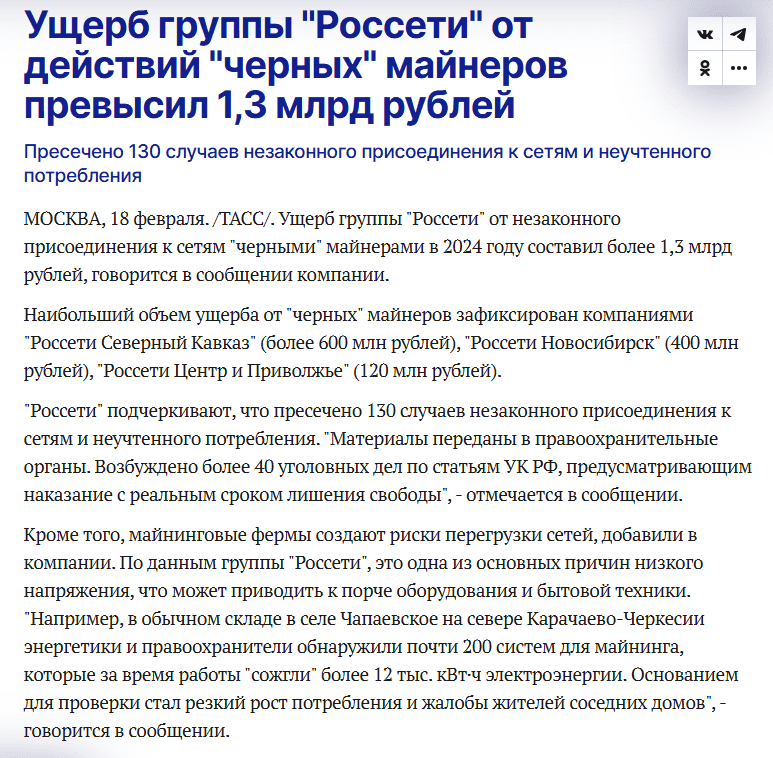
YEREVAN (CoinChapter.com) — Rosseti, Russia’s state power company, reported losses exceeding 1.3 billion rubles ($14.2 million) in 2024 due to unauthorized Russian crypto mining. These operations, known as black mining, have caused significant damage to the country’s power grid.
According to TASS, losses were recorded across multiple regions, affecting power distribution and increasing strain on the grid.
North Caucasus and Novosibirsk Among the Worst-Hit Regions
The North Caucasus suffered the highest impact, losing over 600 million rubles due to illegal Russian crypto mining operations. The Novosibirsk grid followed, reporting 400 million rubles in losses. The Center and Volga regions together accounted for 120 million rubles in damages.
One of the largest individual cases was recorded in Novosibirsk, where an operator ran approximately 3,200 mining devices without authorization. The illegal operation caused a financial loss of 197 million rubles ($2.2 million) by consuming electricity on an industrial scale.
Authorities identified 130 cases of unauthorized electricity use, with over 40 criminal investigations underway. Those involved could face criminal charges and prison sentences.
Unauthorized Mining Overloads Russia’s Power Grid
Rosseti reported that unauthorized crypto mining increases electricity demand, leading to low voltage issues that affect electrical appliances. The excessive consumption also overloads the power grid, causing instability in affected areas.
The company has been working with law enforcement to track and dismantle these illegal operations. However, the high profitability of Russian crypto mining continues to drive unauthorized activities.
Rosseti Plans to Use Excess Power for Legal Crypto Mining
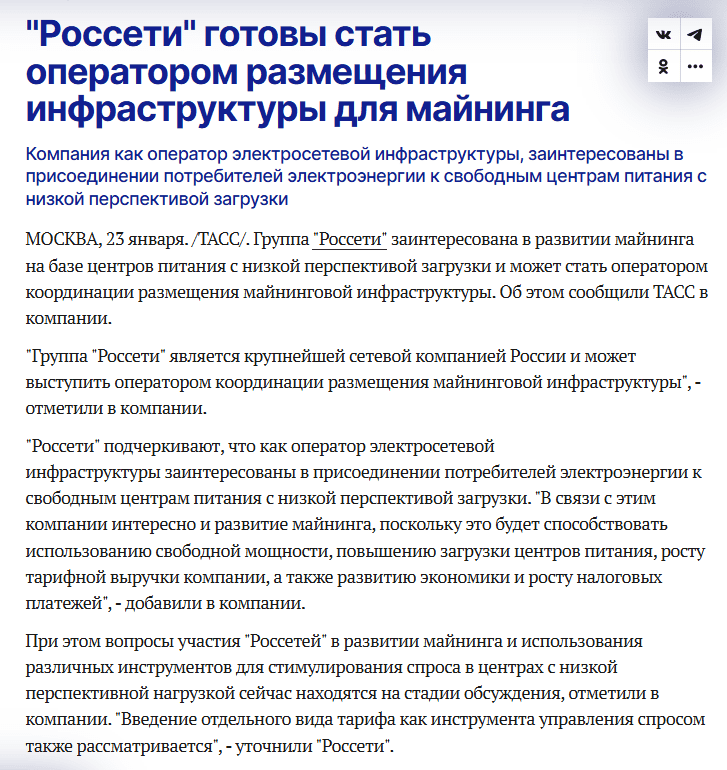
Rosseti recently announced an initiative to explore legal Russian crypto mining as a way to manage underutilized power capacity. The company stated that idle power centers could be used for regulated mining instead of remaining inactive.
Rosseti is discussing a specialized tariff system to ensure efficient energy use while avoiding grid congestion. The company also noted that its modern infrastructure, including switching equipment and load management systems, could support controlled crypto mining operations.
Rosseti Seeks Government Approval for Crypto Mining Centers
According to Kommersant, Rosseti’s CEO Andrei Ryumin has approached Prime Minister Mikhail Mishustin for approval to oversee the development of crypto mining centers. The discussions focus on using excess electricity while ensuring power grid stability.
With losses from unauthorized mining rising, Rosseti is considering a structured approach to manage power distribution effectively. Authorities continue efforts to prevent electricity theft, while discussions about legal crypto mining infrastructure remain ongoing.


