



YEREVAN (CoinChapter.com) — Kentucky lawmakers have approved HB 701, a bill that reinforces Bitcoin self-custody rights and mining protections. The legislation, introduced by Representatives Adam Bowling and T.J. Roberts, passed both legislative chambers on March 14 and now awaits the governor’s signature.
Bitcoin Mining Gains Legal Protection in Kentucky
HB 701 prevents zoning regulations from unfairly targeting Bitcoin mining operations. It also removes specific financial licensing requirements for small-scale miners, allowing independent operators to participate more easily.
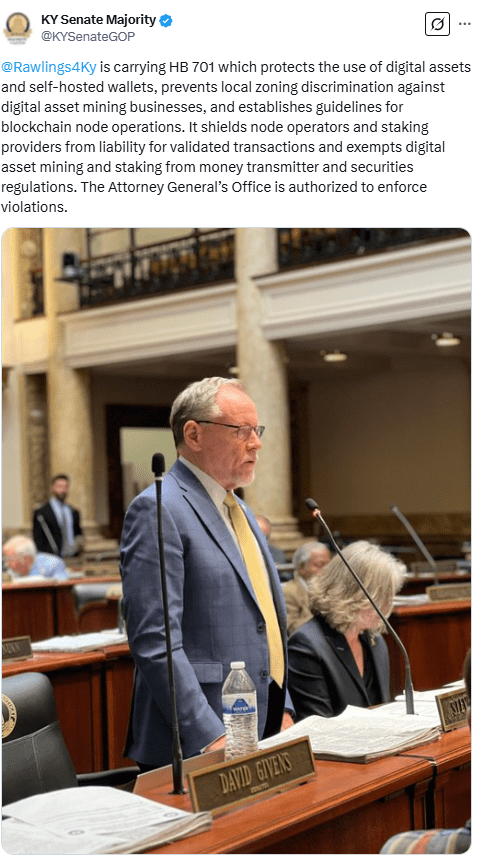
The bill ensures that node operators and staking providers are not held liable for validated transactions. The Kentucky Senate Majority confirmed this on X , stating that the bill keeps digital asset mining and staking exempt from money transmitter and securities regulations.
“[The bill] shields node operators and staking providers from liability for validated transactions and exempts digital asset mining and staking from money transmitter and securities regulations. The Attorney General’s Office is authorized to enforce violations,”
Kentucky’s Senate Majority posted on X.
Bitcoin Self-Custody Rights Secured Under HB 701
The legislation affirms that individuals in Kentucky can store their Bitcoin and digital assets in self-custody wallets without restrictions. This provision strengthens personal control over digital assets and removes uncertainty around private wallet usage.
HB 701 also ensures that Bitcoin payments are not subject to additional taxes, withholdings, or fees beyond what applies to standard financial transactions. This measure provides clarity for businesses and individuals using Bitcoin for transactions.
“Digital assets used as a method of payment shall not be subject to additional taxes, withholdings, assessments, or charges that are based solely on the use of the digital asset as the method of payment,”
Bitcoin Mining and Staking Not Classified as Securities
A major provision of HB 701 confirms that Bitcoin mining and staking services will not be categorized as securities. This classification removes regulatory uncertainties for businesses and individuals involved in digital asset operations.
The bill authorizes the Attorney General’s Office to oversee compliance and enforce violations related to Bitcoin mining and staking regulations. This ensures a structured legal environment for those engaged in crypto-related activities.
Kentucky Considers State Bitcoin Reserve
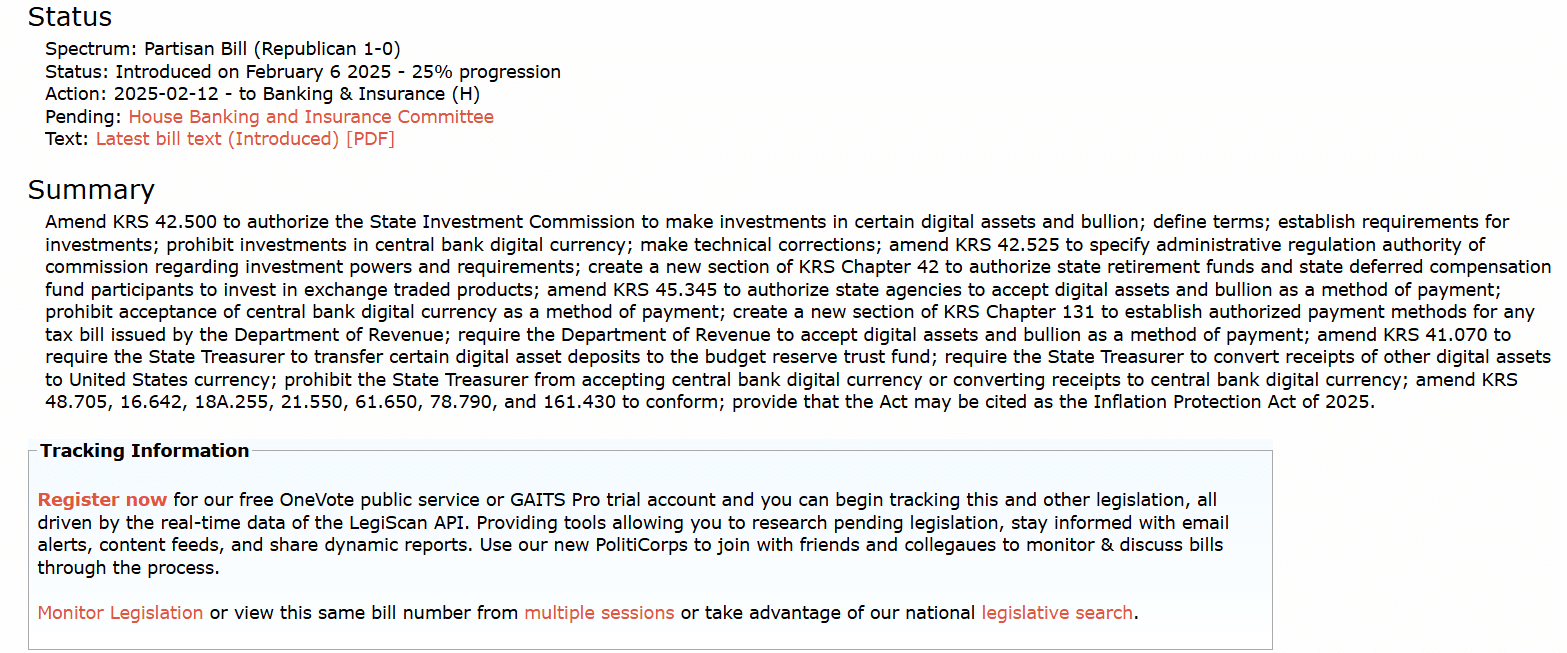
Alongside HB 701, lawmakers are reviewing another proposal to create a Bitcoin reserve for the state. The initiative suggests using excess state funds to acquire digital assets as an alternative store of value.
The bill does not specify Bitcoin by name but refers to digital assets—excluding stablecoins—with a market capitalization exceeding $750 billion. Since Bitcoin’s market cap stands at $1.7 trillion, it remains the only asset that qualifies under these criteria.
While the Bitcoin reserve proposal remains under review, Kentucky continues to advance policies that support Bitcoin self-custody and mining rights, positioning the state as one of the more active in digital asset legislation.


