


YEREVAN (CoinChapter.com) — The SEC stablecoin guidance, issued on April 4, confirms that some tokens are not securities. The United States Securities and Exchange Commission defined these as covered stablecoins. These tokens are fully backed by US dollars or liquid, low-risk assets. They must also allow holders to redeem them 1:1 for dollars.

These US dollar-backed stablecoins are exempt from transaction reporting rules under securities law. But the SEC stated that not all stablecoins qualify. Tokens backed by algorithms, software models, or any type of yield-bearing system are excluded.
The new stablecoin regulations prevent issuers from mixing user reserves with company funds. Reserves must remain separate and cannot be used for market trading or lending. The SEC also blocked issuers from paying interest, profit, or yield to holders.
Covered stablecoins must follow strict reserve rules
Only covered stablecoins that meet all the SEC’s criteria are recognized under this exemption. These tokens must be backed either by physical fiat currency or short-term US Treasury Bills. They must avoid any financial activity involving user funds.
The SEC stablecoin guidance did not include algorithmic stablecoins or synthetic dollars. These tokens continue to face uncertainty in the US regulatory system. The agency focused only on asset-backed models.
Issuers cannot promise any return to holders. They also cannot use reserve assets to earn revenue. These rules apply to both existing issuers and any new firms that plan to issue US dollar-backed stablecoins in the future.
The SEC confirmed that no onchain interest or yield-bearing fiat tokens are permitted under the current guidelines. Covered stablecoins are limited to functioning as digital equivalents of fiat currency.
Stablecoin regulations match GENIUS Act and Stable Act of 2025
The SEC stablecoin guidance matches efforts in Congress. Two proposals—GENIUS Act and Stable Act of 2025—support similar structures. These bills aim to secure the role of US dollar-backed stablecoins in the global financial system.
The GENIUS Act, introduced by Senator Bill Hagerty, and the Stable Act of 2025, by Representative French Hill, both require full backing and no profit-sharing. These laws align with the new SEC definitions for covered stablecoins.
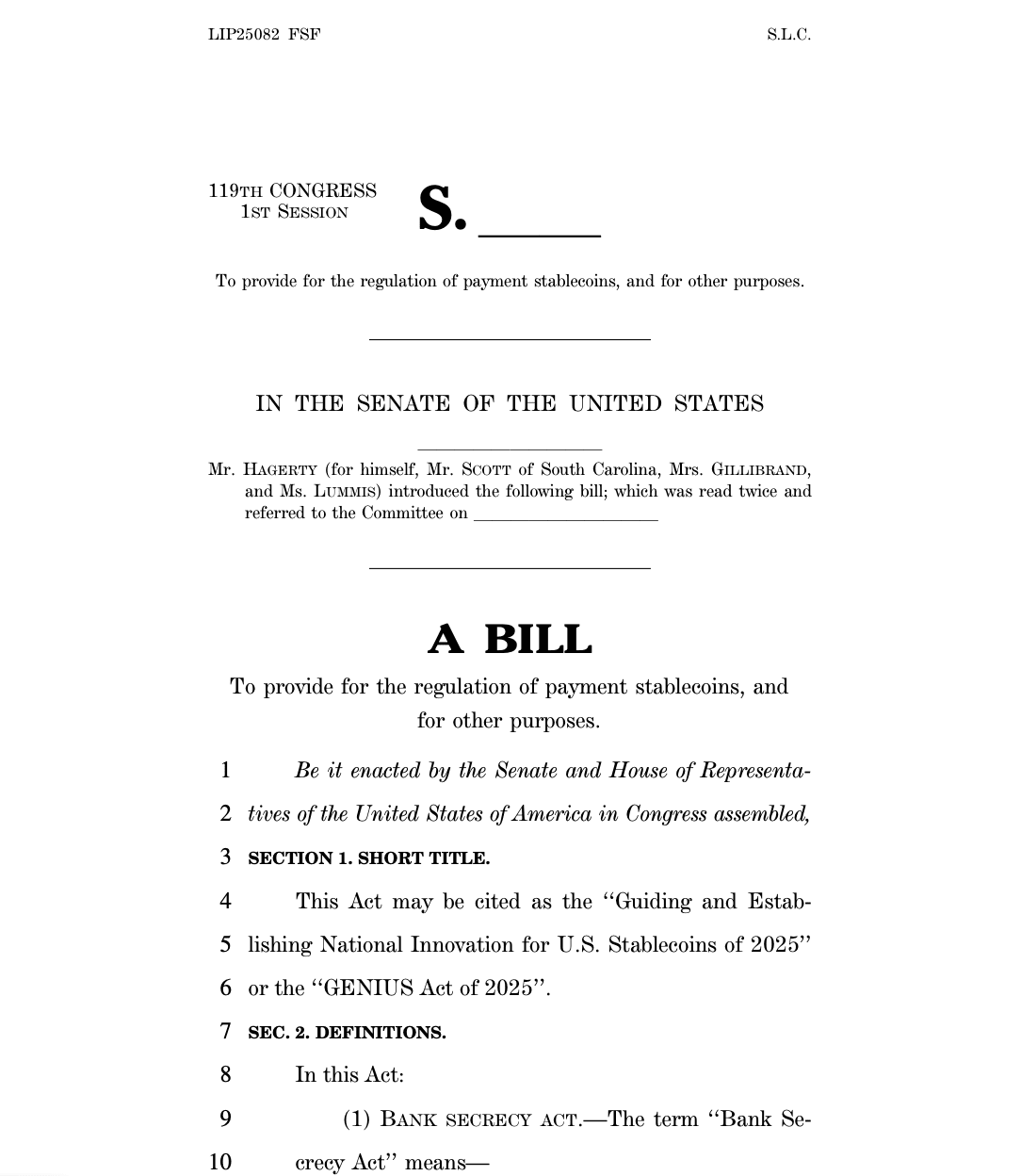
Both bills encourage the use of regulated banks to store reserves. These must include US dollar deposits or short-term US government debt. The new SEC framework reflects the same priorities.
According to the guidance, issuers must remain fully transparent and avoid any financial operations with reserve funds. This includes trading, lending, or investing activities.
Scott Bessent stablecoin remarks highlight policy direction
US Treasury Secretary Scott Bessent spoke about stablecoin regulations at the White House Digital Asset Summit on March 7. He stated that regulating stablecoins is a priority for the current session. Bessent said stablecoins are part of the administration’s digital asset strategy.
He also said the US government will use stablecoins to support the global position of the US dollar. This includes using US dollar-backed stablecoins to boost demand for US Treasuries.
The Treasury sees these tokens as tools to extend dollar use in digital markets. The SEC stablecoin guidance supports this position by making strict rules for reserve-backed tokens.
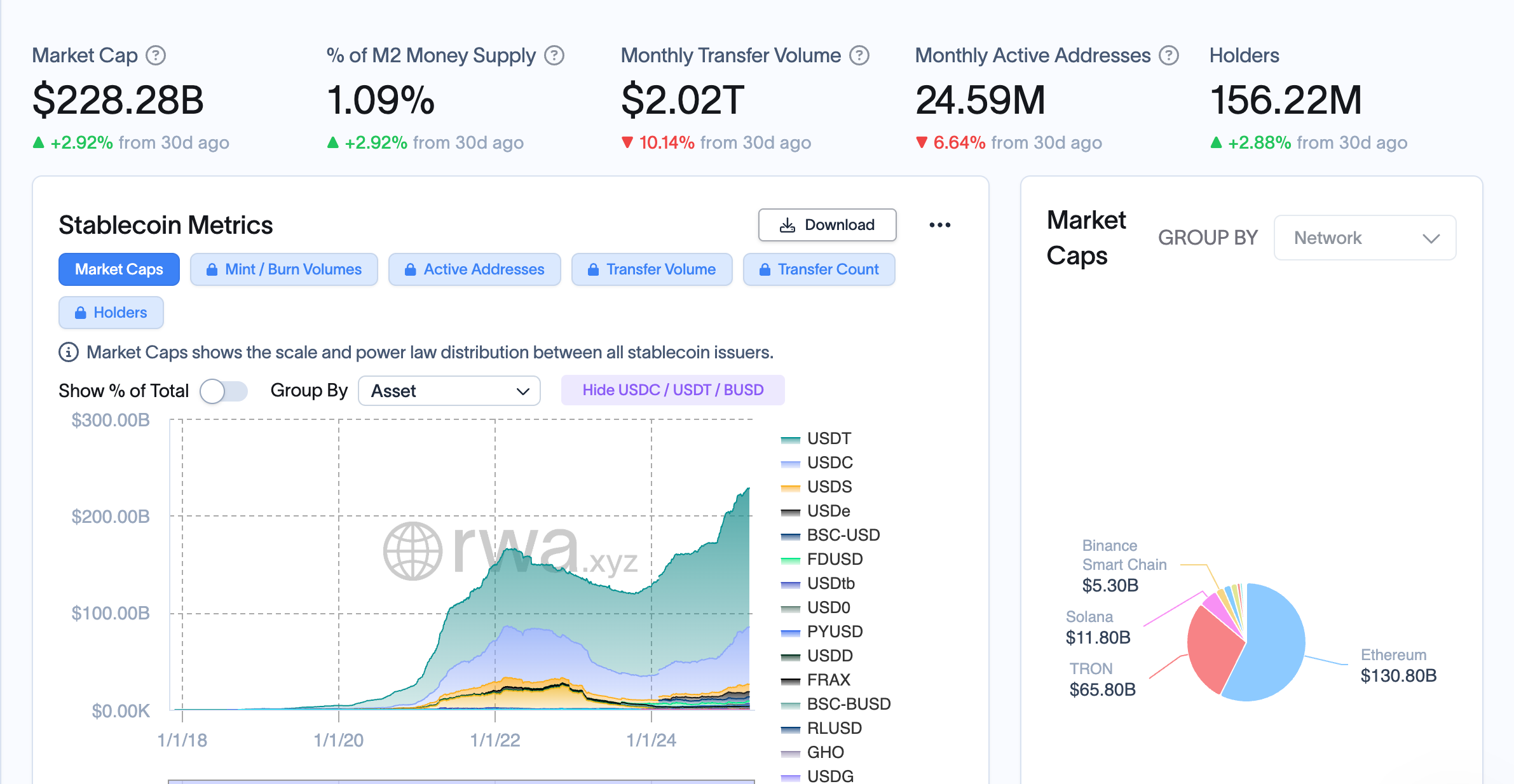
The data shows the scale of adoption. Tether, the largest stablecoin issuer, holds more US Treasuries than countries like Canada, Germany, or South Korea. This connects the stablecoin ecosystem directly with US debt markets.


