


The SPK token lost over 70% of its value shortly after its June 17 launch. It opened around $0.177 and dropped to nearly $0.050 within hours. The sharp decline followed the SPK airdrop to users of platforms like Binance, KuCoin, Bybit, and Bitget.
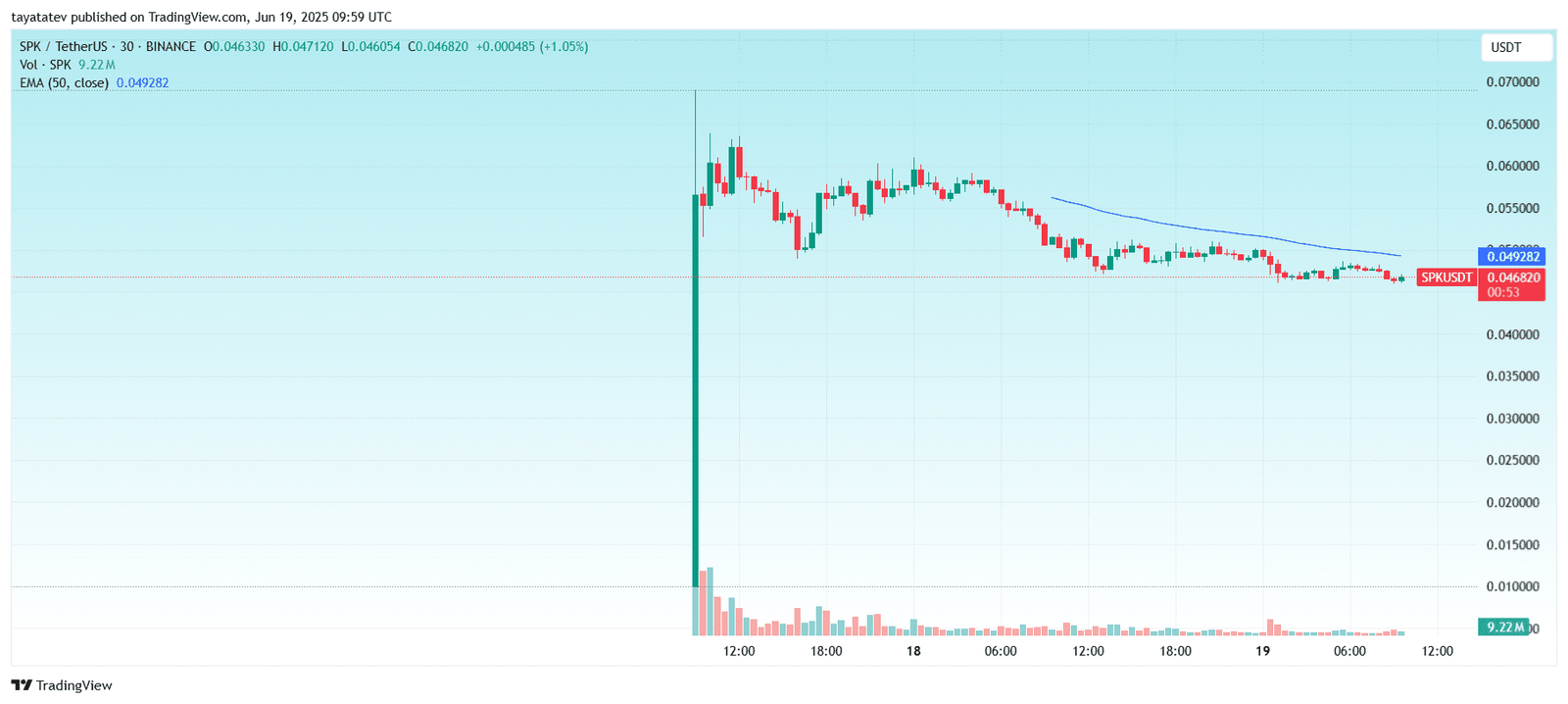
According to Coingecko, over 300 million SPK tokens entered circulation on the first day. Binance alone gave out 200 million SPK tokens to users who passively staked BNB the week before. Many recipients quickly sold their tokens, causing the SPK price crash.
The result was over $120 million in lost market value. Liquidity was thin, and buy orders failed to meet the large sell demand. This led to an accelerated SPK selloff across exchanges.
Spark DeFi Platform Still Holds $8 Billion in TVL
The Spark platform continues to hold $8 billion in total value locked (TVL) despite the drop in SPK token value. The SPK circulation started with 1.7 billion tokens, equal to 17% of the total supply of 10 billion.
The launch did not include farming, even though 65% of SPK tokens are allocated to future farming rewards. Another 23% of SPK tokens are reserved for ecosystem development, and 12% for contributors.
Because the SPK launch gave most early supply to users outside the protocol’s core community, buying pressure remained low. The quick SPK selloff pushed prices down before enough organic demand could build.
Binance and Coinbase Label SPK Token as High Risk
Exchanges responded to the SPK price crash by labeling the SPK token with cautionary tags. Binance added a Seed Tag, and Coinbase marked SPK as Experimental. These labels warn users of volatility and limited trading history.
The large airdrop and lack of demand created a situation similar to other airdrop-led launches. Tokens like Arbitrum, ZORA, and APT experienced similar declines after initial hype faded and early holders sold their tokens.
The structure of the SPK airdrop and token distribution mirrored past cases, where passive participants exited soon after receiving their allocations.
SPK Trading Volume Hits $500 Million but Resistance Holds
In the first hours of trading, the SPK token recorded around $500 million in trading volume. Activity was high, but price stability remained weak. According to trader Niels (@Web3Niels), the token rose 600% briefly from the launch price but faced resistance at $0.057.
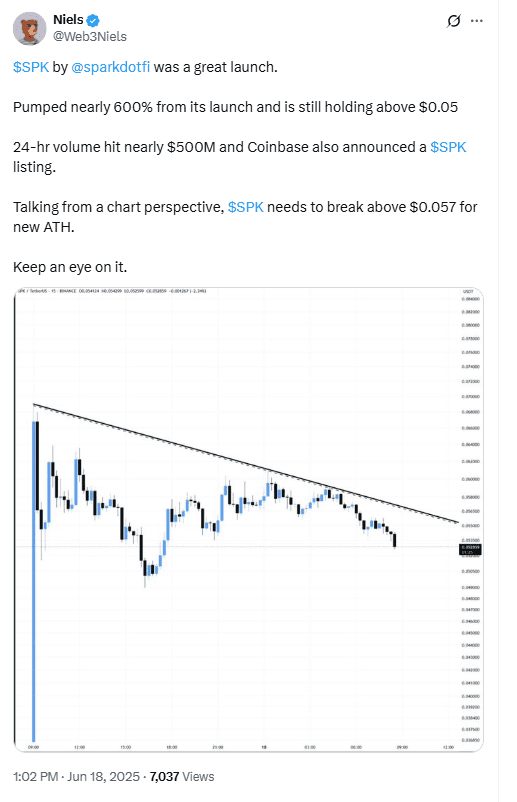
The surge was short-lived. Sell pressure remained high, with most airdropped holders not showing signs of long-term commitment. Order books on multiple platforms failed to absorb the volume.
This situation aligns with the typical pattern of SPK airdrop exits. Airdrop recipients prioritize short-term liquidation rather than engaging with the protocol.
SPK Token Follows Trend Seen in Other Airdrop Launches
The SPK token has followed a common pattern seen in recent token launches. Projects like KAITO, APT, and ZORA faced immediate selloffs after their airdrops. In each case, passive users exited early, leading to sharp price declines.
Large supply increases on the first day overwhelmed demand. This caused order books to break down. The SPK selloff shows that heavy airdrop distribution can lead to major volatility if trading support is limited.
The SPK token entered the market with no farming rewards live. The timing of these distributions may have contributed to the sudden drop.
Solaxy Presale Nears $54M as Launch Approaches
In a separate event, Solaxy ($SOLX) is preparing for its exchange debut. The Solana-based project focuses on off-chain transaction processing. According to its site, Solaxy raised $54 million in its ongoing presale.
Users can buy $SOLX using Solana (SOL), USDT, or by card. The current price is $0.001766. The platform includes a testnet, token bridge, and block explorer, with rewards up to 78% APY offered to stakers.
The Solaxy team has not yet announced a final listing date but confirmed that the presale is in its final phase.


