


On June 26, 2025, the European Commission dismissed the ECB’s warning about joint stablecoin issuance between the EU and foreign countries. The European Commission said the risk of a bank run linked to foreign stablecoins is “highly unlikely.”
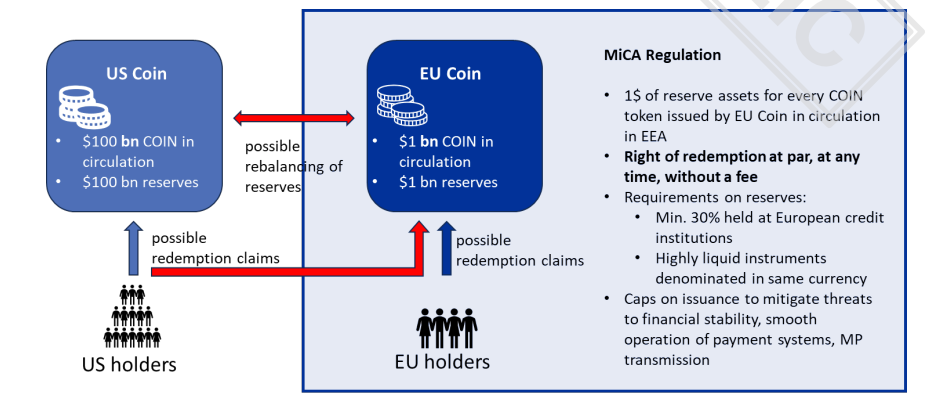
The ECB stablecoin warning came in April, when it published a non-paper saying that joint issuance could weaken the EU’s financial safeguards. The ECB said EU issuers may not hold enough reserve assets inside the region to cover redemptions from both EU and foreign holders.
This marked a shift in Brussels’ stablecoin policy compared to the earlier warnings from the ECB.
MiCA Regulation Seen as Barrier for Foreign Stablecoins
In June 2025, the European Commission published a paper titled “Stablecoins and digital euro: friends or foes of European monetary policy?” The paper reviewed the regulatory limits already in place under MiCA regulation.
This approach, according to the European Commission stablecoin stance, reduces the risk linked to joint stablecoin issuance.
ECB Stablecoin Warning Cites Weak Supervision
The ECB stablecoin warning, issued in April, claimed that joint stablecoin issuance could bypass MiCA regulation. It said foreign issuers might falsely claim compliance while shifting oversight responsibility to EU authorities.
The ECB’s non-paper also warned that stablecoin risk management could be compromised if foreign issuers gain access to the single market without meeting full MiCA requirements.
The central bank warned that this setup could expose EU consumers to risk. It also said the model might weaken the rules for stablecoin redemption and issuance in the EU.
In its report, the ECB included a graphic showing how joint issuance between the EU and US could work. It argued that this setup creates legal uncertainty for regulators. As a result, it could reduce EU control over foreign stablecoins in the region.


