



Ethereum (ETH) climbed to a new all-time high of $4,953 on August 25, breaking the previous peak of $4,865 set in November 2021. The move pushed its market capitalization close to $600 billion, bringing it within reach of the half-trillion-dollar mark. The immediate catalyst came from the Federal Reserve’s annual Jackson Hole meeting on August 22. Chair Jerome Powell said the central bank was prepared to cut interest rates in September if economic conditions weakened further. Lower interest rates reduce the appeal of government bonds and make risk assets more attractive.
Ethereum responded with a sharp 14% gain on the same day, outperforming Bitcoin (BTC), which has been trading below its recent highs of around $124,457. Analysts described the rally as part of a “catch-up trade,” with capital rotating from Bitcoin into Ethereum after months of BTC dominance earlier in the year.

Wall Street Money and Corporate Treasuries Push Ethereum Higher
Institutional demand has been strong throughout August. U.S. spot ETH exchange-traded funds, which launched earlier this year, have become a key entry point for investors. On August 11, these ETFs recorded more than $1 billion in daily inflows, the strongest since their debut. For the week ending August 18, Ethereum products attracted $2.87 billion, nearly three-quarters of all crypto inflows.
Corporate treasuries have added to the demand. On August 18, BitMine Immersion disclosed holdings of about 1.5 million ETH worth $6.6 billion. Days later, SharpLink Gaming reported reserves exceeding $3 billion. By August 21, trackers estimated that 69 companies together held over 4 million ETH on their balance sheets. These figures echo the pattern seen in Bitcoin’s 2020 cycle, when firms like Strategy (formerly MicroStrategy) and Tesla moved into crypto.

Ethereum’s long-term strength comes from network improvements made earlier this year. On February 4, 2025, developers increased the block gas target by 20% to 36 million, expanding throughput. The Pectra upgrade, activated on May 7, introduced new features that cut rollup costs, streamlined staking, and gave regular wallets smart-account capabilities. In July, validators signaled support to raise the gas limit again toward 45 million, further improving efficiency.
At the same time, Ethereum’s transaction activity has increased as rollup fees dropped after the Pectra upgrade. Lower costs make decentralized finance and NFT trading more accessible, suggesting the network’s usage is rising alongside Ethereum price.
These upgrades did not drive the August rally directly, but they strengthened confidence among institutions and developers that Ethereum can handle greater demand without repeating the high fees seen in past bull markets.
Ethereum Supply on Exchanges Shrinks to Lowest in Nearly a Decade
data from CryptoQuant shows Ethereum reserves on centralized exchanges have fallen to about 18.3 million ETH in August 2025, the lowest level in years. The chart indicates that reserves have been on a steady decline since 2022, when they stood above 28 million ETH. By early 2023, balances dropped to around 23.4 million ETH, and they have continued to trend lower through 2024 and into 2025.
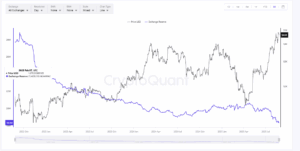
This matters because when fewer coins are available on exchanges, it reduces the immediate supply for selling. If demand rises through ETFs and corporate treasuries, the limited supply can drive prices higher — a dynamic often described as a supply squeeze.
Ethereum’s role in traditional finance is also expanding. BlackRock’s BUIDL fund, a tokenized U.S. Treasury product built on Ethereum, crossed $1 billion in assets under management in March 2025. Such products show how major financial institutions are beginning to use Ethereum for real-world applications.
Risks at the $5,000 Threshold
The speed of Ethereum’s rise raises the risk of a short-term correction. The 14% surge on August 22 pushed ETH into overbought territory on momentum indicators. The $5,000 level now acts as a major psychological barrier. A delay in the Fed’s expected rate cut, weaker ETF inflows, or profit-taking could trigger a pullback.
Derivatives data shows institutions are deeply involved. CME ether options open interest passed $1 billion in August, and global ETH futures positions are near record highs. While this deepens liquidity, it also raises volatility risk if leveraged bets unwind.
Ethereum’s latest record differs from its 2021 high. Four years ago, the surge was driven mostly by retail speculation and soaring gas fees. This time, the rally rests on institutional inflows, corporate adoption, structural network upgrades, reduced exchange supply, tokenization growth, and a robust derivatives market.


