


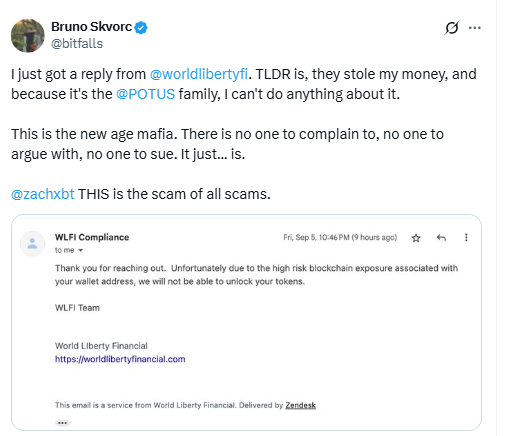
WLFI, the token linked to World Liberty Financial, drew sharp criticism this week after freezing investor wallets, including those of prominent backers Justin Sun and developer Bruno Skvorc. The move immediately ignited controversy across the crypto sector, with industry participants questioning whether a token marketed as decentralized could justify such unilateral action.
Skvorc denounced the decision as theft, describing it as “the new age mafia,” while Sun labeled the freeze a breach of blockchain norms. The freeze highlighted the growing tension between investor expectations of decentralization and the project’s internal control measures.
WLFI Defends Security Measures
In response to the backlash, World Liberty Financial insisted the wallet freezes were not punitive but protective. The project said it acted to shield investors from phishing attempts and malicious exploits, arguing that temporarily restricting certain wallets was necessary to prevent broader risks to the ecosystem.
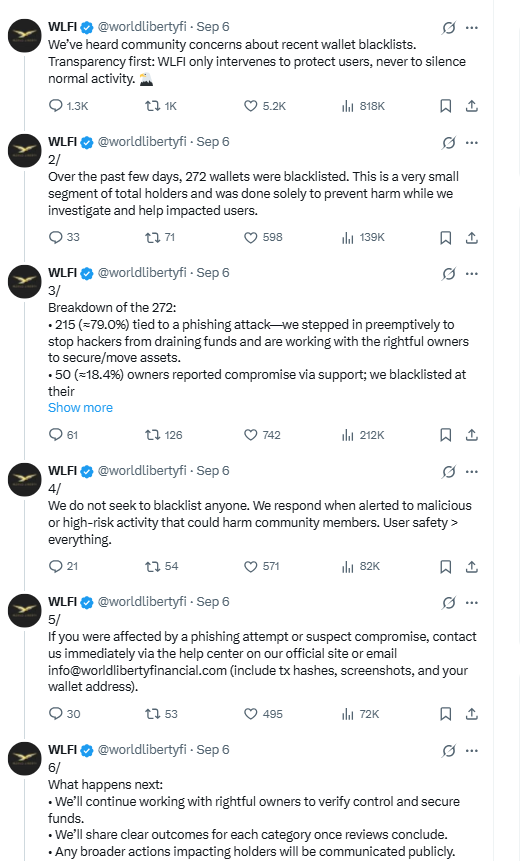
WLFI stressed that its intervention was limited in scope and designed to ensure long-term safety, not undermine user autonomy. However, the explanation has done little to ease concerns, as critics view the move as an unprecedented level of control over a supposedly decentralized asset.
Justin Sun Presses for Resolution
Justin Sun, founder of Tron and a major investor in WLFI, escalated pressure on the project by publicly demanding that his tokens be unfrozen. He argued that the allocation had been “unreasonably frozen” and that such actions threatened confidence in the project’s governance model.
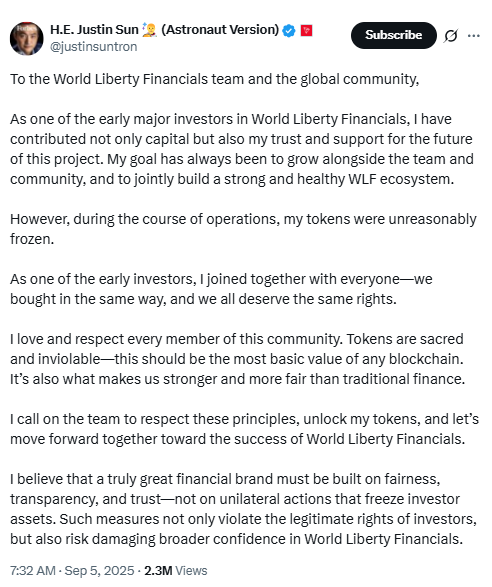
Sun’s remarks added significant weight to the debate, given his influence in the digital asset industry and his history of large-scale investments. His intervention placed WLFI in a difficult position, as the project must balance its claim of protecting users with the reputational damage caused by freezing a high-profile stakeholder’s funds.
Token Burn as Control Strategy
Alongside the wallet freeze dispute, WLFI announced the permanent destruction of 47 million tokens, representing about 0.19% of its circulating supply. The burn was positioned as a measure to maintain scarcity and reinforce value for long-term participants.
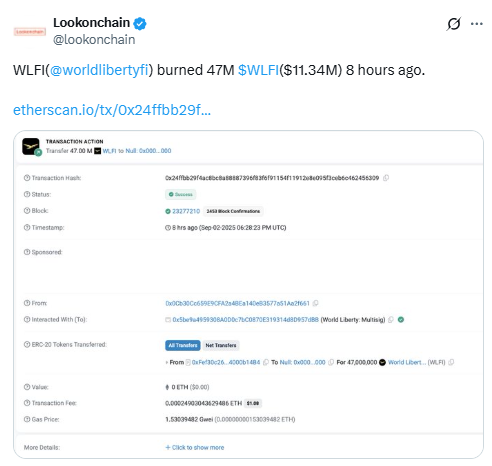
The move also signaled that the project was willing to take direct action to influence supply dynamics, even as investors questioned its handling of governance issues. While token burns are a common strategy across the industry, the timing of WLFI’s decision placed it squarely within the broader debate over centralization, transparency, and trust.
Broader Implications for Governance
The unfolding controversy over WLFI underscores the challenge of managing blockchain projects that position themselves between decentralized ideals and centralized control mechanisms. The wallet freezes may strengthen short-term security, yet they also highlight how quickly trust can erode when investors perceive decisions as unilateral. Justin Sun’s public criticism amplifies the stakes, pushing the project to respond with greater clarity about its governance framework. As WLFI continues to navigate these disputes, the token remains a focal point in the discussion over how much power blockchain projects should wield over user funds.
WLFI Price Action on September 8
WLFI traded under pressure on September 8, moving around the $0.21 level after a volatile week. The WLFI/USD chart shows that the token opened the day near $0.2127 and briefly attempted to climb toward $0.2151, the 50-hour exponential moving average (EMA). However, sellers stepped in quickly, pushing the price back to $0.2102 by the evening session.
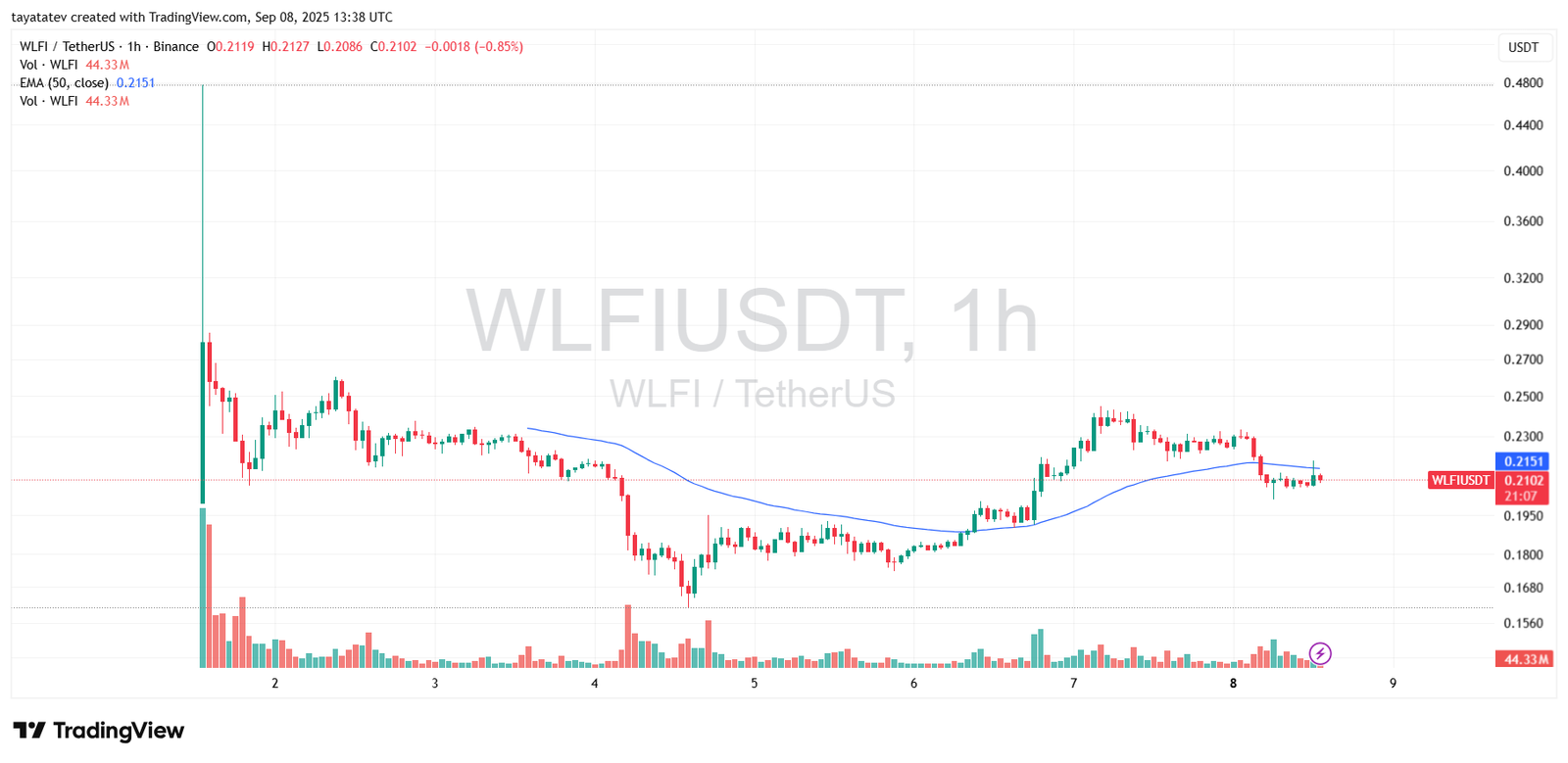
Earlier in the week, WLFI had slipped below the $0.20 level, reflecting sustained selling pressure. Yet by September 7, buyers managed to stage a recovery, driving the token closer to $0.23. That rebound, however, failed to hold as the EMA line acted as resistance, limiting further upside momentum. The inability to sustain above the moving average suggests that bullish strength remains fragile.
At the same time, trading volume on September 8 stood at 44.33 million, showing steady activity despite the restrained price action. The consistent turnover indicates that market participants remain engaged, but the lack of decisive movement highlights uncertainty. If the token breaks firmly above the $0.2151 EMA, it could signal renewed bullish momentum. Conversely, if it slips below $0.20 again, it may invite further downside pressure.
In short, WLFI spent September 8 consolidating just under its resistance zone, with traders watching closely for confirmation of direction. The coming sessions will determine whether the token can reclaim upward momentum or continue to face resistance near the short-term EMA.
WLFI RSI Analysis on September 8
The Relative Strength Index (RSI) for WLFI on September 8 stood near 41.7, placing it in the lower neutral zone. This reading signals weakening momentum after the token’s recent rebound toward overbought conditions earlier in the week. On September 7, RSI climbed above 70, showing strong bullish momentum, but the indicator quickly reversed as sellers dominated, pulling it sharply down to near 35 by the next day.
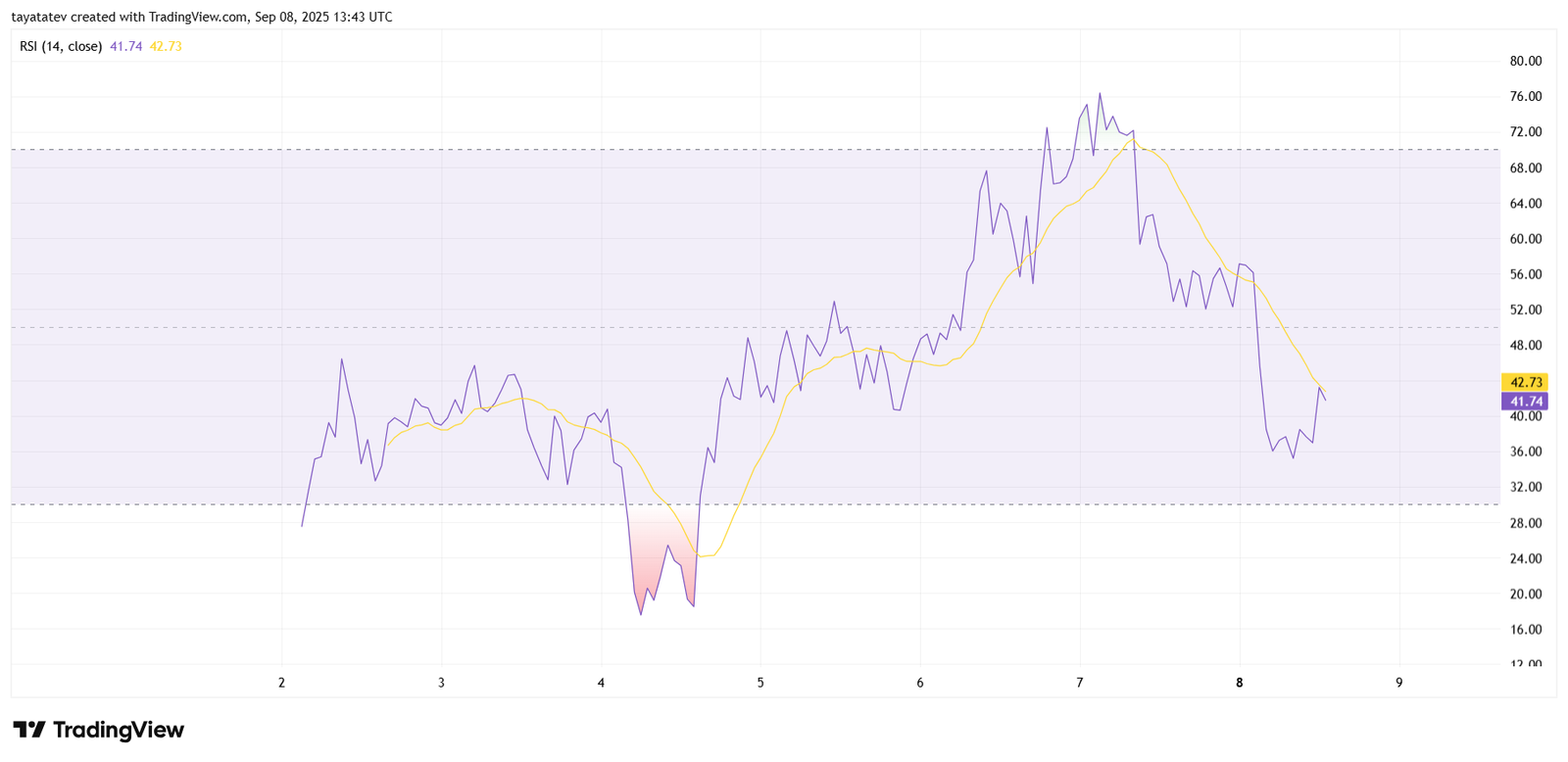
Throughout the past sessions, the RSI has demonstrated high volatility, with sharp swings between oversold and overbought levels. The move under 50 reflects a shift in control from buyers to sellers, suggesting caution among traders. At the same time, the short-term uptick from the low 30s shows that buyers are attempting to defend against deeper declines, trying to reestablish balance in the market.
Going forward, if RSI remains below 50, WLFI may struggle to build sustainable bullish momentum. However, a decisive bounce above this threshold would confirm renewed strength and could pave the way for another attempt at recovery. Until then, the indicator highlights consolidation pressure, with September 8 reflecting a fragile balance between rebound attempts and ongoing selling pressure.


