



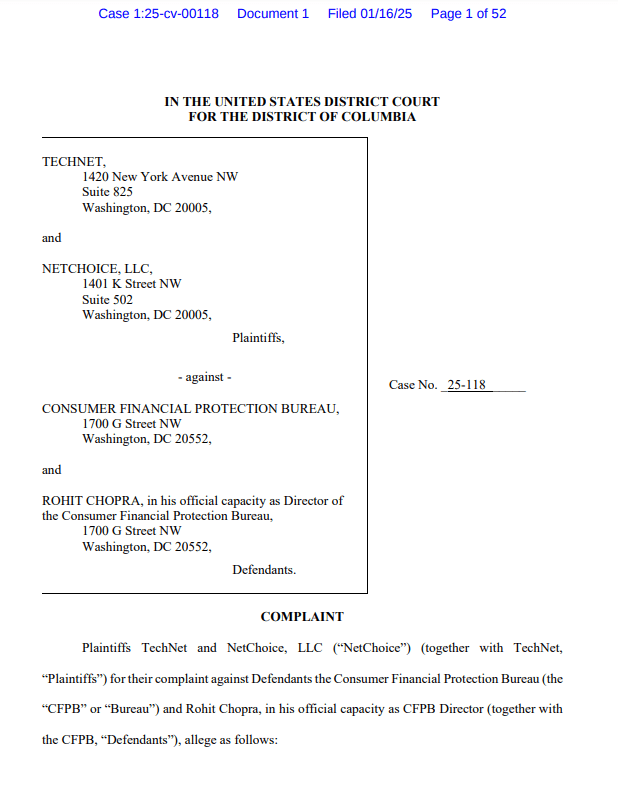
YEREVAN (CoinChapter.com) — Two organizations, TechNet and NetChoice, have filed a lawsuit against the US Consumer Financial Protection Bureau (CFPB). The lawsuit, filed on Jan. 16, opposes a rule issued in December 2024 that seeks to regulate digital wallets and payment apps in the same way as traditional banks.
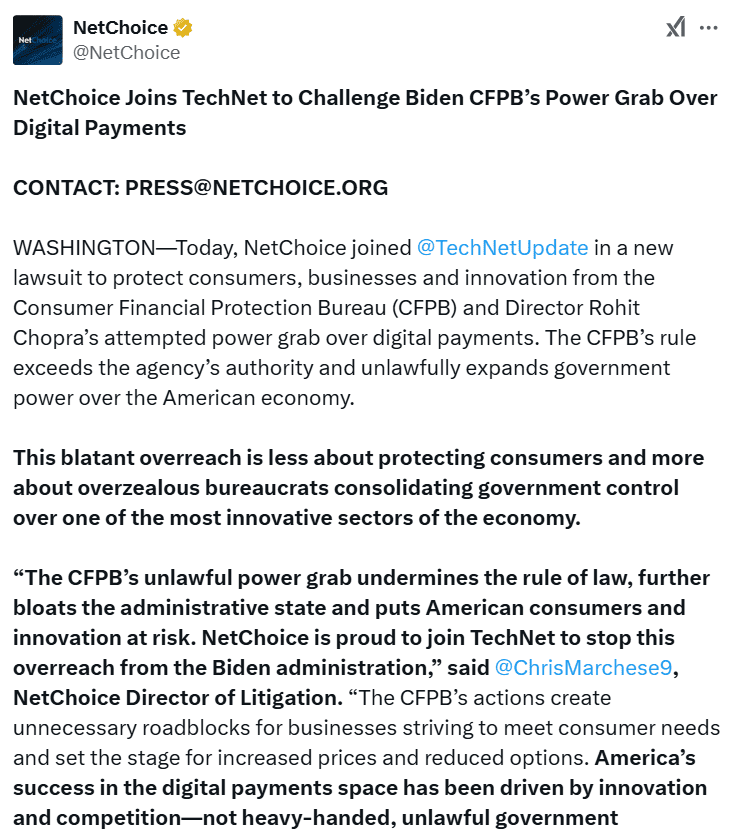
The 259-page rule allows the CFPB to supervise “general-use digital consumer payment applications.” This affects nonbank companies like Apple Pay, Google Wallet, PayPal, Venmo, and Cash App. However, cryptocurrency wallets and decentralized wallets are not included in the rule.
Chris Marchese, litigation director at NetChoice, criticized the rule. He stated that it creates “unnecessary roadblocks for businesses striving to meet consumer needs” and could lead to “increased prices and reduced options.”
CFPB Rule Raises Concerns Among Industry Leaders
The CFPB claims the rule is meant to protect personal data, reduce fraud, and stop “illegal debanking.” The bureau has expanded its authority to conduct proactive compliance examinations of digital wallets and payment apps.
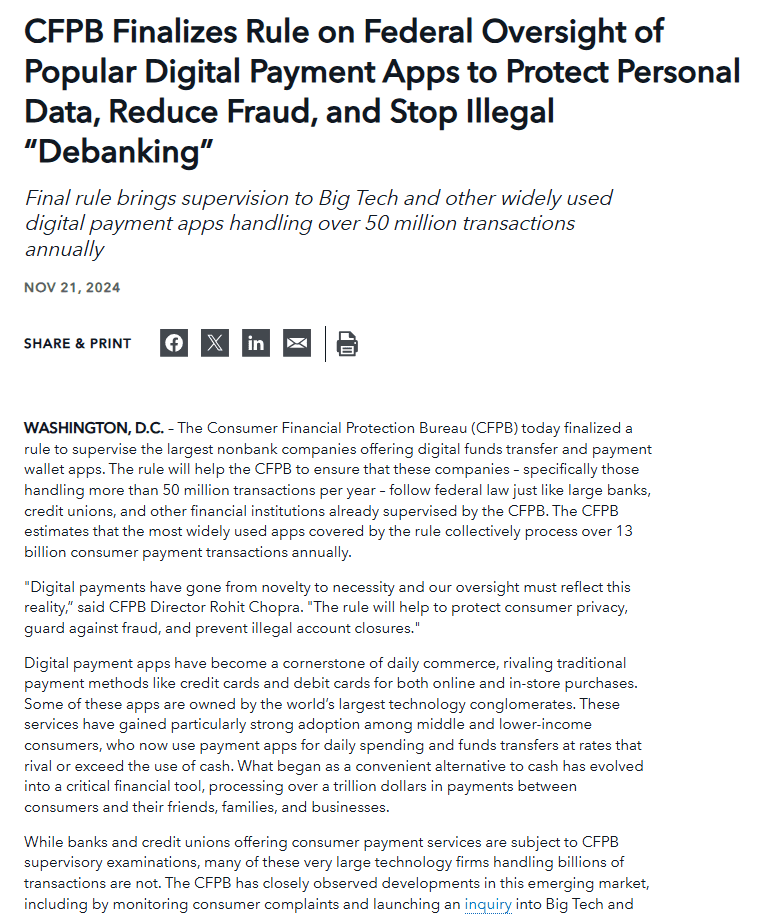
In a statement, NetChoice called the rule a “blatant overreach” and argued it focuses less on protecting consumers and more on expanding government control over the financial technology sector.
The plaintiffs argue that many companies impacted by the rule already follow strict state-level regulations. They claim the CFPB failed to identify specific gaps that would justify the rule. This, they say, makes the regulation “arbitrary and capricious.”
State Regulations vs. Federal Authority
The lawsuit highlights tension between state-level regulations and federal oversight of digital wallets and payment apps. TechNet and NetChoice argue that companies like Apple Pay and PayPal already comply with extensive state regulations. The CFPB’s new rule, they claim, imposes redundant and burdensome oversight.
While the rule targets larger nonbank companies, the plaintiffs emphasize that cryptocurrency wallets remain excluded. The decision to focus only on certain types of payment apps has further fueled industry pushback.
CFPB Fines Block Over Cash App Practices
On the same day the lawsuit was filed, the CFPB imposed penalties on Block Inc., the parent company of Cash App. The regulator accused Block of insufficient fraud protection measures. Specifically, it claimed that Cash App directed users experiencing fraud-related losses to their banks instead of providing direct assistance.
The CFPB’s order requires Block to pay $120 million in compensation and a $55 million penalty to the agency’s victim relief fund. Block denied the allegations but must comply with the penalties.
Crypto Wallet Rules Proposed Separately
On Jan. 10, the CFPB introduced a proposal targeting crypto service providers. If implemented, the rule would require these providers to compensate users for losses caused by fraud, hacks, or scams. This proposal is not part of the current lawsuit but reflects the CFPB’s broader interest in regulating nonbank financial services.


