


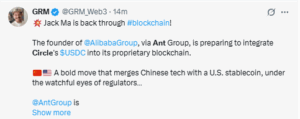
Ant International, the cross-border payments arm of Jack Ma’s Ant Group, wants to add the USDC stablecoin to its blockchain network. The plan depends on Circle, the issuer of USDC, meeting new rules passed by the U.S. Senate in June 2025.
Circle, which went public in June, expects to finish its stablecoin compliance by late September, according to its latest SEC statements. The stablecoin bill sets strict reserve and audit rules for issuers in the U.S.
The Goal: To Slash Cross-Border Fees and Speed Up Payments
Ant processed over $1 trillion in cross-border transactions in 2024. About one-third of that already uses blockchain rails. By adding USDC, Ant International wants to cut payment fees, which today range from 7% to 10% in some corridors, to under 1%. It also plans to reduce settlement times from days to near instant.
According to the World Bank’s Q4 2023 report, sending $200 overseas still costs an average fee of 6.4%. Even online channels average around 5%. Ant wants to remove costly bank layers and FX markups by letting merchants settle in digital dollars.
AntChain launched in July 2020. It already supports tokenized deposits and digital assets from banks such as HSBC, JPMorgan Chase, and Standard Chartered. Adding USDC would expand these digital rails by adding dollar-pegged stablecoins to the network.
Ant’s Alipay+ payment system already handles transactions in more than 15 currencies. A USDC option could widen its services for merchants and banks looking for faster dollar settlements.
Tether’s (USDT) Lead in Asia Poses a Hurdle
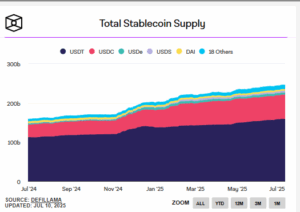
Tether’s USDT remains the largest stablecoin in the market. It holds about $158 billion in circulation compared to USDC’s $61 billion.
Central and Southern Asia handled over $750 billion in crypto inflows between July 2023 and June 2024. Most of this flow uses USDT, which is easy to access and has deep liquidity.
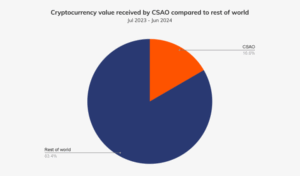
USDC, by contrast, is growing mainly in places with tighter oversight such as Hong Kong and Singapore. But Tether remains strong in regions with fewer banking options and lighter regulation. This means Ant must convince businesses and traders to switch from USDT to USDC.
Hong Kong Rules May Help, But Competition Is Tight
Ant is also seeking a stablecoin license under Hong Kong’s new rules. The Hong Kong Monetary Authority’s stablecoin regime will open on August 1, 2025. The HKMA has confirmed it will issue fewer than 10 licenses in its first phase.
Ant’s competitors could include other Chinese tech companies, global fintechs, or even crypto exchanges looking to issue regulated stablecoins through Hong Kong. Securing a license will be key for Ant’s rollout.
While China bans crypto transactions at home, major Chinese firms are pushing for offshore yuan stablecoins through Hong Kong. This strategy would give exporters and businesses another option besides the dollar. Ant and JD.com have both explored this plan, according to the Financial Times.
At the same time, Chinese regulators have warned about scams linked to unregulated stablecoins. This shows Beijing is watching how companies handle offshore digital tokens.
No Pilot Timeline Yet, But Merchant Offers Expected
So far, Ant International and Circle have not shared when or where the first USDC pilot will launch. Many expect Hong Kong to be the first market because the licensing framework is clear and the HKMA sandbox is ready.
To compete with Tether’s wide use, Ant may need to offer merchants lower FX spreads, fee discounts, or loyalty incentives for using USDC instead of USDT. Neither company has confirmed these details yet.
Circle is also applying for a national bank license in the U.S. Its IPO, and the deal with Ant, show that Circle wants to position USDC as a regulated, trusted option for large businesses.
Can Ant International’s USDC Bet Succeed?
If Circle completes its U.S. compliance steps and Ant secures licenses in Hong Kong, Singapore, and Luxembourg, the company could could lower the cost and time it takes for merchants to settle dollar payments. Cutting payment fees and delays would help thousands of small businesses and big banks alike.
Tether’s strong grip in Asia, its bigger supply, and its simple access make it hard to dislodge quickly. Regulatory questions also remain. China still tightly controls capital flows and crypto exposure.
Ant’s plan shows that large payment companies want stablecoins that follow clear rules. If the rollout works, it may push more global companies to use regulated dollar coins instead of unregulated alternatives.


