



Binance Alpha lost nearly 40,000 users in just three days. According to Dune data, active users dropped from 233,000 on June 12 to 195,000 by June 15. The drop followed a sharp decline in two major tokens, ZKJ and KOGE.
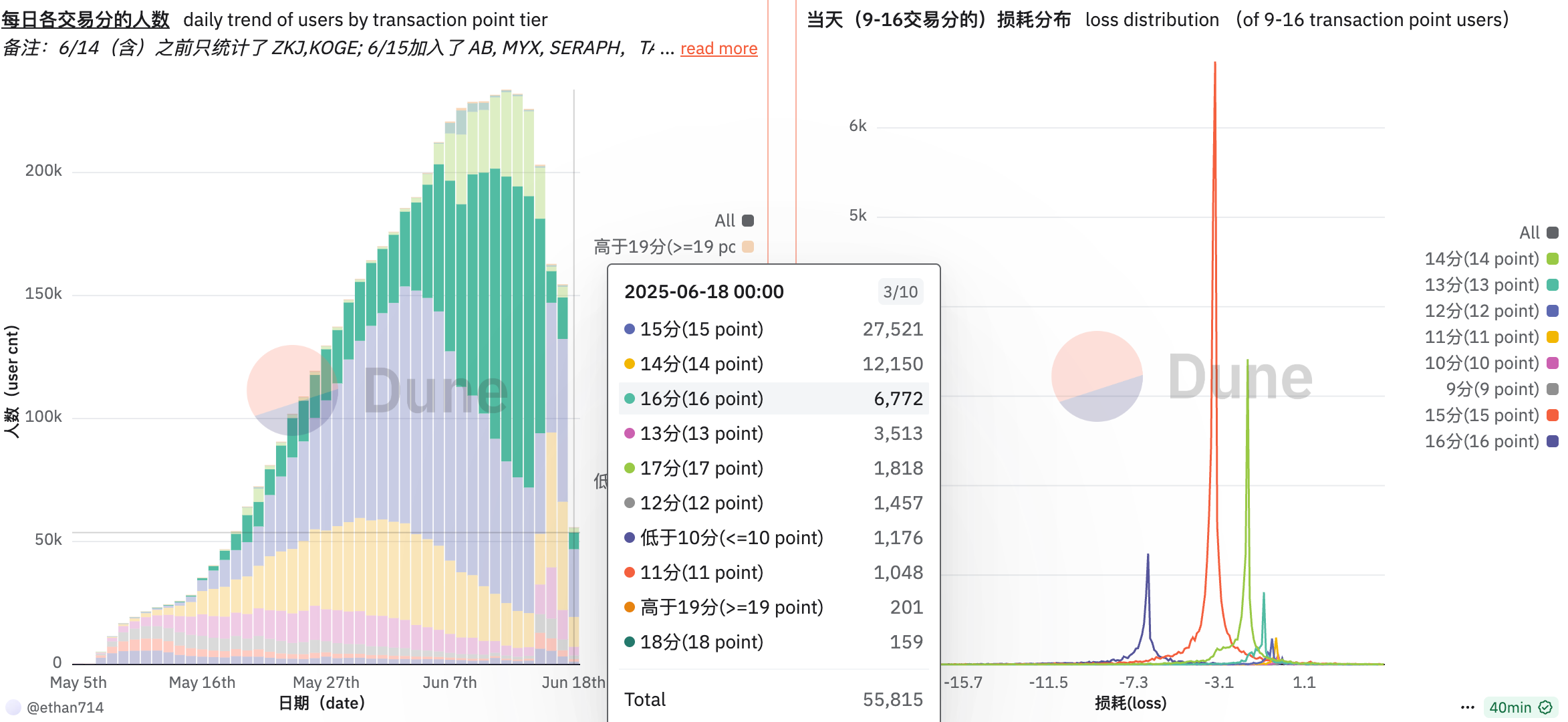
Both tokens experienced sudden crashes after whale wallets removed liquidity. These large withdrawals caused pool instability, forcing a wave of sell-offs. The platform could not absorb the pressure, and prices dropped quickly.
The number of traders also declined. Active trading users fell to about 55,000, showing a significant shift in behavior on the platform.
ZKJ Crash and KOGE Crash Cut Binance Alpha Trading Volume by 63%
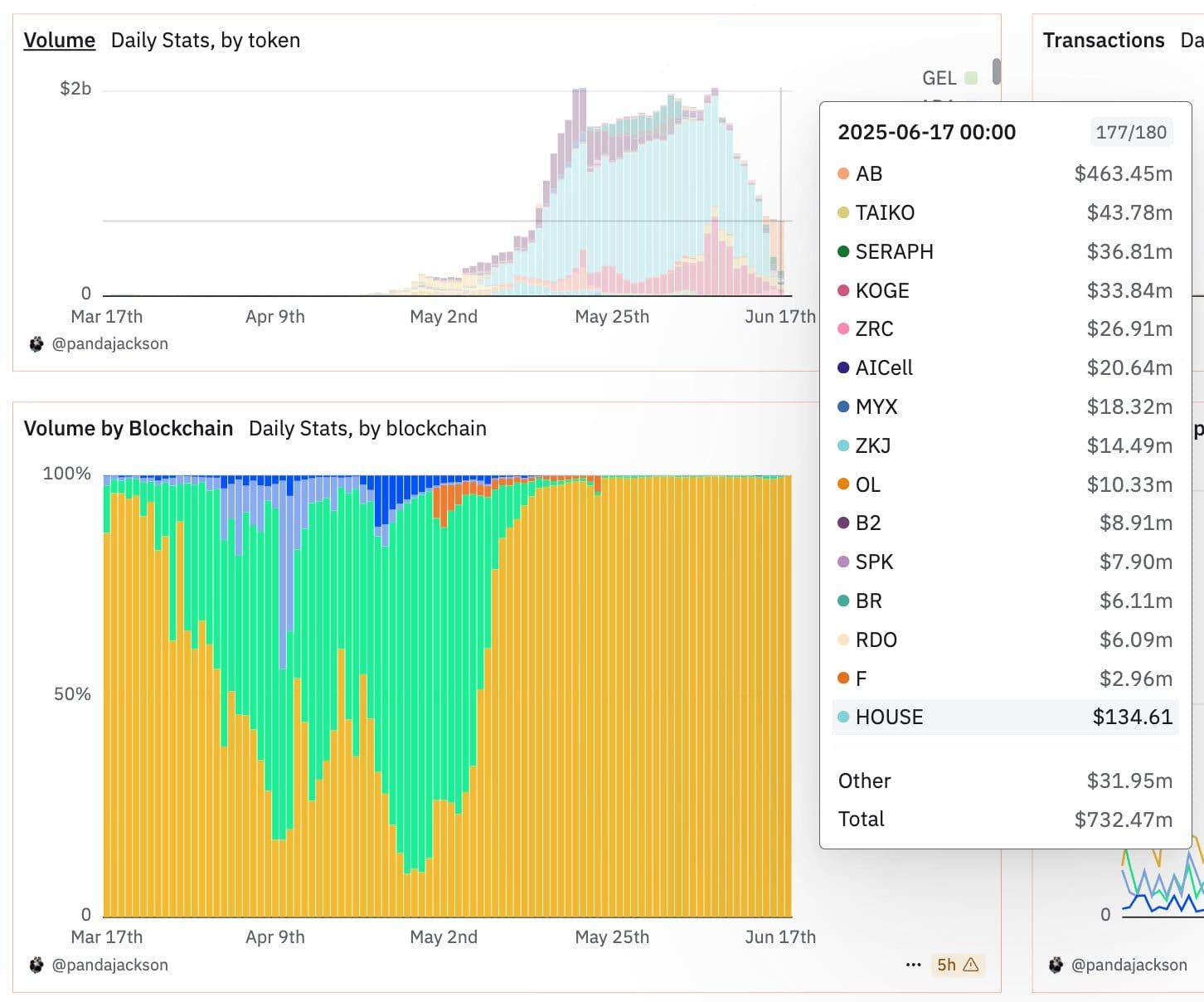
Before the ZKJ crash and KOGE crash, Binance Alpha trading volume peaked at $2.04 billion on June 8. But by mid-June, it dropped to nearly $749 million, a 63% decrease. The drop came soon after the flash crashes hit both tokens.
These tokens had been among the most traded on the platform. When liquidity left, the price structure failed. Binance Alpha’s reliance on high-volume single tokens increased the risk of such sudden collapses.
After the crash, AB token took over. On one day, it made up over 63% of total trading volume. This shift raised concerns about overdependence on a few tokens within the Binance Alpha system.
Binance Alpha Flash Crash Exposes Model Weakness
The crash revealed issues in Binance Alpha’s airdrop model. The model rewards users for activity, but it created an incentive to push volume into a few tokens. Once whales exited, the price impact became severe.
Users noted the lack of controls against artificial volume. Some demanded changes to point distribution and clearer rules around reward mechanisms.
Binance Alpha policy change followed the flash crash. The platform introduced measures to limit fake trading volume. However, many users said the changes came too late and lacked details.
Policy Change Fails to Ease User Complaints
After the flash crash, Binance Alpha released a new policy to block fake volume. The update did not come with an early notice. Users were not informed in advance and raised concerns over the lack of communication.
Several traders requested refunds or restoration of lost points. They cited missing transparency during the policy shift. The platform has not yet addressed those requests directly.
An analyst on X wrote,
“There is no particularly good target. Even if the wear is low, there is still a risk of price fluctuations.”
The post echoed the risks linked to whale exits and token instability.
AB Token Dominance Follows Binance Alpha Flash Crash
After the ZKJ crash and KOGE crash, AB token quickly became the top traded token on Binance Alpha. The data shows more than 63% of daily volume tied to this one asset. The pattern resembles the concentration seen before the collapse.
This volume shift raised questions about the token model. Whale wallets had created similar trading patterns before with ZKJ and KOGE. The sudden shift left the system exposed.
Data from Dune and Ai on X showed the timeline of changes. There are no further updates from the platform as of June 18.


