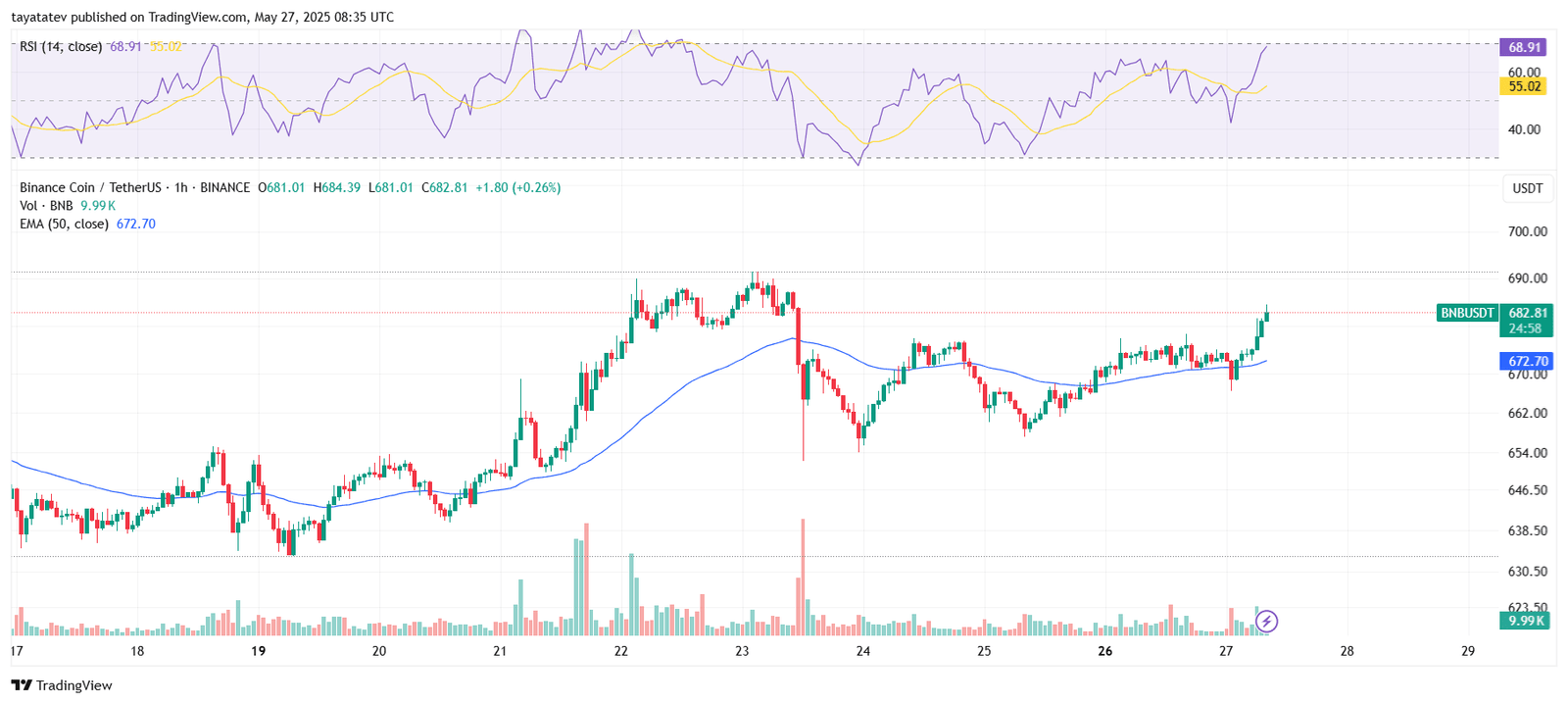
BNB Chain launched the Maxwell Hard Fork on its testnet on May 27, 2025, reducing block time from 1.5 seconds to 0.75 seconds. The BNB Chain upgrade will go live on the BNB Chain mainnet on June 30, 2025.
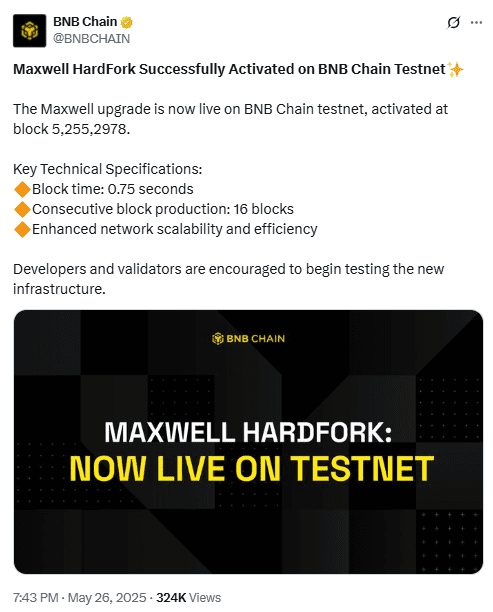
Source: BNB Chain on X
The testnet upgrade took place at block height 5,255,2978. BNB Chain asked developers and validators to begin testing the updated structure. The new block time lowers latency while keeping validator sync stable.
The Maxwell Hard Fork is named after physicist James Clerk Maxwell, who worked on the link between electricity and magnetism. According to BNB Chain, the goal was to improve transaction speed without harming decentralization or validator coordination.
BNB Chain Maxwell Hard Fork Extends Epochs and Adjusts Gas Limit
The BNB Chain upgrade includes major changes to how the network handles block production and synchronization. The epoch length increased from 500 to 1,000 blocks, giving validators more predictable timeframes.
Each validator now produces blocks for 16 turns in a row. This setup allows block cadence to stay consistent, even with blocks arriving twice as fast.
In parallel, the per-block gas limit was cut from 70 million to 35 million. This change keeps the total network output balanced, limiting congestion and reducing risk of state overload.
BNB Chain Boosts Sync Speed With Sub-Second Propagation
The BNB Chain Maxwell Hard Fork also brings faster block propagation. Validators now receive blocks within 400 milliseconds. This helps avoid delays between nodes and reduces sync lag.
The BNB Chain upgrade also improved range synchronization. Slow or offline nodes now catch up faster even under the new, tighter schedule.
These sync tools work together with the new block time to ensure all validators stay aligned, avoiding risks tied to skipped blocks or forks.
The BNB Chain upgrade pushes finality close to 1.9 seconds, matching performance goals seen on Solana and parts of Ethereum.
Because the BNB Chain remains EVM compatible, developers do not need to rewrite code. Apps built for Ethereum can also work on BNB Chain without changes.
This also allows real-time apps like swaps, games, and predictions to operate directly on Layer-1, without relying on additional speed layers.
BNB Chain vs Ethereum: Faster TPS, Slower Finality
Chainspect data shows the BNB Chain now processes 12 times more transactions per second than Ethereum. It also reports a 37% rise in TPS after the Maxwell Hard Fork testnet launch.
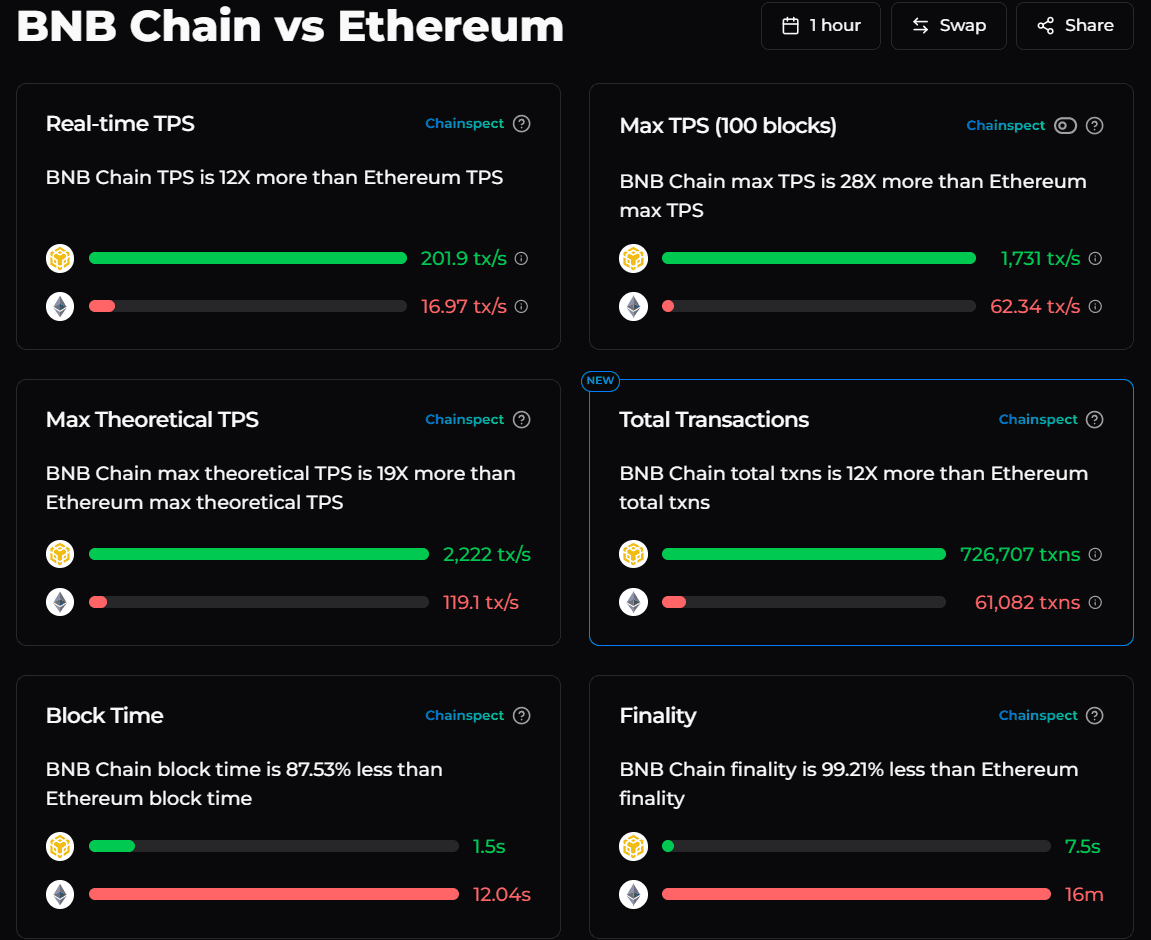
However, BNB Chain still trails Ethereum on two metrics. It is 87.5% slower in block time and 99.21% behind in finality compared to Ethereum.
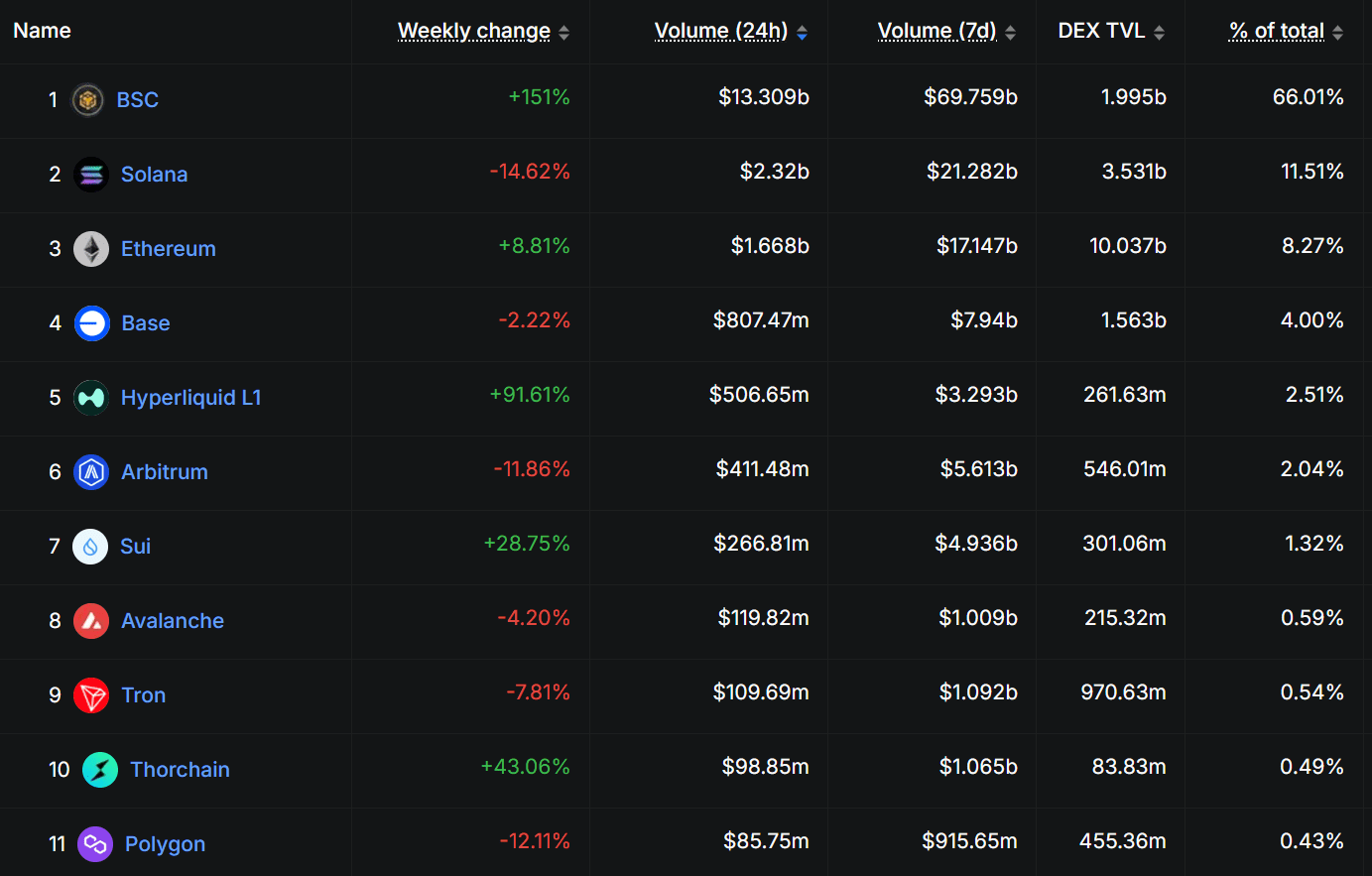
Still, in terms of DEX usage, BNB Chain remains ahead. DefiLlama data shows BNB Chain hit $13 billion in daily DEX trading volume, around six times more than Solana.
Elja Cites Lorentz Gains Ahead of Maxwell Rollout
DeFi analyst Elja referenced the previous Lorentz Hard Fork, which had cut gas fees by 10x and increased transactions per second. Elja posted on X that Maxwell Hard Fork would improve those metrics further.
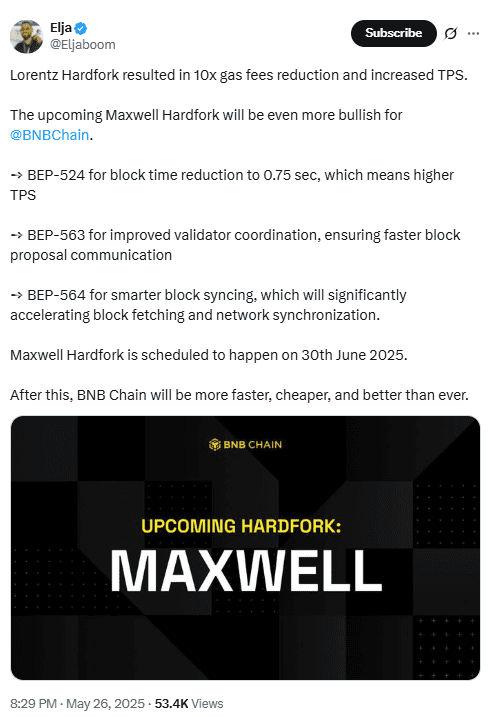
“Lorentz Hardfork resulted in 10x gas fees reduction and increased TPS. The upcoming Maxwell Hardfork will be even more bullish for BNBChain,” Elja wrote.
One user said that Maxwell may fix previous transaction failures during wallet sales, which they had experienced on the network earlier.