



Cardano will soon support Chainlink’s oracle network through a self-serve integration library, according to CEO Charles Hoskinson. He confirmed the development on June 20, 2025, stating that he maintains close communication with the Chainlink team and receives regular updates.
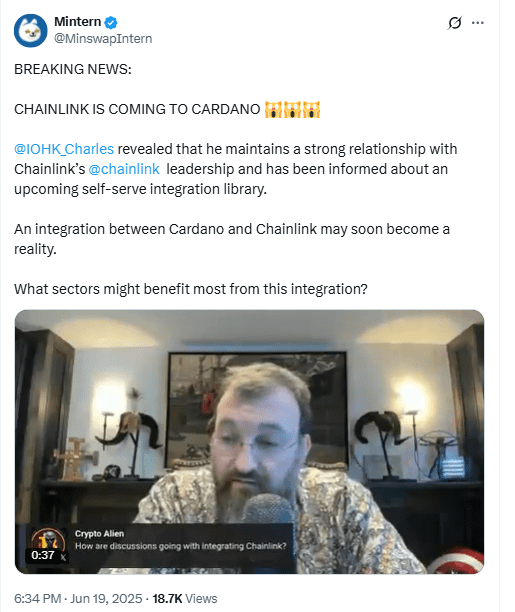
Chainlink Integration to Boost Cardano’s dApp Potential
The integration will allow developers on Cardano to access off-chain data directly through Chainlink’s decentralized oracle feeds. This marks a major step for applications that rely on real-world inputs—such as decentralized finance (DeFi), insurance, and gaming platforms.
Oracles play a critical role in connecting blockchain smart contracts with external data like exchange rates, weather metrics, and market statistics. Without them, smart contracts remain isolated and lack responsiveness to real-world events. Chainlink solves this gap by providing a decentralized system that delivers accurate, tamper-resistant data to blockchain networks.
With Cardano expanding its smart contract infrastructure, the Chainlink integration will give developers new tools to create more complex and useful applications. A self-serve library simplifies the process, removing the need for customized setups or intermediary solutions.
Chainlink Secures Major Financial Partners
On June 19, 2025, Chainlink revealed multiple high-profile partnerships that anchor its CCIP strategy. UBS Asset Management and Swift launched a pilot program for tokenized fund settlements. The program ran under Singapore’s Project Guardian and demonstrated seamless integration between traditional infrastructure and blockchain systems. It also showed reduced costs and faster settlements across the $63 trillion mutual fund sector.
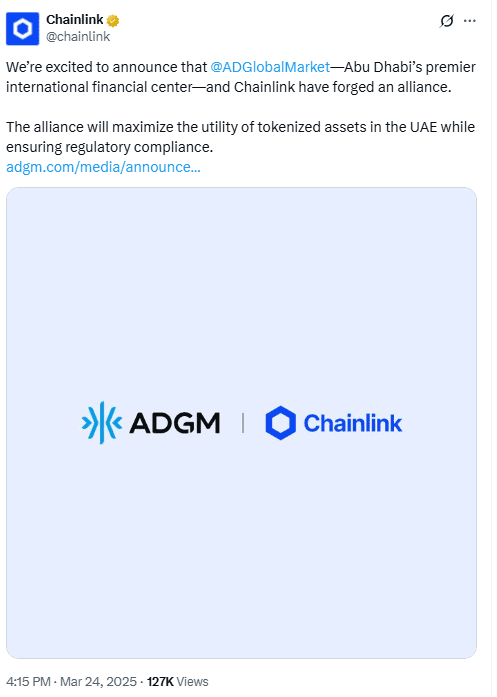
Separately, Chainlink signed a long-term agreement with Abu Dhabi Global Market (ADGM) to develop blockchain compliance standards. ADGM’s Registration Authority will use Chainlink’s technical services to manage tokenized assets within a regulated framework. This ensures that new tokenization pilots meet the legal and operational standards expected by institutional players.
Chainlink Evolves Into Tokenization Infrastructure
Chainlink is no longer just an oracle provider. Through CCIP and institutional-grade infrastructure, it now links traditional finance to blockchain ecosystems. It enables fund managers, banks, and regulators to move from pilot experiments to full-scale production models.

Recent integration into World Liberty Financial’s DeFi ecosystem further demonstrates Chainlink’s growing role in bridging real-world assets and decentralized platforms. Each integration contributes to a broader network effect, where successful implementations encourage faster adoption.
Replicable Model for Global Expansion
The UBS-Swift pilot under Project Guardian now serves as a replicable model for other financial firms exploring asset tokenization. Chainlink’s technical stack proved effective in reducing friction across traditional and digital asset rails. Following this, other asset managers have begun evaluating similar models for deployment.

The ADGM partnership also provides a framework for compliant tokenization under strict regulatory standards. It offers a ready-made blueprint for jurisdictions looking to attract blockchain innovation without sacrificing oversight.
Together, these partnerships reduce institutional resistance and signal that blockchain integration is no longer experimental—it’s actionable.

LINK Price Outlook Tied to CCIP Adoption
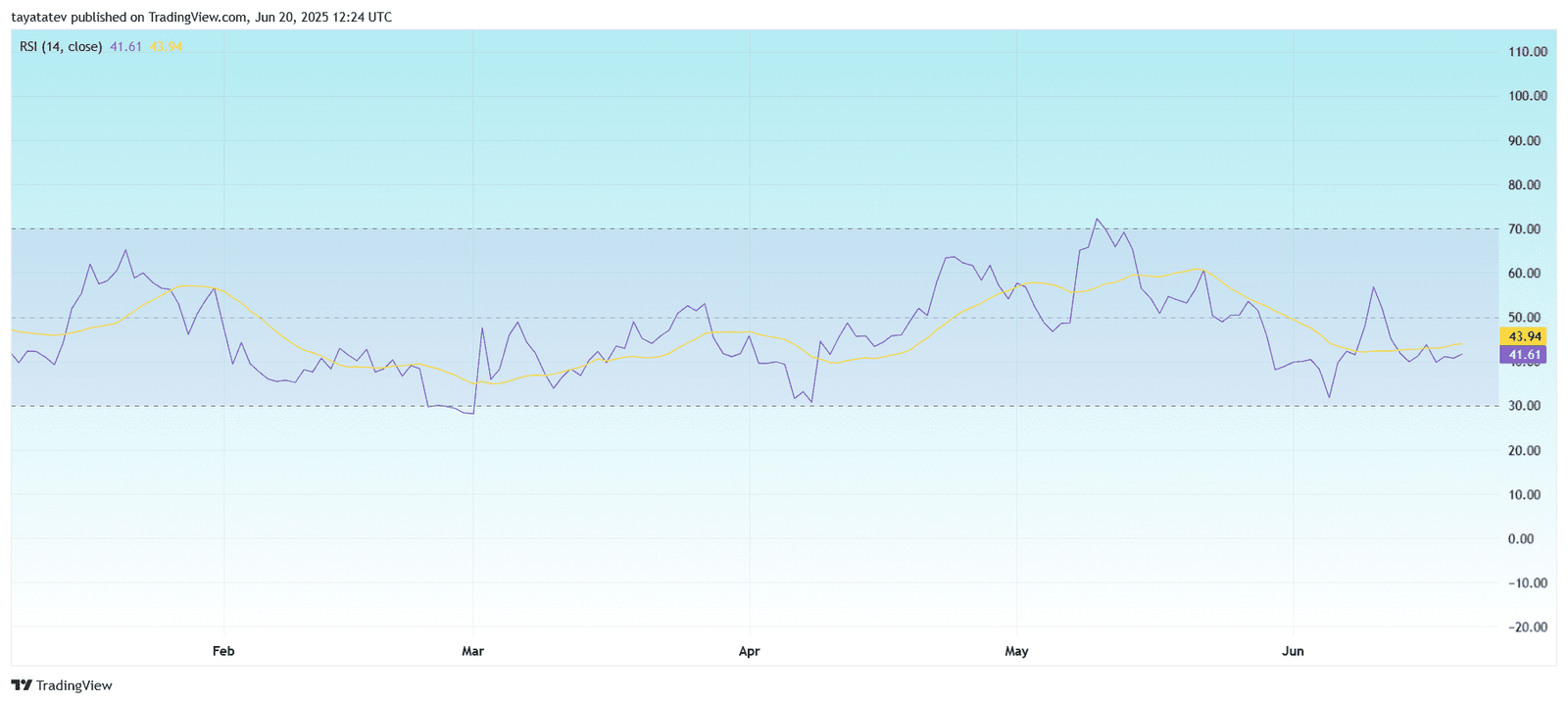
As Chainlink moves deeper into real-world finance, LINK’s value proposition grows. If CCIP adoption continues to expand, analysts see room for LINK to reclaim the $30 zone. Institutional use cases provide not only liquidity but also long-term demand for the protocol’s services.
By embedding itself in regulatory frameworks and financial infrastructure, Chainlink is building more than partnerships—it’s building the technical rails for tokenizing the global economy.


