
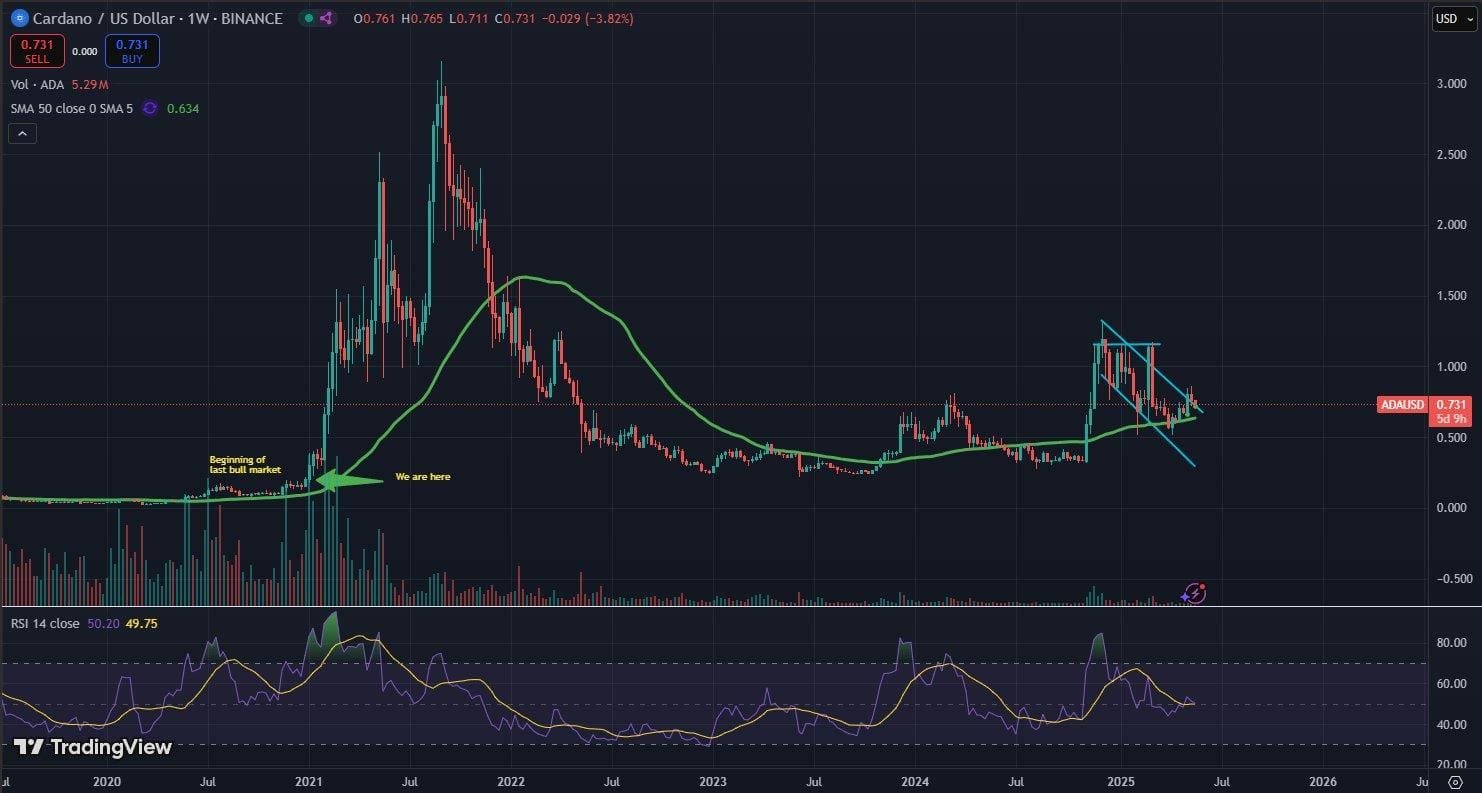
Cardano (ADA) has seen $932 million worth of tokens withdrawn from centralized exchanges since January 2025. According to blockchain analytics firm TapTools, this movement suggests a shift toward self-custody and mirrors a pattern last seen during the 2021 bull market. At that time, ADA reached its all-time high of $3.10. The large withdrawals this year indicate that investors may be positioning for a long-term price rise.

Whale Accumulation Reaches 410M ADA in April, Signals Strong Bullish Momentum
In April 2025, Cardano saw renewed interest from large investors, with over 410 million ADA accumulated in wallets holding between 10 million and 100 million tokens. Crypto analyst Ali Martinez highlighted this trend using on-chain data from Santiment. His chart shows a clear increase in holdings from these whale-tier addresses, starting around April 2 and continuing through the end of the month.
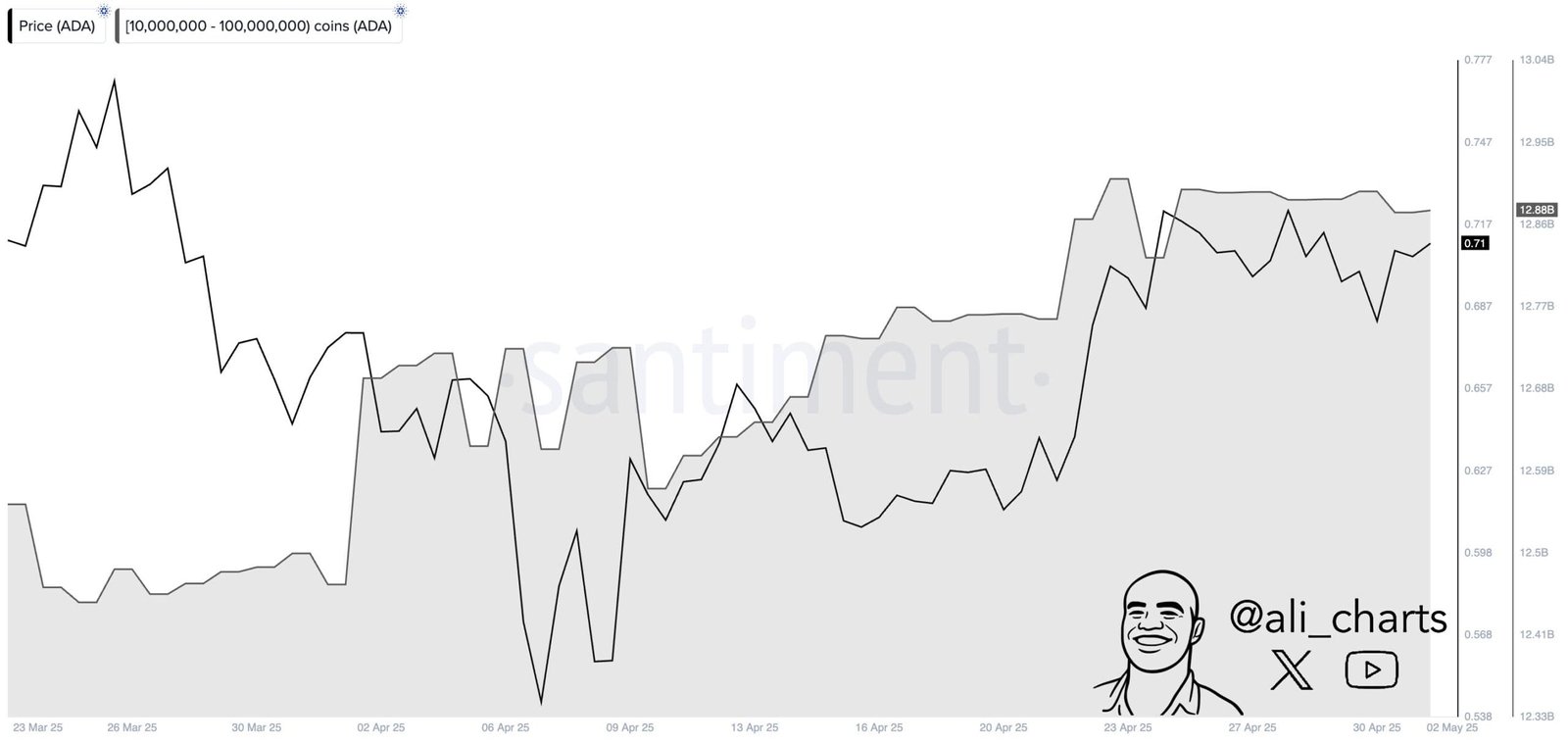
The timing of this accumulation coincided with a gradual rebound in ADA’s price. After experiencing price pressure in late March, the chart shows whales started buying aggressively just as ADA stabilized and began climbing again. The shaded area representing whale holdings continued rising even as price volatility persisted, indicating sustained confidence among high-net-worth investors.
This behavior supports the broader narrative of reduced exchange supply and rising investor conviction. Combined with the $932 million in ADA withdrawn from centralized platforms earlier in the year, the data points to preparation for a long-term holding strategy—often a precursor to upward market moves. Martinez’s analysis connects the rise in accumulation with the expectation that ADA will play a larger role in the upcoming market cycle.
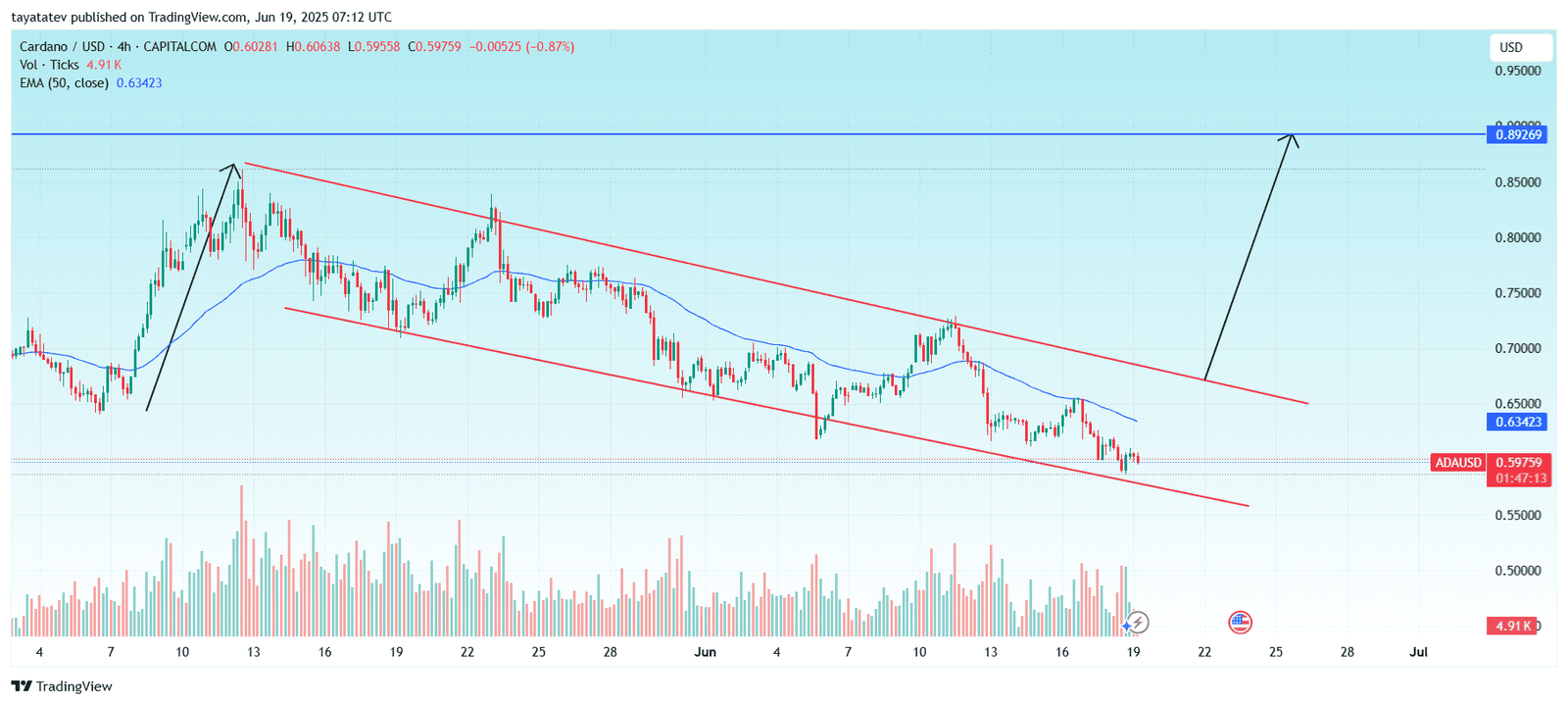
On June 18, analyst Sssebi added to the growing optimism. He projected a 10x to 20x price increase for ADA during the current bull cycle. Using technical analysis, he noted that Cardano remains within a bullish channel and is resting on a major support level. He claimed that $7 is a realistic target and framed it as a conservative 10x move from the token’s current trading range. His forecast aligns with the accumulation trend highlighted by Martinez, suggesting that large investors may be positioning based on similar technical setups.
Brazil Integration Drives Real-World Adoption
One of Cardano’s major developments in 2025 was its partnership with SERPRO, Brazil’s largest government IT provider. Announced in March, the partnership integrates Cardano’s blockchain with Brazil’s public digital infrastructure, which processes over 33 billion transactions annually. This large-scale collaboration highlights Cardano’s use in national systems and shows its increasing role in government-grade blockchain applications.
Cardano’s ecosystem has grown sharply in developer engagement. The number of Plutus V2 smart contracts on the platform increased from about 8,100 in January 2024 to over 133,000 by mid-June 2025. This shows that developers continue to build on Cardano, focusing on creating decentralized applications and expanding the network’s features.
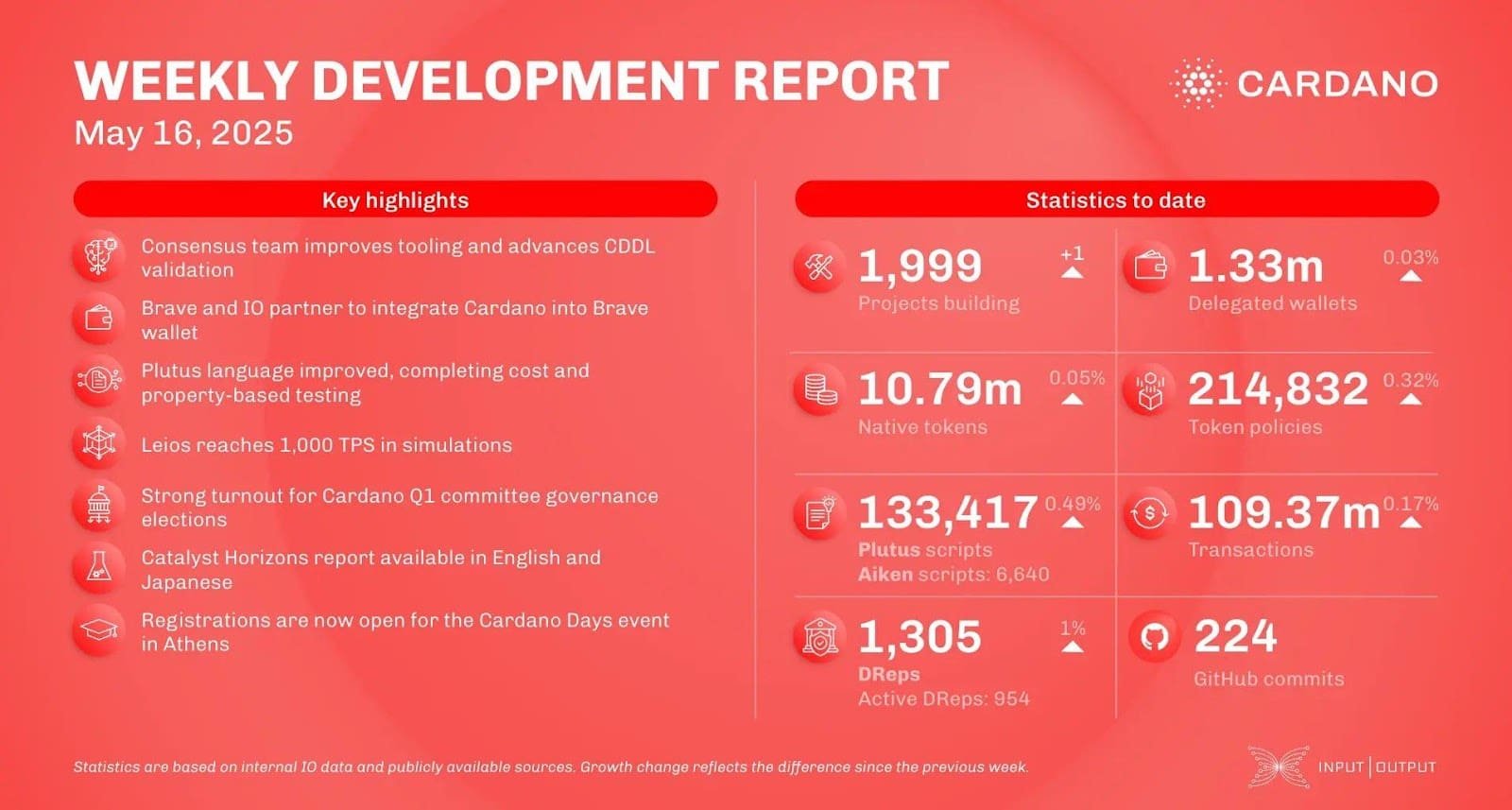
“Leios” Upgrade to Boost Speed and Scalability
Cardano is also preparing to roll out a key technical upgrade called “Leios.” This update aims to improve the network’s transaction throughput while preserving decentralization. By increasing speed and capacity, Cardano hopes to strengthen its position against other blockchain platforms that dominate the DeFi and smart contract space.
Cardano plans to integrate Bitcoin into its ecosystem by the end of June 2025. Once complete, this upgrade will let Bitcoin holders use their assets within Cardano’s decentralized apps. The move will connect two major networks and may help Cardano attract more users from the broader crypto community, while also increasing cross-chain utility.