



YEREVAN (CoinChapter.com) — French Hill, Chair of the House Financial Services Committee, rejected a proposal from Coinbase CEO Brian Armstrong to approve interest-bearing stablecoins. Speaking to reporters on April 1, Hill said there is no agreement in Congress on allowing stablecoin holders to earn interest.
“I hear the point of view, but I don’t think that there’s consensus among the parties or the Houses [of Congress] on having a dollar-backed payment stablecoin pay interest to the holder of that stablecoin,”
Hill stated.

This comment followed Brian Armstrong’s public request just one day earlier. Hill has supported stablecoin regulation in the past. His appointment as Committee Chair had been seen as a key moment in US crypto policy development. However, his opposition to interest-bearing stablecoins highlights the boundaries of current legislative support.
Coinbase CEO Brian Armstrong Appeals for Stablecoin Interest
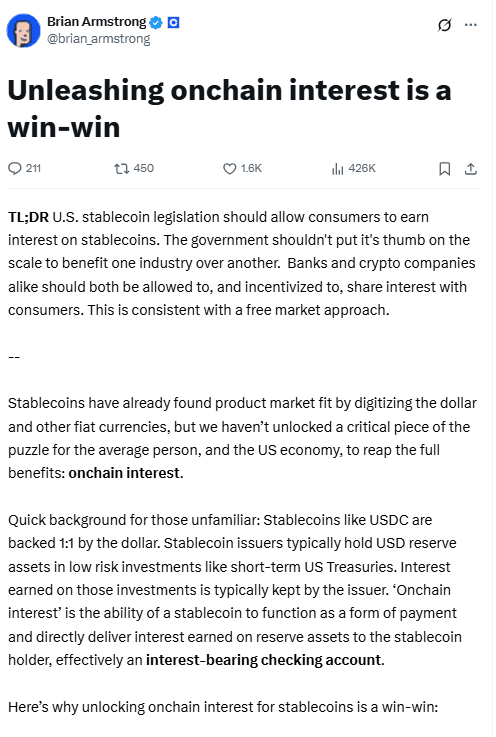
On March 31, Coinbase CEO Brian Armstrong urged lawmakers to allow consumers to earn interest on stablecoins. He said the government should not block either banks or crypto companies from offering interest. Armstrong called it a fair-market approach, asking for equal treatment.
“US stablecoin legislation should allow consumers to earn interest on stablecoins,”
Armstrong said.
“The government shouldn’t put its thumb on the scale to benefit one industry over another. Banks and crypto companies alike should both be allowed to, and incentivized to, share interest with consumers.”
Stablecoin Legislation Faces New Challenges
The broader push for stablecoin legislation gained momentum in recent months. Former President Donald Trump said stablecoins would help maintain dollar dominance. Despite this, French Hill’s stance showed that not all crypto-related proposals will gain traction in Congress.
While French Hill supported stablecoin frameworks, he stopped short of endorsing interest-bearing stablecoins. This created a divide between general support for stablecoin usage and opposition to interest payments.
The rejection also comes after several Bitcoin Reserve proposals failed in Republican-led states. These setbacks add to concerns within the industry that, despite high-profile support, US crypto policy faces slow progress in some areas.


