



Dogecoin’s blockchain has seen a major surge in network activity. The number of active addresses—wallets sending or receiving DOGE—rose sharply to 1.6 million, marking the highest daily figure in the network’s history.
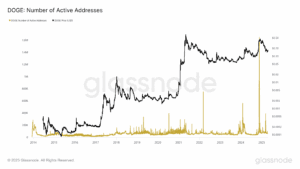
This uptick shows a sudden wave of transactional engagement. In most cases, a rise in active addresses indicates increased user participation, renewed speculation, or even network-level events such as airdrops or integrations. However, in Dogecoin’s case, the source of the spike remains unclear, which raises questions about the quality and longevity of the activity.
New Address Creation Hits Unusual Levels
Alongside the spike in activity, new address creation surged to over 1.2 million wallets in a single day. Historically, new address growth of this magnitude often coincides with bullish sentiment, as seen during Dogecoin’s explosive rallies in early 2021 and mid-2023.
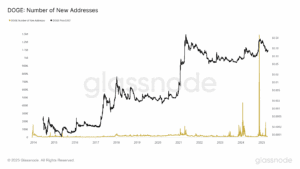
However, past cycles show that such bursts can also result from automated wallet generation—particularly during viral campaigns or farming initiatives. Without sustained follow-through, these surges tend to fade quickly and have limited impact on long-term price appreciation.
Despite Dogecoin’s fluctuating market value, one trend has remained constant: long-term address growth. The total number of DOGE wallets now stands near 80 million, showing steady adoption and on-chain expansion.
Unlike active or new address spikes, which are often volatile, the total address metric has shown consistent growth since 2014. This signals Dogecoin’s lasting appeal as a speculative asset and tipping currency, even if it remains a meme coin in the eyes of institutional investors.
You May Also Like: Nasdaq Moves to List 21Shares Dogecoin ETF Amid 70+ Crypto ETF Filings
Price Fails to React—A Bearish Signal or Lagging Indicator?
While the on-chain metrics reflect historic engagement, Dogecoin’s price has failed to break out meaningfully. As of May 19, DOGE trades around $0.216, having pulled back from a local high near $0.26.
The 4-hour chart reveals a recent descending triangle breakout, typically considered a bullish continuation pattern. However, the breakout lacked strong volume support and has since lost momentum. The Relative Strength Index (RSI) sits around 45, signaling weak buying pressure and indecision.
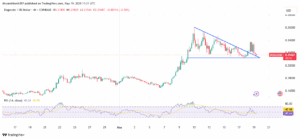
This is not the first time Dogecoin’s network usage has outpaced price performance. In 2021 and 2023, similar spikes in address activity were followed by either sideways trading or minor corrections.
One possible explanation is that high address counts don’t always equate to market conviction. Many newly created addresses hold negligible balances or engage in one-off transactions. Without significant capital inflow or demand-side catalysts, price may continue to lag behind network expansion.
Moreover, DOGE’s inflationary supply model—with 10,000 new coins minted per minute—adds constant sell pressure, making it harder for price to respond positively unless offset by sustained demand.
What’s Next for DOGE?
From a technical perspective, Dogecoin is at a crossroads. Price is consolidating near the $0.21 support zone. If bullish momentum fails to return, DOGE could revisit the $0.195 level. On the upside, a clean break above $0.23 with strong volume could reignite short-term rallies.
For investors, the key question is whether this spike in on-chain activity reflects genuine adoption or a short-lived anomaly. If activity remains elevated while price stabilizes, it may lay the groundwork for a breakout. But if address activity fades—as it has in past cycles—DOGE may remain stuck in a consolidation phase.


