


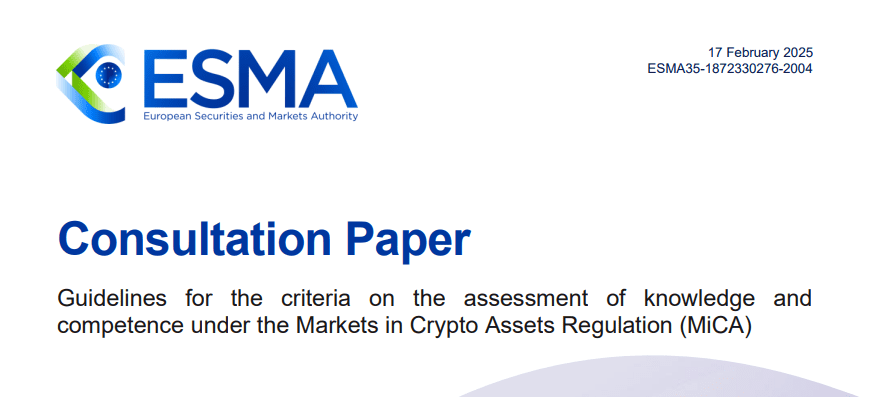
YEREVAN (CoinChapter.com) — The European Securities and Markets Authority (ESMA) has released a consultation paper detailing new MiCA guidelines for crypto asset service providers (CASPs). The document, published on Feb. 17, seeks feedback from the industry on the knowledge and competence requirements for staff handling crypto assets.
MiCA Guidelines for Crypto Staff Training and Knowledge
The proposed MiCA guidelines require staff at CASPs to have a strong understanding of crypto assets, blockchain technology, market structures, and pricing mechanisms.
Employees must also be aware of the risks associated with digital assets, including volatility and complexity. The document emphasizes that staff providing advice or information about crypto assets must understand regulatory frameworks, tax implications, and compliance requirements. It also highlights the need for careful communication, especially when discussing high-risk crypto assets.
The guidelines propose that CASPs conduct regular assessments of staff competence to ensure compliance. Companies would be responsible for maintaining records of employee qualifications and monitoring their professional development.
Minimum Qualifications for Crypto Asset Service Providers’ Staff
The consultation paper suggests that staff handling crypto asset advisory roles should have relevant educational backgrounds, including degrees in finance, law, or blockchain-related studies. Employees with work experience in financial markets or crypto asset services would also meet the requirements. The proposal further emphasizes ongoing professional development, requiring staff to stay updated on crypto asset regulations and market risks.
Supervision of unqualified staff would be necessary, ensuring that employees without proper qualifications receive guidance from experienced professionals. CASPs would also need to conduct annual reviews to assess employee training needs and ensure continued compliance with MiCA regulations.
MiCA Regulations and Their Impact on Crypto Firms
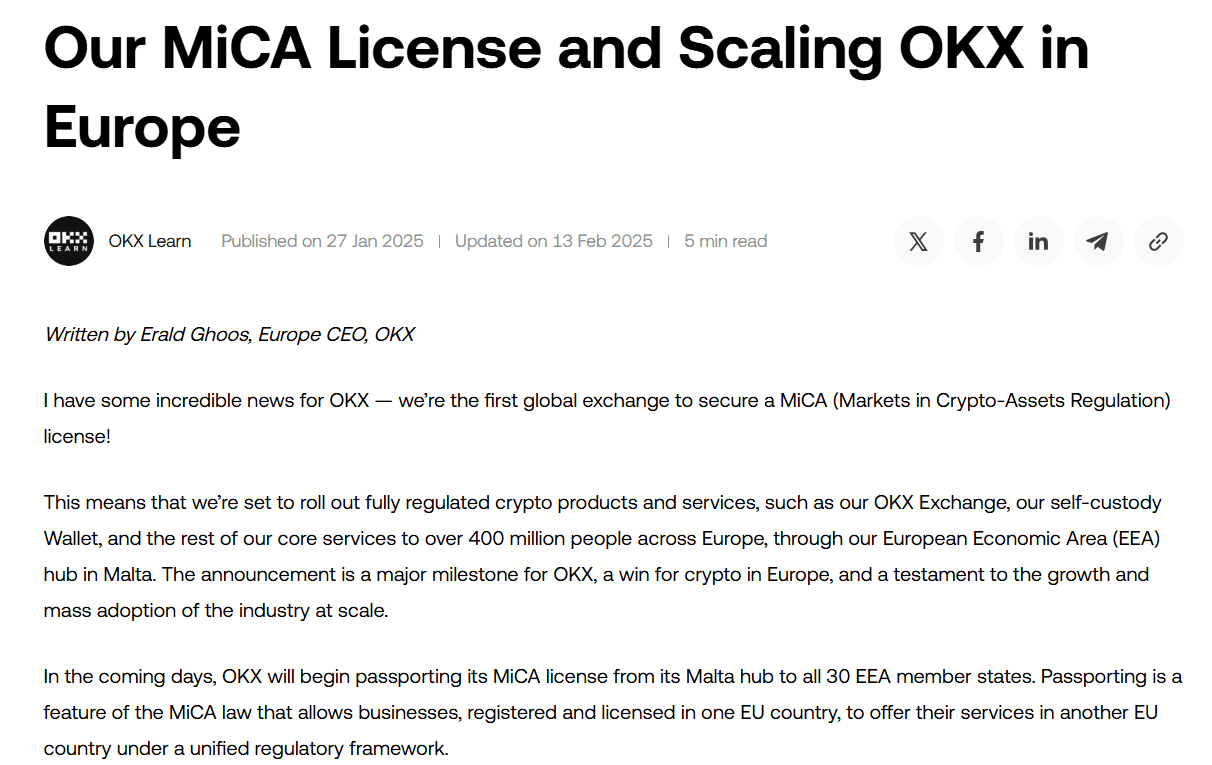
The MiCA regulations affect companies offering crypto asset services in the European Union. Major exchanges such as OKX, Crypto.com, and Bybit are in the process of obtaining MiCA licenses to continue operating in the region. These companies must meet the regulatory requirements set by ESMA, which include ensuring that staff have adequate knowledge of crypto assets and related financial services.
The proposed guidelines align with ESMA’s earlier stance on non-MiCA-compliant stablecoins. In January, the regulator advised firms to adjust their operations to comply with MiCA, leading some exchanges to delist Tether’s USDT in Europe. Tether later criticized the move, describing it as rushed and disruptive to the market.
Consultation Period Open Until April 22
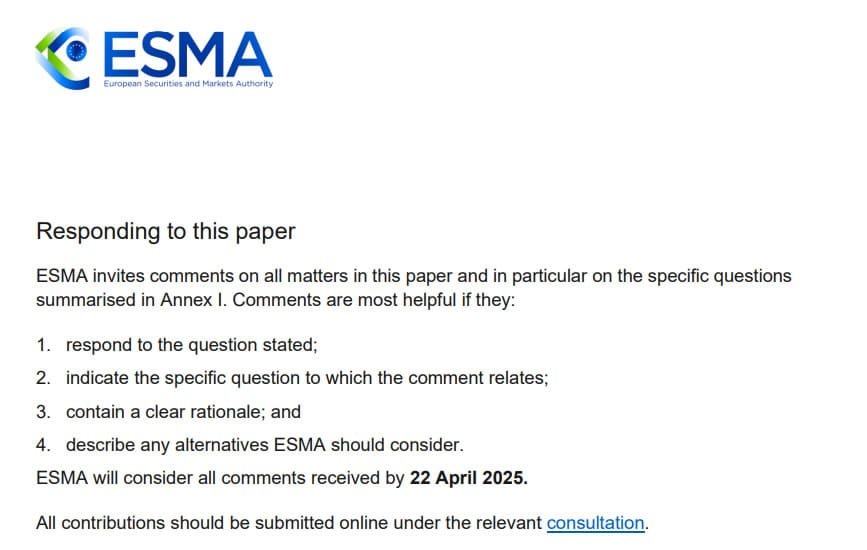
The consultation period for the MiCA guidelines remains open until April 22. ESMA is seeking industry feedback on the proposed competence requirements, including suggestions for alternative approaches. The final version of the guidelines is expected to be published in Q3 2024.
The new requirements are part of broader efforts to strengthen crypto asset regulations across the European Union. By ensuring that CASPs meet knowledge and training standards, ESMA aims to establish a more structured regulatory framework for the growing crypto asset industry.


