


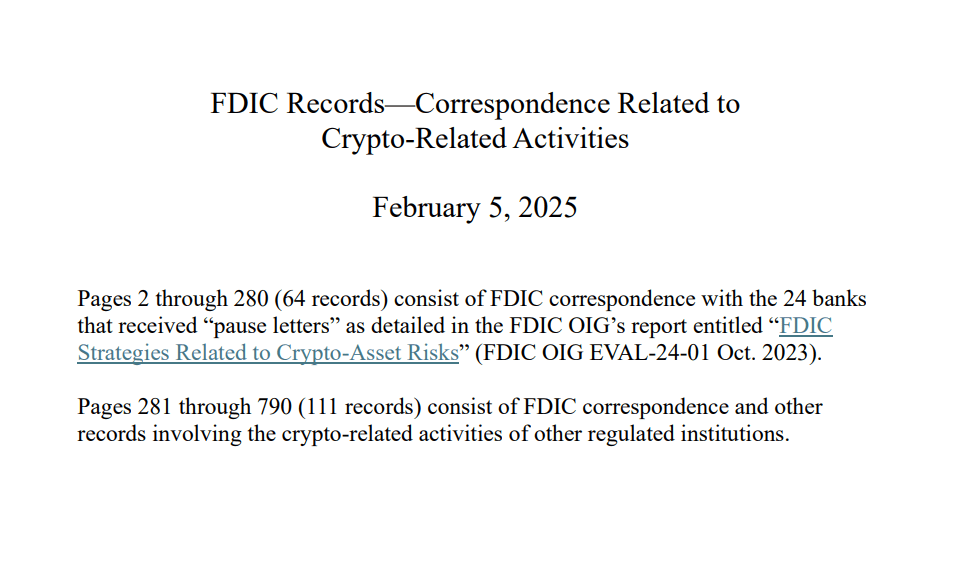
These documents include previously released correspondences from 24 banking firms, along with additional requests from other institutions attempting to expand into crypto services. The FDIC’s restrictive approach to these requests is evident throughout the records.
FDIC Acting Chairman Travis Hill stated,
“Looking forward, we are actively reevaluating our supervisory approach to crypto-related activities.”
This statement suggests a shift in regulatory strategy.
Documents Released After FOIA Requests
The Freedom of Information Act (FOIA) requests that led to this document release were filed by Coinbase in October 2024. The company requested FDIC records related to the debanking of crypto firms under what has been called Operation Chokepoint 2.0.
The redactions prompted a response from U.S. Judge Ana Reyes, who criticized the FDIC for excessive censorship. In a Dec. 12 order, she wrote,
“The FDIC cannot simply blanket redact everything that is not an article or preposition.”
She described the redactions as showing a “lack of good-faith effort.”

Senator Cynthia Lummis Calls Out FDIC Over Crypto Records
Senator Cynthia Lummis has accused the FDIC of destroying documents linked to Operation Chokepoint 2.0. In January 2025, she sent a letter instructing the agency to preserve all records on digital asset activities from 2022 onward.
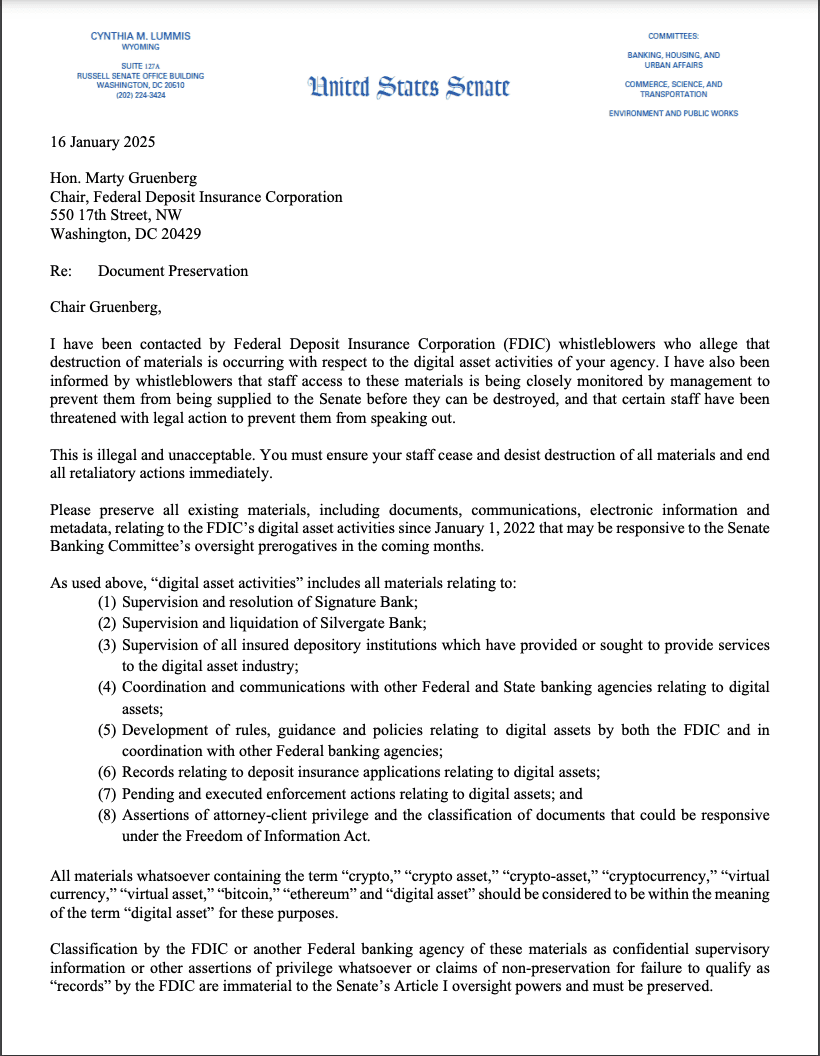
The senator warned that if FDIC employees were found to have destroyed evidence, she would refer the matter to the U.S. Department of Justice. The Senate Banking Committee is also monitoring the issue closely.
In her letter, Lummis referenced whistleblower allegations claiming that FDIC management had closely monitored staff access to materials and threatened legal action to prevent employees from speaking out. She demanded the preservation of all documents, communications, and metadata related to digital asset activities, including the resolution of Signature and Silvergate Banks, enforcement actions, and coordination with federal and state banking agencies. She warned the that any claims of privilege or non-preservation would not exempt the agency from complying with Senate oversight.


