



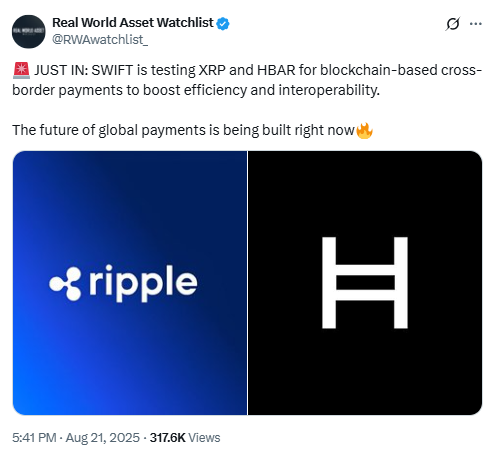
Hedera has moved deeper into global finance as it partners with SWIFT to test Hashgraph technology for cross-border payments. The trial positions Hedera among networks seeking to modernize settlement systems long dominated by legacy rails. At the same time, the collaboration underscores growing demand for distributed ledger infrastructure in institutional finance.
Hackathon in Africa Extends Global Footprint
Hedera has launched a hackathon in Africa with Orange Middle East & Africa and Dar Blockchain through the Hashgraph Association. The program aims to attract developers and expand grassroots adoption in one of the fastest-growing digital markets. By tying innovation to regional partnerships, Hedera strengthens its long-term ecosystem strategy.
Large organizations, including Google, IBM, and the Reserve Bank of Australia, continue exploring Hedera’s ledger for applications spanning CBDCs, tokenized real estate, NFTs, and AI integration. A notable development came from EQTY Lab, which deployed its Verifiable Compute platform on NVIDIA’s Blackwell chips, showing performance improvements for enterprise blockchain workloads.
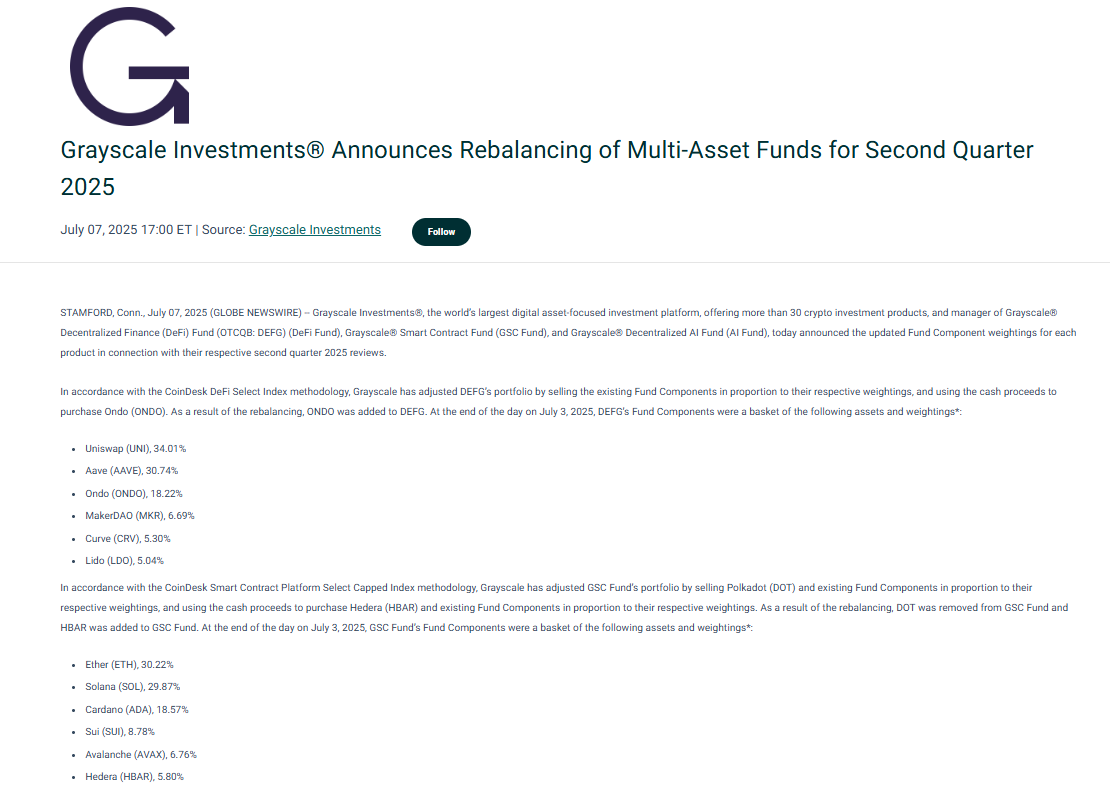
In a signal to institutional investors, Grayscale included HBAR in its Smart Contract Platform Select Fund. The addition reflects Hedera’s standing among protocols offering enterprise-grade infrastructure and sustainability benefits. Hedera already operates as a carbon-negative network, offsetting more emissions than it consumes.
Foundation Expands Governance Role
The Hedera Foundation has stepped up its governance efforts. It named Charles Adkins, the former Hedera president, as its new CEO. The foundation also joined the ERC-3643 Association to advance real-world asset tokenization and invested in Archax-issued Fidelity USD Money Market Fund tokens. Meanwhile, Hedera’s Guardian tool integrated with the UNDP’s Digital Public Goods National Carbon Registry, connecting sustainability with global infrastructure.
On the technical front, Hedera introduced new Hedera Improvement Proposals (HIPs). HIP-1215 enables scheduled contract calls, while HIP-1217 expands modularity for the Mirror Node API. Both upgrades are expected to improve developer efficiency and broaden use cases. In July, the $550,000 “Hello Future: Origin Hackathon” launched, introducing the Hedera CLI for faster app deployment.
Hedera also advanced decentralization by transferring its core codebase to the Linux Foundation. The move, branded as Hiero, places the protocol under open-source governance, aligning Hedera with industry standards and community-driven development.
Hedera Charts Bullish Pennant as Support Gets Tested
On September 1, 2025, Hedera’s four-hour HBAR/USD chart on TradingView displayed a bullish pennant pattern following a sharp upward move. The structure formed after a strong rally, then narrowed into converging trend lines while trading volume decreased. Such pennants typically suggest continuation, with the next move often matching the size of the prior surge.
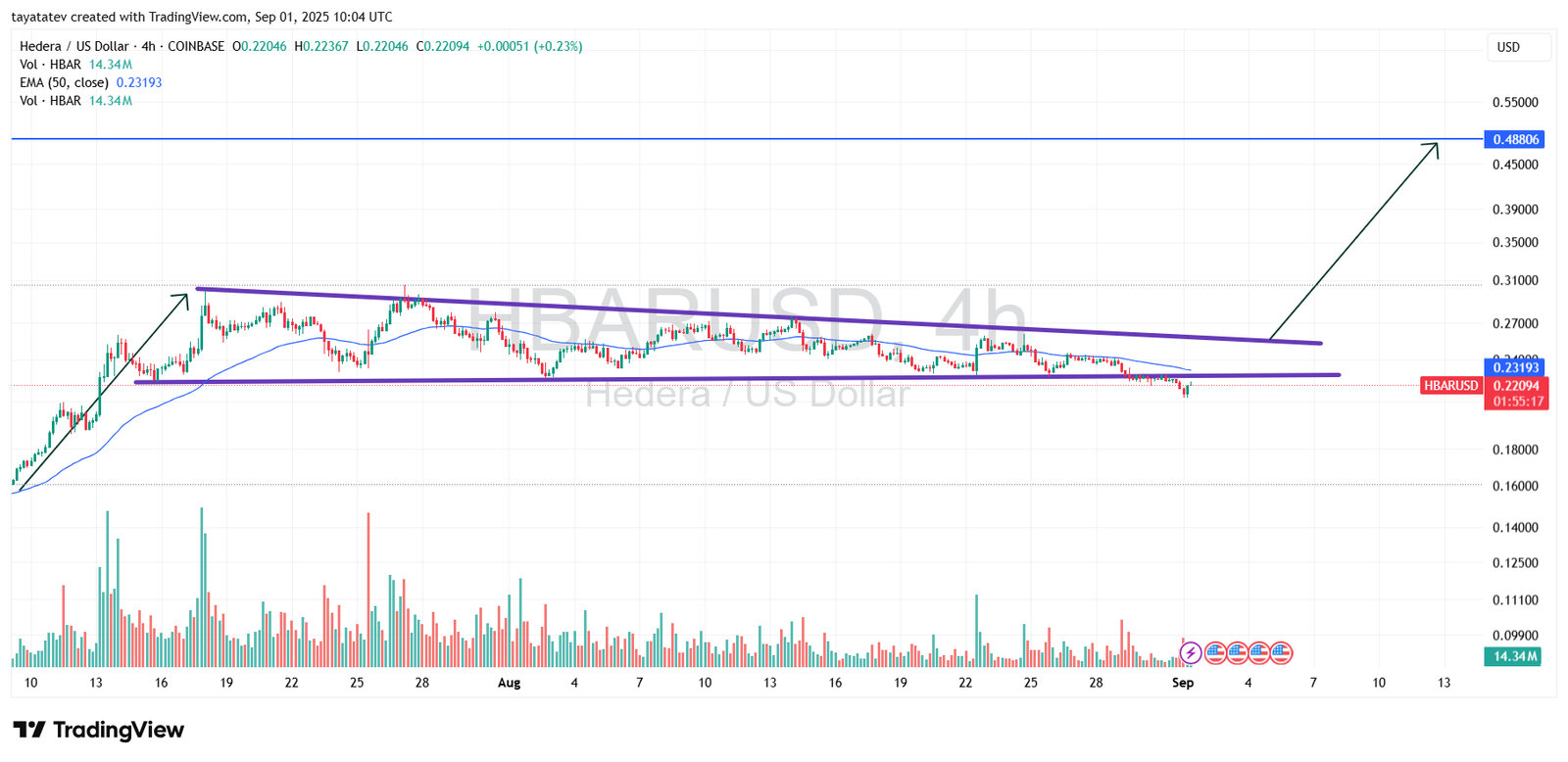
The measured projection from this setup indicates a possible 121 percent rise from the current $0.2209 level. That target sits near $0.488, highlighted on the chart as a major resistance zone. However, price is now leaning on the lower boundary of the pennant, showing that the market is testing support before any breakout attempt.
A bullish pennant signals continuation when price breaks the upper boundary with rising volume. In Hedera’s case, reclaiming the $0.26–$0.27 range would confirm the move and open the path toward $0.488. For now, the token trades below its 50 EMA at $0.2319, and traders are watching closely to see if support holds or if the structure weakens.
Hedera RSI Signals Weak Momentum Near Support
On September 1, 2025, the four-hour RSI chart for HBAR showed a reading of 40.83, with the signal line at 35.88. The indicator sits below the midpoint of 50, highlighting bearish momentum after weeks of declining pressure.
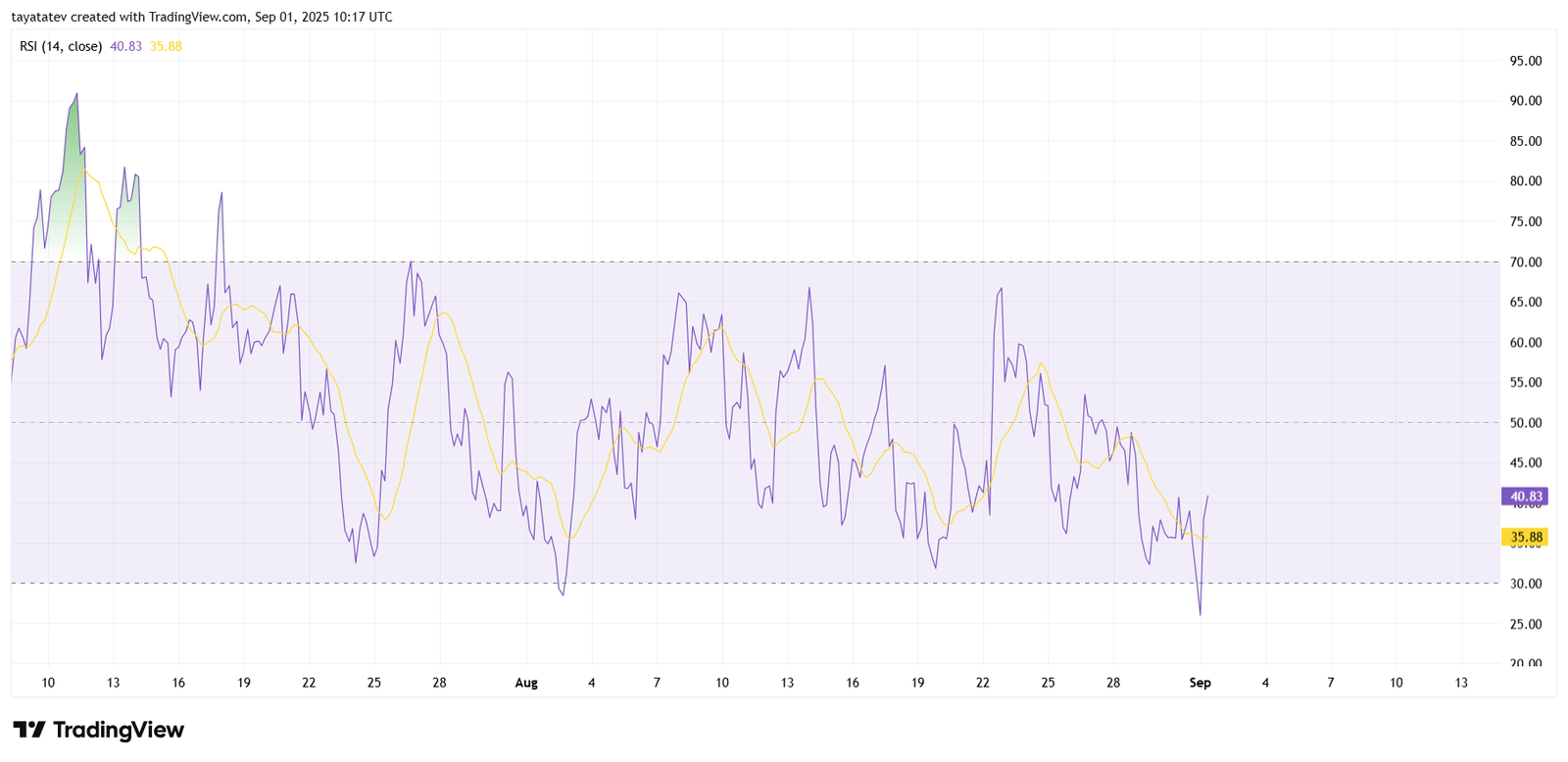
The RSI has repeatedly dipped into the 30–35 zone during August, a range that often signals oversold conditions. However, it has struggled to sustain rebounds above 50, confirming weak buying interest. The latest move shows the RSI bouncing modestly after brushing near 30, suggesting short-term traders are attempting to defend support.
In technical terms, the RSI reflects market momentum. Readings above 70 show overbought conditions, while levels below 30 suggest oversold pressure. Hedera’s RSI now hovers just above oversold territory, indicating that sellers still dominate but also leaving room for a relief bounce if volume picks up.
The next move will depend on whether the RSI can reclaim the 50 level. A push above that threshold would show renewed bullish momentum to match the bullish pennant pattern seen on the price chart. Failure to hold above 35, however, could signal deeper weakness and extend the downtrend.
Hedera MACD Turns Bearish as Momentum Weakens
On September 1, 2025, the four-hour MACD chart for HBAR showed both the MACD line (-0.00415) and the signal line (-0.00394) below zero. The histogram printed in red near -0.00021, reflecting negative momentum and subdued buying pressure.
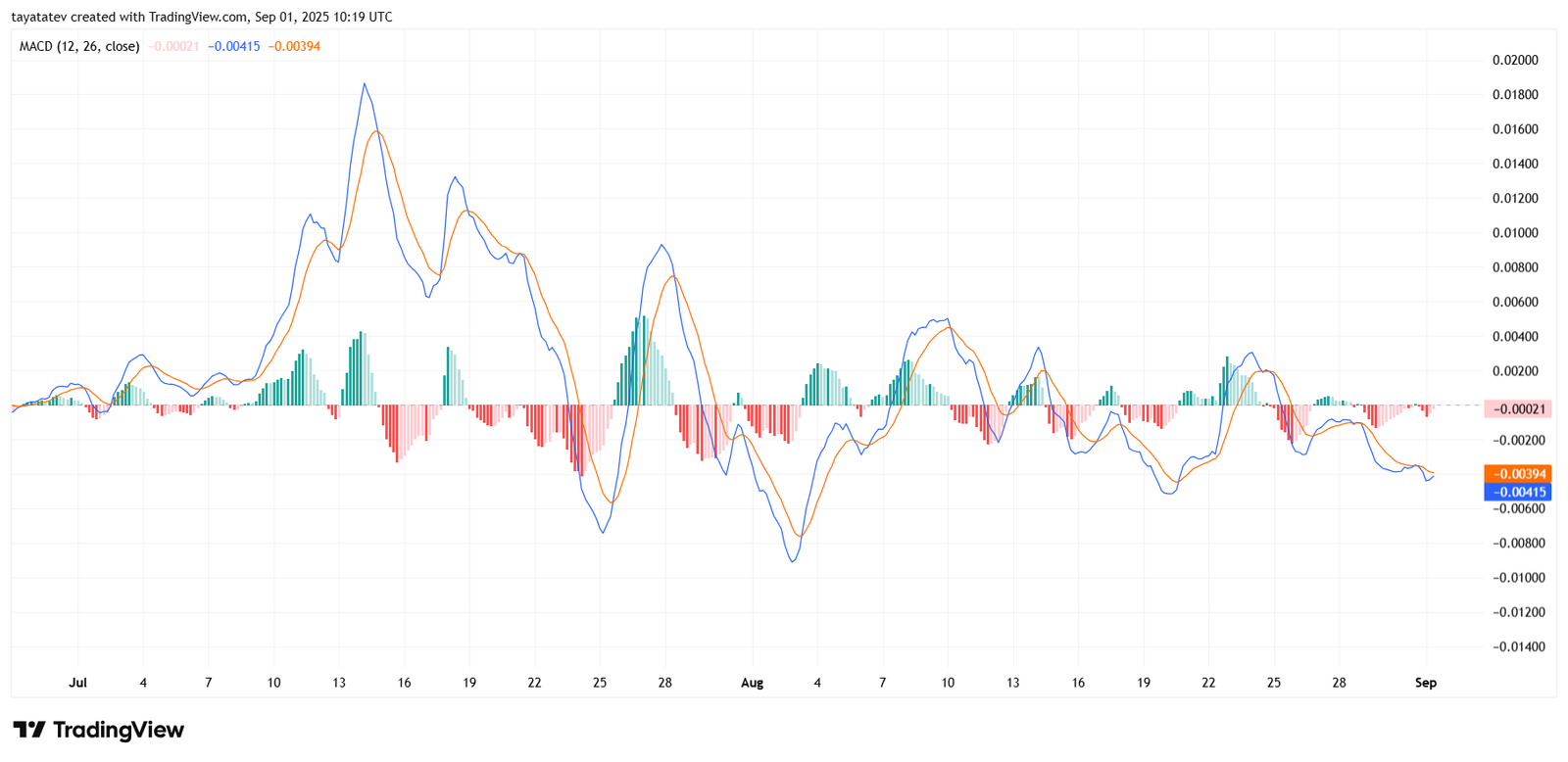
The MACD has crossed below the signal line after failing to sustain strength in late August. That crossover, combined with sub-zero values, signals bearish control in the short term. The histogram has flattened but remains in negative territory, which shows momentum has slowed yet still leans toward sellers.
Earlier in July and August, the MACD produced several sharp green peaks, each aligned with price rebounds. However, those moves lost strength quickly, showing a series of lower highs in momentum. This repeated failure highlights weakening bullish conviction.
For confirmation, traders will watch whether the MACD can reclaim positive territory and flip the histogram green. A sustained push above the zero line would indicate that momentum has shifted back in line with the bullish pennant seen on the price chart. Until then, the indicator suggests the market remains cautious and vulnerable to further downside pressure.


