

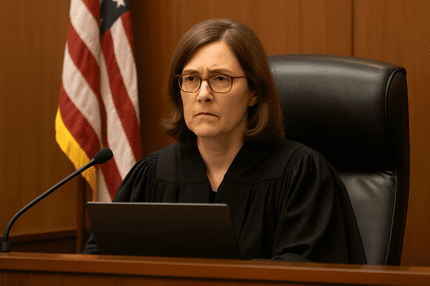

U.S. District Judge Katherine Failla allowed testimony that Roman Storm could have changed Tornado Cash to stop criminal use. The ruling came Sunday, during the second week of the Roman Storm trial.
Philip Werlau from AnChain.AI will testify that a “user registry smart contract” could have limited Tornado Cash access. Werlau is an investigator who specializes in anti-money laundering compliance.
Storm’s legal team tried to block Werlau’s testimony. They said the suggested code has never been used in the blockchain industry. Judge Failla disagreed. She wrote that the witness could explain the idea if it was feasible and if Storm likely knew about it.
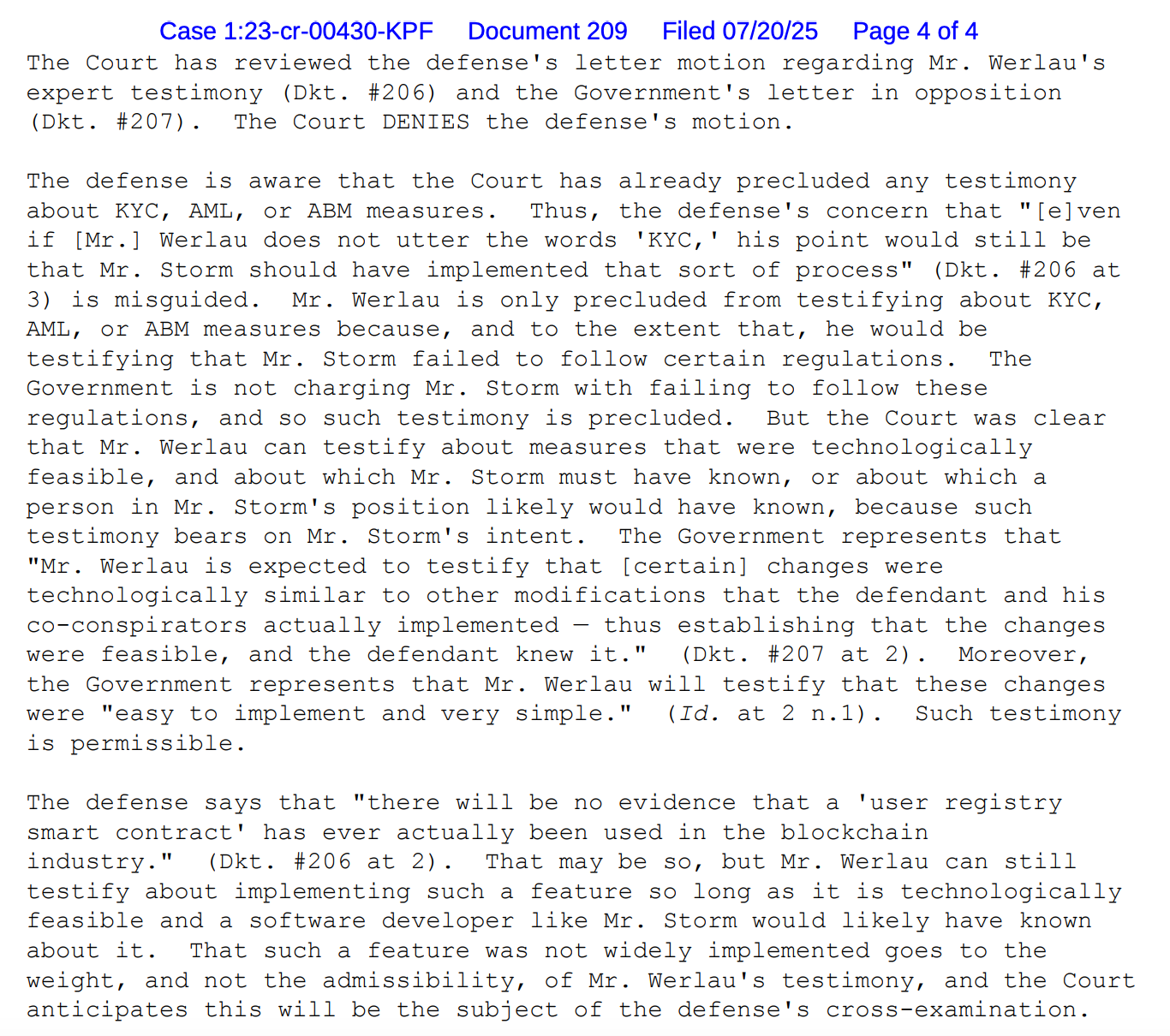
“Such testimony is permissible,” Failla stated in the court order. “Mr. Werlau can still testify about implementing such a feature so long as it is technologically feasible and a software developer like Mr. Storm would likely have known about it.”
Prosecutors Link Tornado Cash to Crime
The Roman Storm trial continued Monday, marking the sixth day in court. Storm faces money laundering charges, conspiracy to operate an unlicensed money transmitter, and conspiracy to violate U.S. sanctions. The charges relate to his role in Tornado Cash, a crypto mixing service that hides the source and destination of crypto transactions.
Government lawyers argue Storm helped operate Tornado Cash in a way that allowed money laundering. They said he ignored ways to prevent illegal use. Prosecutors expect to finish presenting their case by Friday. After that, Storm’s defense team will begin its arguments.
Werlau is expected to support the claim that Tornado Cash code changes were possible but not implemented. The witness will describe how Storm, as a developer, could have added barriers for bad actors.
FBI Testimony Cites Millions Moved Through Platform
Joel DeCapua, a supervisory special agent from the FBI, testified last week. He told the court his team found 16 large transactions using Tornado Cash. Each one moved more than $5 million, he said. DeCapua works in the FBI’s cybercrimes unit and focuses on digital asset cases.
So far, witnesses have included law enforcement officials and hackers who allegedly used Tornado Cash. The testimony aims to show the crypto mixing service played a role in hiding illicit funds.
The court documents and witness statements show the prosecution’s focus on technical knowledge and responsibility. The Roman Storm trial now turns to whether the jury believes he could have prevented misuse.
Court Compares Case to Other Crypto Convictions
Judge Failla referred to other crypto-related trials as part of her courtroom analysis. She cited former FTX CEO Sam Bankman-Fried, OneCoin co-founder Karl Greenwood, and ex-OpenSea product manager Nathaniel Chastain. All three were sentenced to prison for crimes involving crypto or digital assets.
Those references show how federal courts are handling cases involving blockchain developers. The Roman Storm trial, however, centers on code design and platform oversight rather than direct theft or fraud.
In the Netherlands, Tornado Cash co-founder Alexey Pertsev was found guilty in 2024. He was sentenced to more than five years in prison for money laundering through the same platform. That case focused on Tornado Cash’s use by criminal organizations to launder funds.
Prosecutors in the Roman Storm trial argue that similar conditions existed. They claim Storm ignored red flags and failed to apply available restrictions.
Witness to Explain Feasibility of Code Tools
Werlau’s testimony will focus on the idea of a user registry smart contract. This tool could have tracked or limited who used Tornado Cash. Although it has not been used in public blockchain systems, the government argues it was possible.
Court filings show that prosecutors aim to prove Storm had technical control. They also claim he was aware of the risks and chose not to act.
The Roman Storm trial continues this week in a federal courtroom, with more law enforcement witnesses expected. The defense will respond to these claims once the government concludes its presentation.


