
YEREVAN (CoinChapter.com) — Lawmakers in Ohio have introduced House Bill 116 to prevent state and local governments from imposing additional taxes on crypto payments. The bill, introduced on Feb. 24 by Representative Steve Demetriou and co-sponsored by Tex Fischer, Brian Lorenz, Ty D. Mathews, Riordan McClain, and Josh Williams, seeks to amend existing laws to ensure that digital assets are not subject to fees beyond those applied to fiat transactions.
“The general assembly shall not enact a bill that proposes to impose a fee, tax, assessment, or other charge on digital assets used as a method of payment for goods and services,”
the bill states.
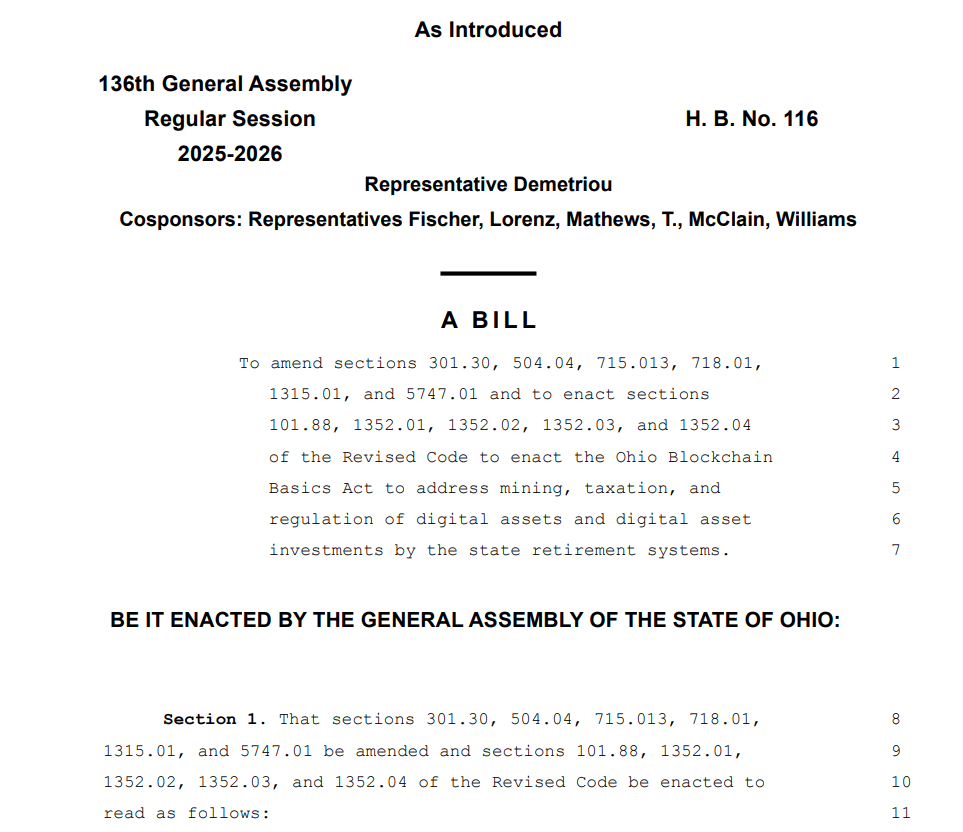
The legislation defines digital assets as cryptocurrencies, stablecoins, and NFTs. However, state and sales taxes will still apply to crypto transactions, similar to other payment methods.
Bill Protects Self-Custody, Staking, and Mining
The Ohio Blockchain Basics Act outlines protections for self-custody of digital assets, allowing individuals to hold crypto in hardware wallets or self-hosted wallets without state interference. The bill also confirms the right to stake crypto assets, reinforcing that participation in staking does not require additional licensing under existing Ohio laws.
Ohio Pension Funds to Evaluate Crypto ETF Investments
Moreover, under HB 116, Ohio state pension funds must evaluate the risks and benefits of investing in crypto exchange-traded funds (ETFs). A report on this assessment is required to be submitted to the General Assembly within a year.
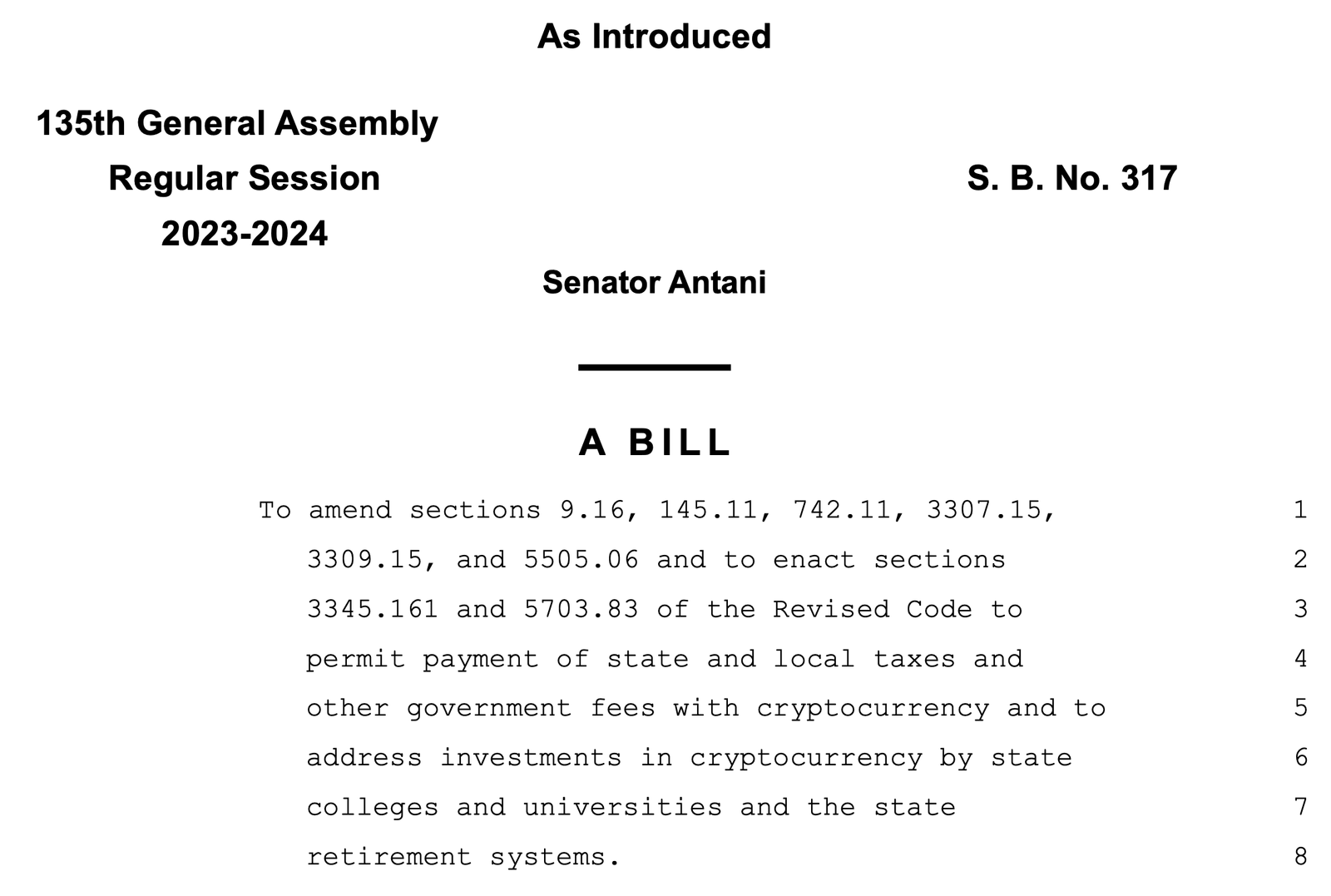
Notably, this bill follows several crypto-related legislative efforts in Ohio. In September 2023, Senator Niraj Antani introduced a bill requiring the state to accept crypto payments for state taxes.
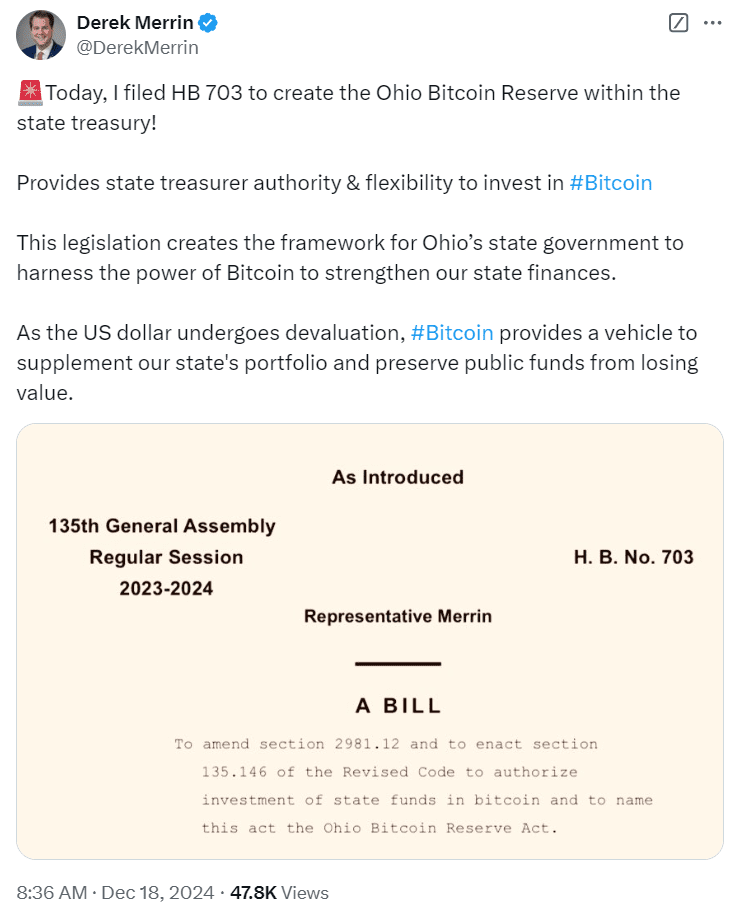
In December 2023, House Republican leader Derek Merrin proposed HB 703, which aimed to create a Bitcoin reserve for the state.
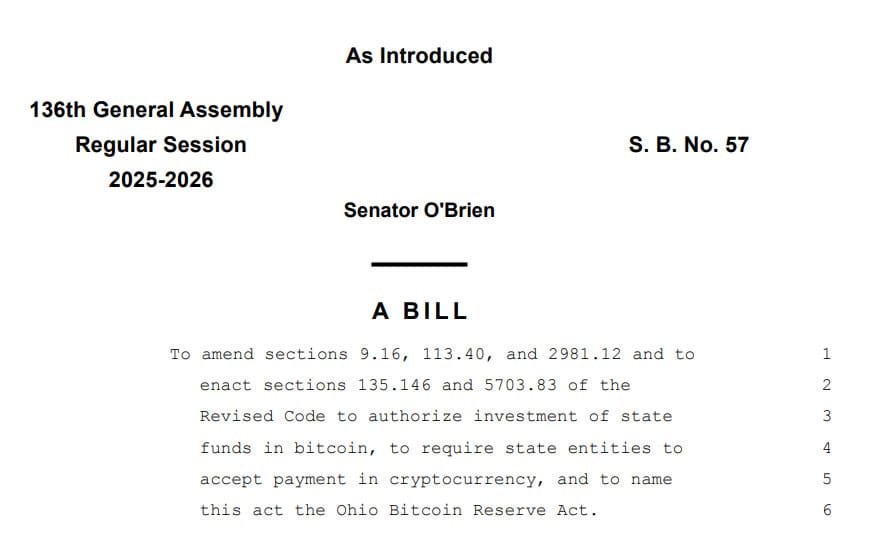
In February 2024, Senator Sandra O’Brien also introduced another bill proposing an Ohio Bitcoin Reserve Fund, which would hold Bitcoin for a five-year period. Above all, these developments indicate ongoing discussions about crypto regulations and state-level digital asset adoption in Ohio.