


YEREVAN (CoinChapter.com) — Pavel Durov, the founder of Telegram, has left France and traveled to Dubai after receiving permission from a French court on March 13, 2025. His departure follows his August 2024 arrest in Paris, which led to charges that Telegram facilitated illegal activities.
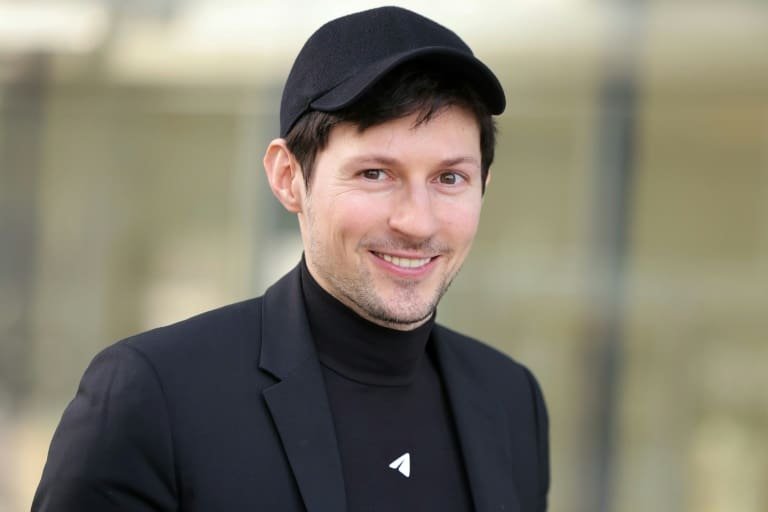
Authorities in France accused Durov of allowing illicit transactions on Telegram, leading to legal proceedings that prevented him from leaving the country for several months. His release has sparked discussions on privacy, digital freedom, and platform responsibility.
French Court Approves Durov’s Travel to Dubai
On March 13, 2025, a French court granted Durov permission to leave France, according to AFP and Barron’s. Reports stated that Durov departed France that morning with official approval. Other sources indicated that he received permission to leave for “several weeks.”
No official statements have been released by Durov or his legal team regarding his departure. French authorities have also not clarified whether the case is closed or still under investigation.
The decision allowing Durov to leave France follows several months of legal uncertainty, during which French prosecutors accused Telegram of failing to prevent illegal activities on the platform.
Durov’s Arrest and Charges in France
Durov was arrested at Le Bourget airport in Paris on August 24, 2024. French prosecutors accused him of allowing illicit activities on Telegram, which they claimed violated financial crime and security laws.
The charges, announced on August 28, 2024, stated that Durov could face up to 10 years in prison and a €500,000 ($550,000) fine. The French Prosecutor’s Office (Parquet de Paris) alleged that Telegram facilitated illegal transactions by failing to regulate its platform.
Following his arrest, Durov was released on August 28 after posting €6 million ($6.5 million) in bail. However, French authorities barred him from leaving the country, requiring his presence for legal proceedings.
The case drew global attention, with some seeing the arrest as an attack on digital privacy while others viewed it as an enforcement action against platforms used for financial crimes.
Toncoin’s Price Surge After Durov Left France
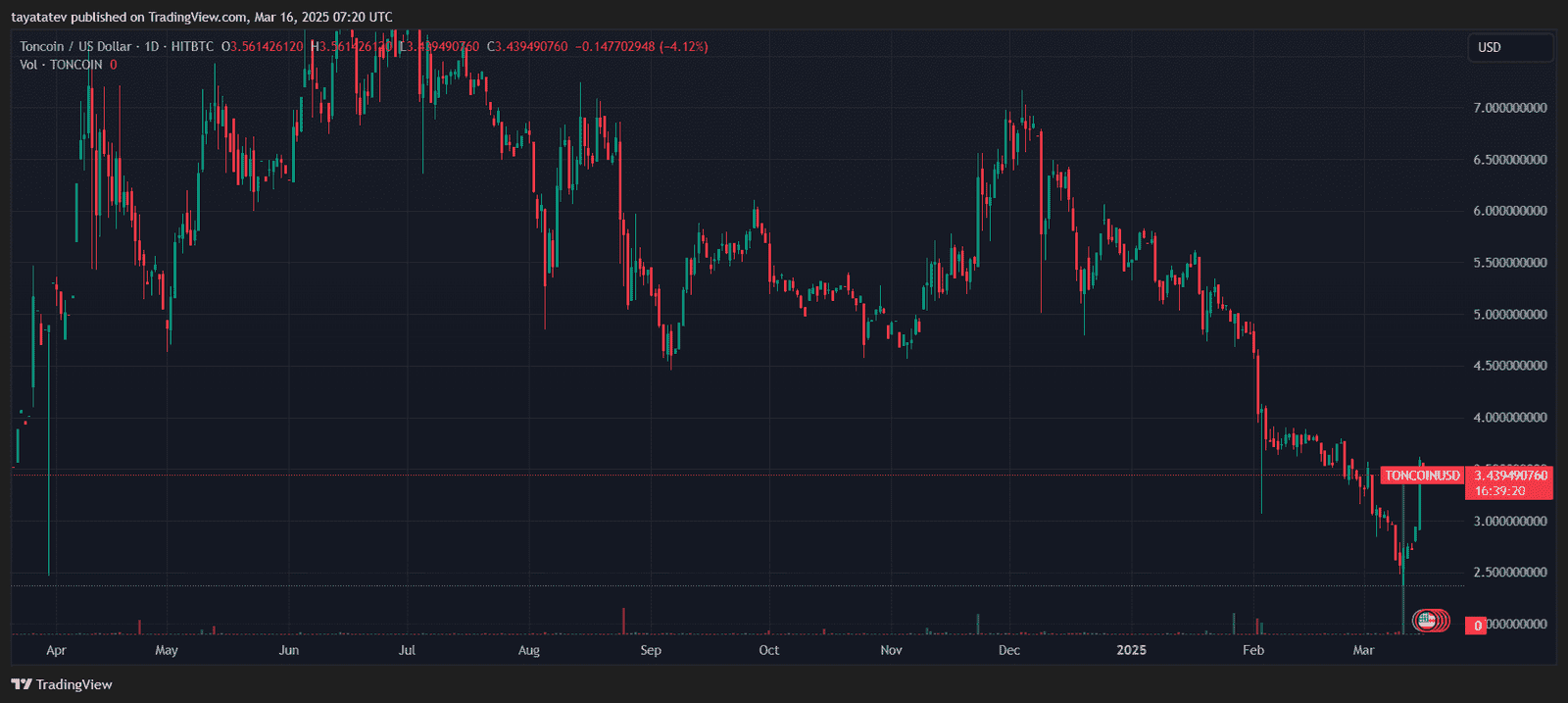
After news broke that Pavel Durov had been allowed to leave France, the price of Toncoin (TON), the native cryptocurrency of The Open Network (TON), experienced a sharp increase in trading activity.
According to the TradingView chart, TON’s price rebounded after hitting a low of $2.36 on March 11, 2025. The cryptocurrency jumped past $3.50 before settling around $3.44, reflecting a strong recovery. This price movement marked a significant shift in sentiment following months of decline.
TON had previously lost over 67% of its value, dropping from a peak of $7.20 in December 2024 to its March low. The price decline accelerated after the post-U.S. election rally faded and macroeconomic concerns weighed on the broader crypto market.
Following Durov’s legal developments in France, TON surged by over 40% from its lowest point, signaling renewed market optimism. This upward movement indicates growing confidence in Telegram’s leadership and the broader TON ecosystem.
Russian Government Monitored Durov’s Case
Pavel Durov case drew comparisons to Alexander Vinnik, the BTC-e operator, who was involved in a high-profile legal battle across multiple countries before being returned to Russia in a U.S.-Russia prisoner swap.
Alexander Vinnik, a Russian national and operator of BTC-e, was arrested in Greece in 2017 at the request of U.S. authorities, who accused him of money laundering and operating an unlicensed cryptocurrency exchange. His case involved multiple extradition requests from the United States, France, and Russia.
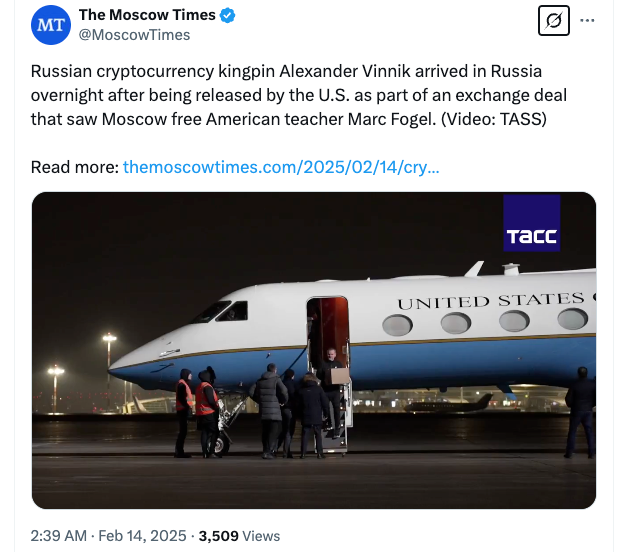
Their cases had different contexts and outcomes. Durov’s case involved allegations related to Telegram’s operations, sparking debates about platform responsibility and digital freedom. In contrast, Vinnik’s case centered on financial crimes linked to his cryptocurrency exchange, which led to his extradition and conviction in the United States. While Vinnik’s legal troubles concluded with a U.S.-Russia prisoner swap, Durov’s case remains unresolved, leaving uncertainty surrounding Telegram’s operations. Both cases highlight diplomatic tensions and jurisdictional challenges that arise when tech entrepreneurs and financial operators face legal scrutiny in foreign countries.
TON Society Supported Durov’s Release
The TON Society, an organization supporting The Open Network (TON), released a statement on March 15, 2025, describing Durov’s regained travel rights as a victory for free speech and digital privacy.
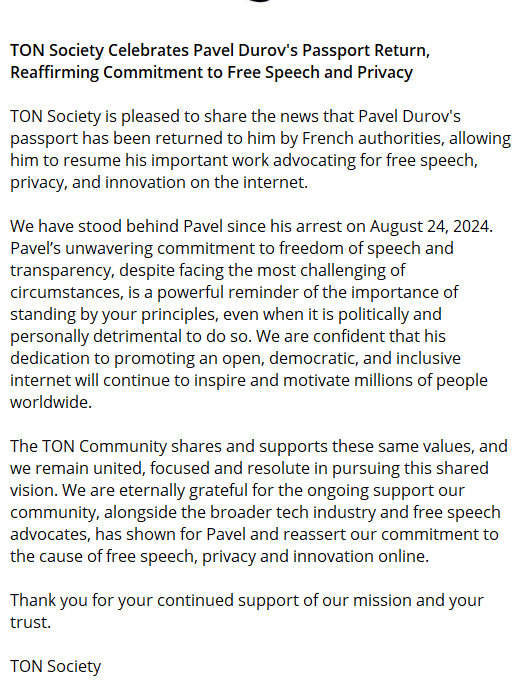
The group emphasized its support for Durov, stating:
“Pavel’s unwavering commitment to free speech and transparency, despite facing the most challenging circumstances, is a powerful reminder of standing by one’s principles.”
The TON Society had previously criticized the French government for detaining Durov. It also urged international organizations, including the United Nations, the European Union, and the Organization for Security and Cooperation in Europe (OSCE), to intervene.
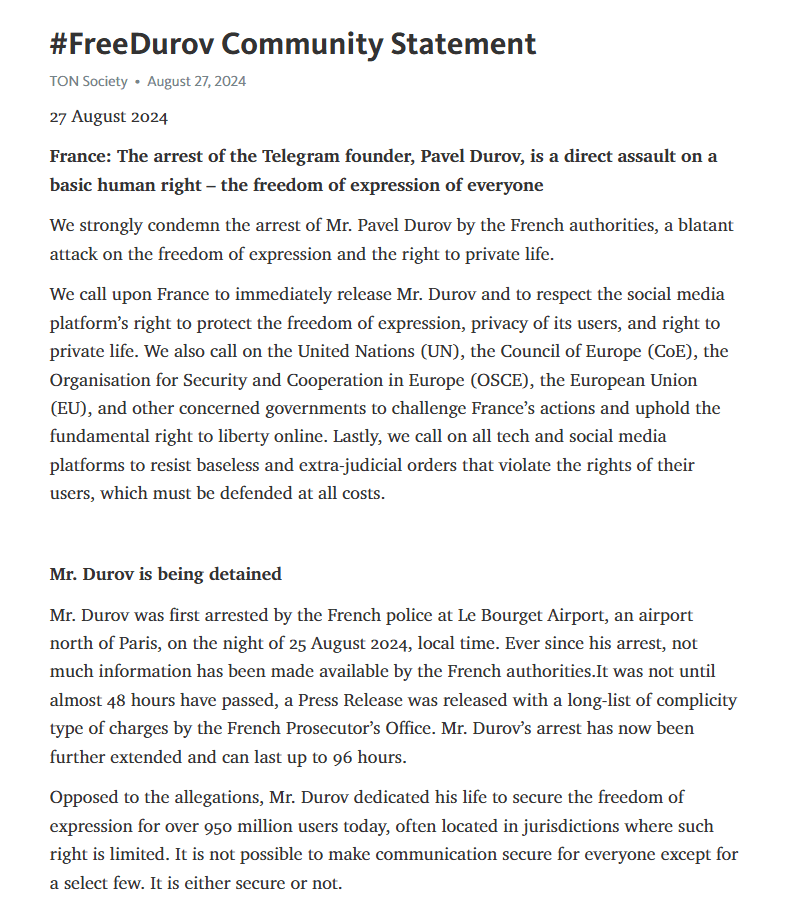
Many privacy advocates and crypto supporters viewed Durov’s case as a test of government control over online platforms. The TON Society has consistently promoted encryption, decentralized networks, and user privacy.
French Government Responds to Criticism
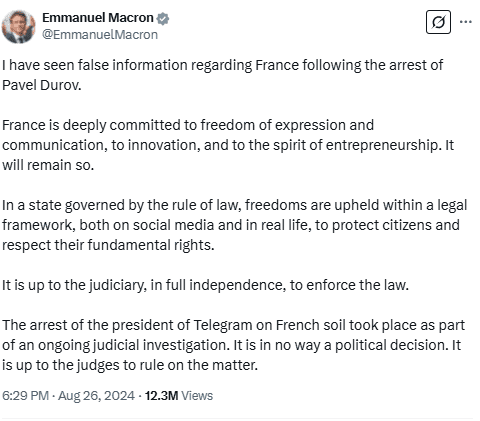
Following Durov’s arrest, French President Emmanuel Macron denied political motivations behind the case. He stated that France remains committed to protecting free speech, despite accusations from free speech activists and privacy advocates.
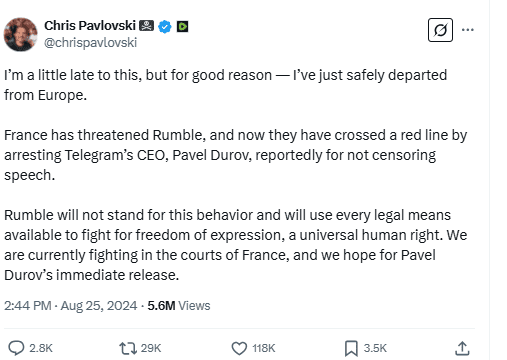
Shortly after Durov’s detention in August 2024, Chris Pavlovski, CEO of Rumble, announced he had left Europe, citing concerns over government pressure on digital platforms.
Privacy advocates have continued to warn about potential regulatory overreach, arguing that cases like Durov’s could have lasting consequences for online freedoms.
What’s Next for Durov?
With Durov now in Dubai, the status of his legal case in France remains uncertain. There has been no official confirmation on whether French authorities will continue the investigation or if a settlement is being negotiated.
Dubai has long been a preferred destination for entrepreneurs and tech founders due to its business-friendly regulations and lack of extradition agreements with many nations.
Durov’s departure from France has reignited debates on the responsibilities of tech leaders, government jurisdiction over digital platforms, and the balance between privacy and security.
The outcome of this legal battle could impact Telegram’s operations, regulatory scrutiny on messaging platforms, and the future of online privacy policies.


