



On June 15, 2025, Pi Network’s PI/USDT chart on OKX showed an ascending channel pattern on the 1-hour timeframe. An ascending channel pattern is a bearish technical formation where the price moves upward between two parallel trendlines before typically breaking down.
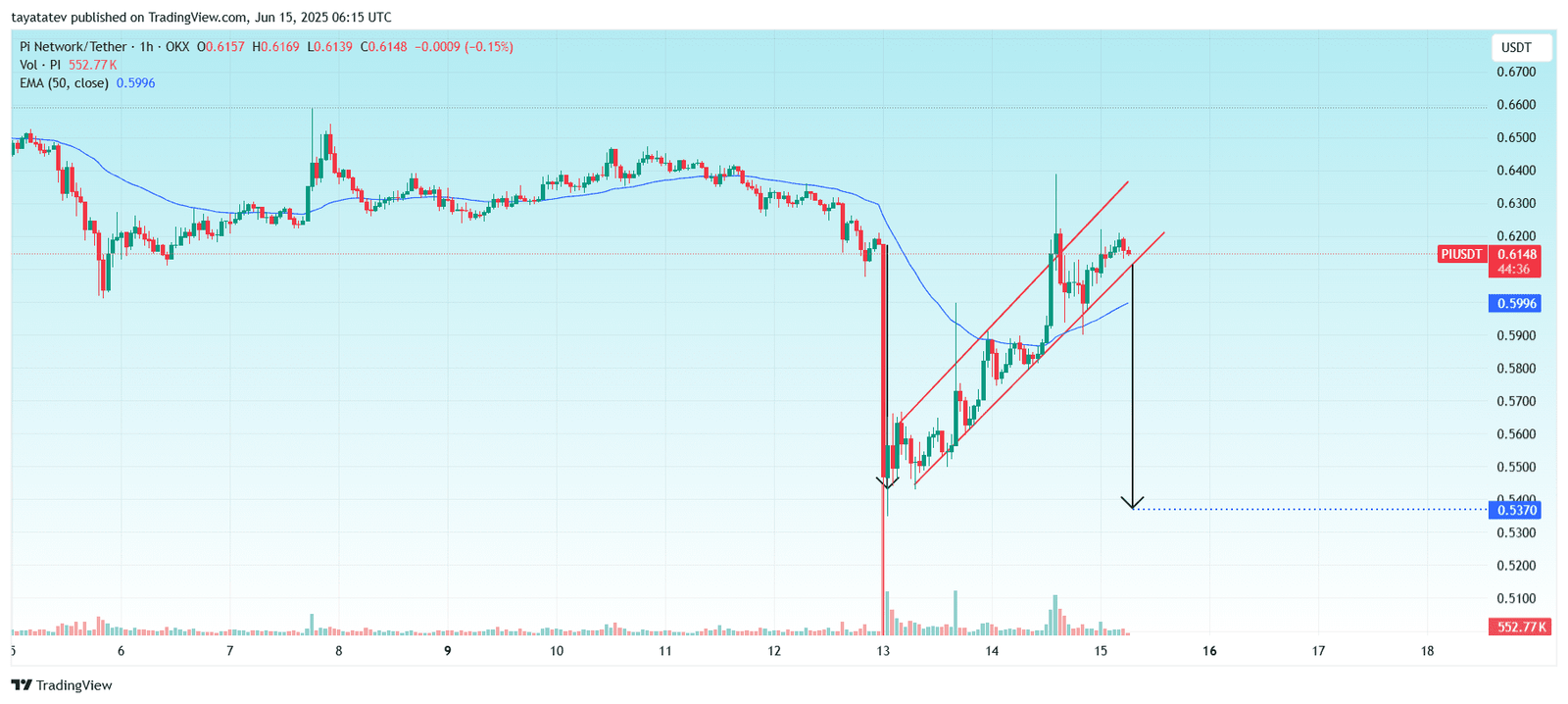
The pattern formed after a sharp price rebound from the June 13 bottom. However, PI/USDT has now touched the upper resistance of the channel near $0.616 and started to pull back. The 50-hour Exponential Moving Average (EMA), currently at $0.5996, sits just below the lower trendline, suggesting a critical support level.
If the price breaks below the channel and loses the EMA, the pattern implies a potential 12 percent decline from the current price of $0.6148. This move could push the price toward the $0.5370 level, as indicated by the projected downside in the chart.
Volume on the breakout spike and the follow-up climb shows weakening buying pressure. Additionally, the bearish wick on the latest candle signals rejection from the top trendline. If confirmed by a breakdown below the lower trendline and EMA, the bearish target of $0.5370 may come into play soon.
RSI Hits Overbought Zone Ahead of Possible PIUSDT Breakdown
On June 15, 2025, the 4-hour Relative Strength Index (RSI) for PI/USDT reached 63.70. The RSI measures momentum and ranges from 0 to 100. Values above 70 usually signal overbought conditions, while values below 30 show oversold zones.
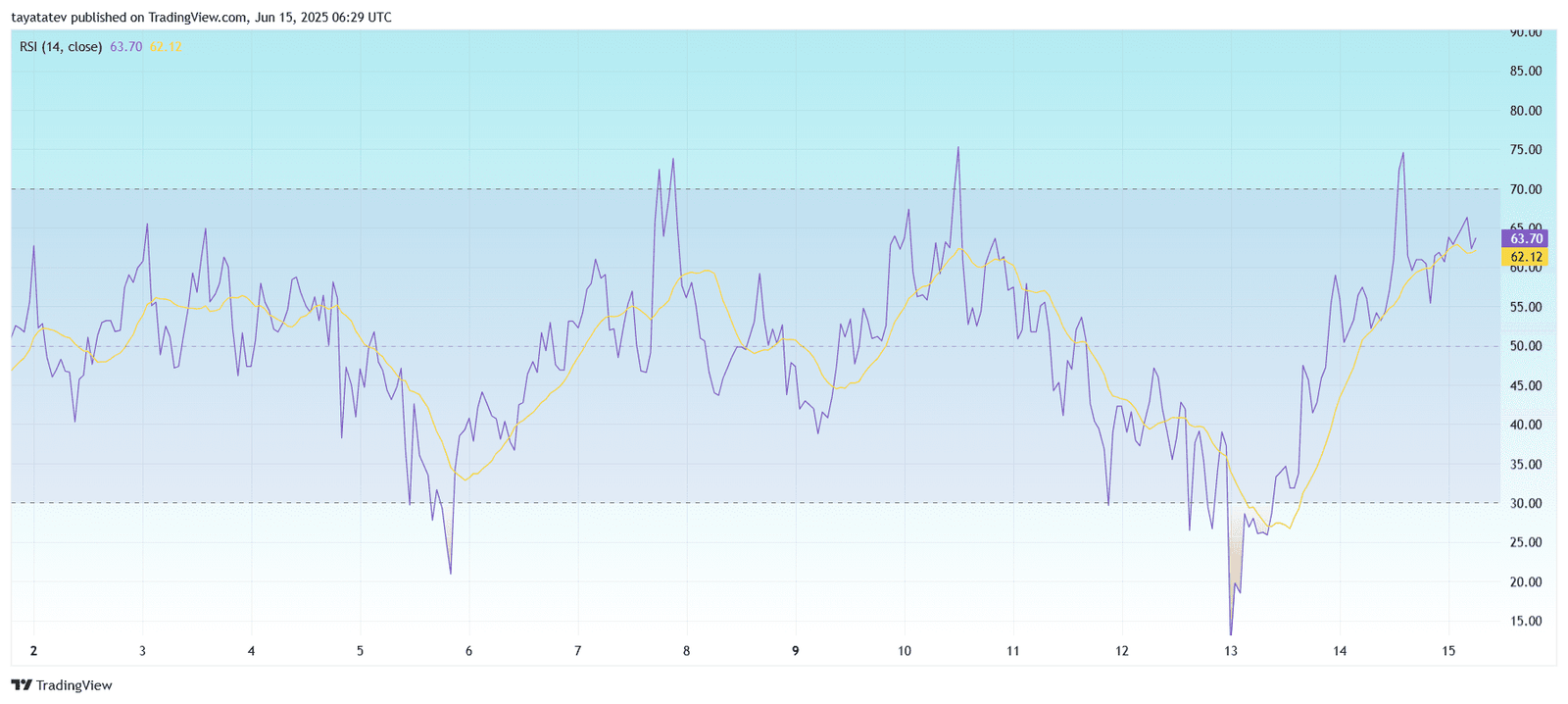
Currently, the RSI is close to the overbought threshold. The RSI moving average stands at 62.12, just below the main line, showing that buying momentum has slowed but remains strong. This level aligns with previous peaks where the price reversed.
Looking at the broader context, the RSI rebounded sharply from a low near 17 on June 13, confirming the price recovery from that date. However, the current uptrend is flattening, which often happens before a pullback.
If the RSI crosses below the moving average and dips under 60, it could confirm weakening bullish momentum. Combined with the bearish ascending channel pattern in the price chart, this RSI setup supports the risk of a 12% drop toward the $0.5370 level.
MACD Shows Bullish Momentum But Flattening Signal
Meanwhile, the Moving Average Convergence Divergence (MACD) forPI/USDT showed a bullish crossover. The MACD line (blue) stands at 0.0080, slightly above the signal line (orange) at 0.0078. The MACD histogram still prints green bars, but the bar height is shrinking.
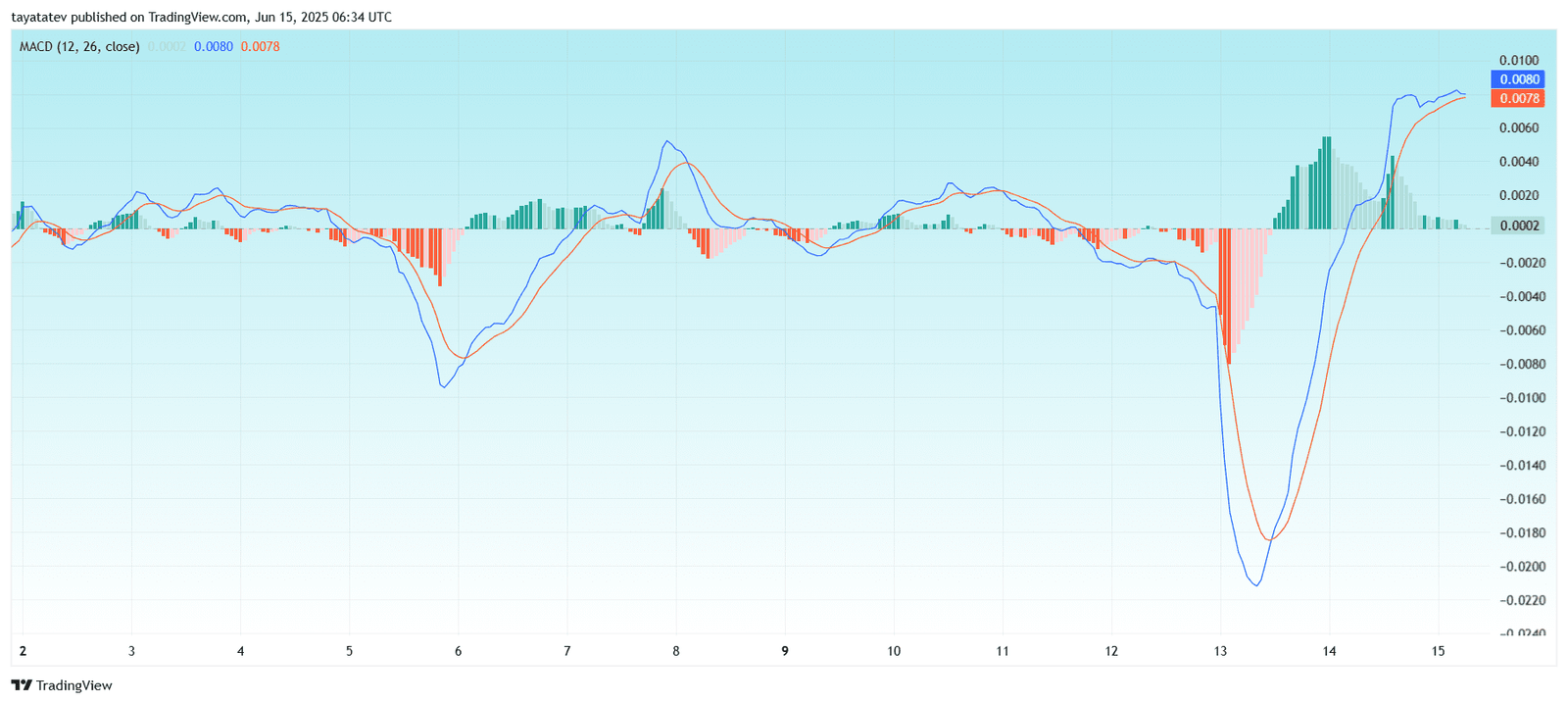
MACD (12, 26) uses two exponential moving averages—12-period and 26-period—to detect changes in momentum. A crossover above the signal line suggests bullish momentum, while a downward crossover indicates weakening trend strength.
The MACD line crossed above the signal line on June 13, confirming the price rally from that day’s bottom. Since then, the histogram has shown steady growth, but the pace is now slowing.
If the MACD histogram continues to contract, and the blue MACD line crosses back below the orange signal line, it may signal a momentum shift. This would support the bearish case shown on the price chart and RSI, possibly validating the projected drop toward $0.5370.
DMI Flashes Weakening Bullish Signal on PIUSDT
The Directional Movement Index (DMI) for PI/USDT showed early signs of trend exhaustion. The DMI indicator includes three lines:
– +DI (blue): 28.17
– –DI (orange): 14.87
– ADX (red): 28.00
The +DI line is above the –DI line, which suggests bullish strength. However, the two lines are nearly crossing, and the Average Directional Index (ADX) is no longer rising. The ADX measures trend strength, and a falling ADX often signals that the trend is weakening.
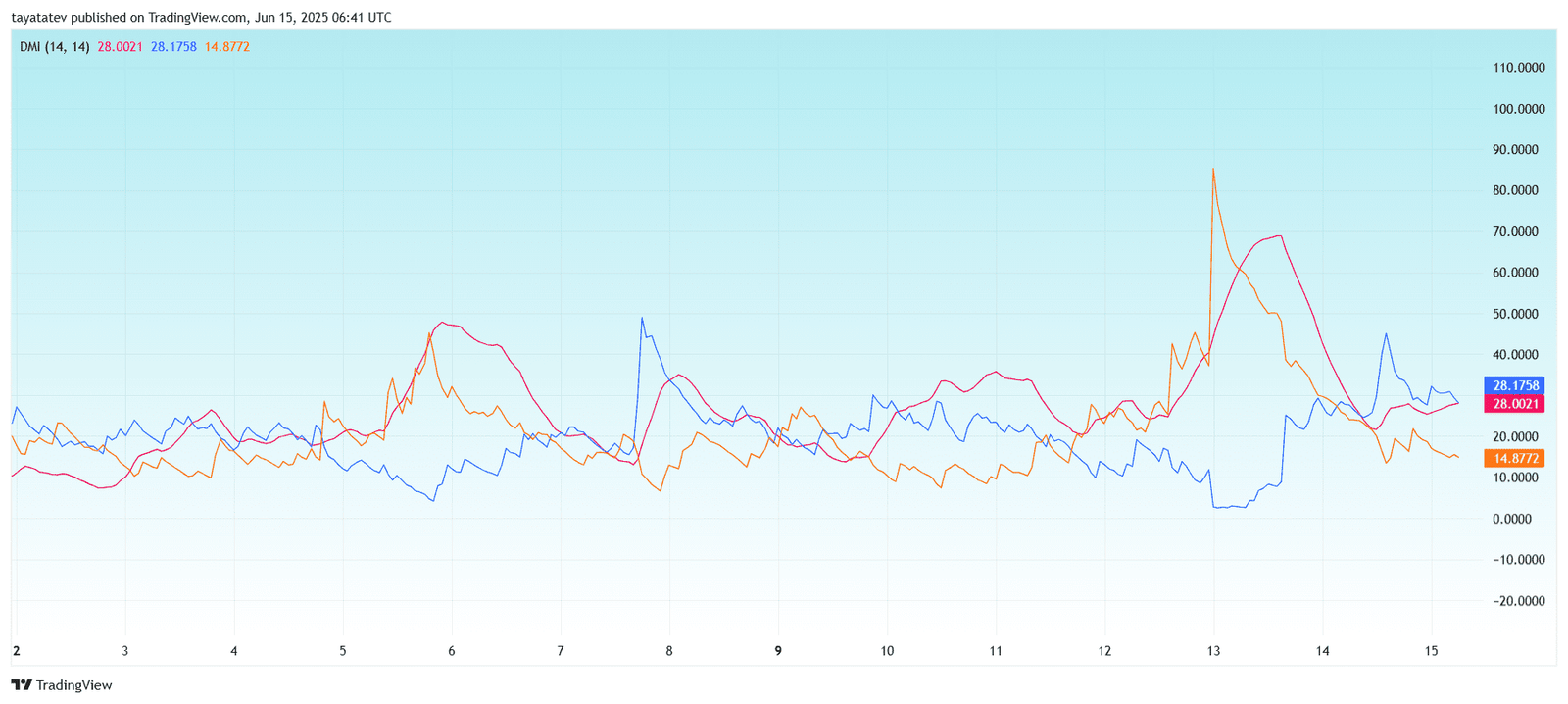
Earlier in the chart, the ADX spiked above 70 during the sharp price move on June 13. Since then, it has declined significantly, now hovering near 28. This shift confirms that the current uptrend has lost momentum.
If +DI crosses below –DI and ADX continues to drop, it would confirm a bearish trend shift. This setup supports the earlier breakdown risk shown on the price, RSI, and MACD charts.
Pi Network Expands .pi Domains Auction With New App Features and Stats Tools
On June 15, 2025, Pi Network’s Core Team shared two key updates aimed at boosting community participation in the ongoing .pi Domains Auction. The auction, first revealed during Pi Day 2025, has already attracted over 200,000 bids, with more than 100,000 submitted within the first week.
The .pi Domains Auction serves as a Web3-native identifier system, allowing users, developers, and businesses to secure digital names for storefronts, apps, and services. These domain names act like traditional web addresses but operate across the Pi Browser and, eventually, other Web3 wallets and browsers. For Chrome and Safari users, the domains are accessible using the .pinet.com extension.
According to the team, these identifiers strengthen Pi Network’s presence in both real-world commerce and decentralized apps. Proceeds from the auction will directly fund Pi ecosystem initiatives, including developer events and support programs.
Update 1: Real-Time Stats Dashboard
The first major update introduces a dedicated interface displaying real-time auction data. Users can now track the most popular domains, highest bid amounts, and current trending auctions. This update improves transparency and allows participants to monitor market activity at a glance.
Update 2: Integration Into Pi App
The second update adds full .pi Domain functionality directly inside the Pi App. Previously limited to the Pi Wallet, users can now access new features such as the stats dashboard and email notification settings within the app itself. This wider integration makes it easier for Pioneers to engage with the auction from a single platform.
Alongside the two core updates, the Core Team rolled out several enhancements. First, they refined the bidding interface to improve usability. Second, more users can now access the Auction as the Mainnet wallet has seen a “significant” expansion in accessibility. Finally, Pioneers can enable email alerts for specific domains by adjusting settings in the app.
Together, these updates aim to increase visibility, ease of use, and community involvement in the .pi Domains initiative as Pi Network prepares for broader Web3 engagement.


