


Pi Network recently celebrated Pi2Day—its mid-year checkpoint tied to the symbolic “2π” (6.28)—with a suite of ecosystem enhancements. The celebrations were a far cry from the team’s Pi Day announcements earlier this year in March, which left many fans disappointed.
Under the hood, Pi implemented backend optimizations—such as KYC synchronization and wallet activation improvements—to clear migration bottlenecks and expand main net access.
The latest updates did attract a lot of hype, but the Pi Network token failed to react to the news.
Feature Rollouts Fail to Lift Sentiment
Pi Network’s Pi2Day event brought a fresh set of ecosystem updates, many focusing on infrastructure and usability. One of these announcements was the launch of Pi App Studio, a no-code development tool designed to help users create decentralized applications with drag-and-drop modules and AI-assisted guidance.

The team claimed that the platform aims to lower the entry barrier for developers and stimulate more activity within Pi’s ecosystem. Another key addition was the ‘Ecosystem Directory Staking’ feature, which allows users and businesses to stake PI in support of valuable projects, positioning the directory as a form of community-led ranking system.
On the technical front, the team introduced backend improvements to address longstanding friction points. The updates appeared tailored to resolve issues that have hampered user migration to the enclosed mainnet and delayed broader functionality for months.
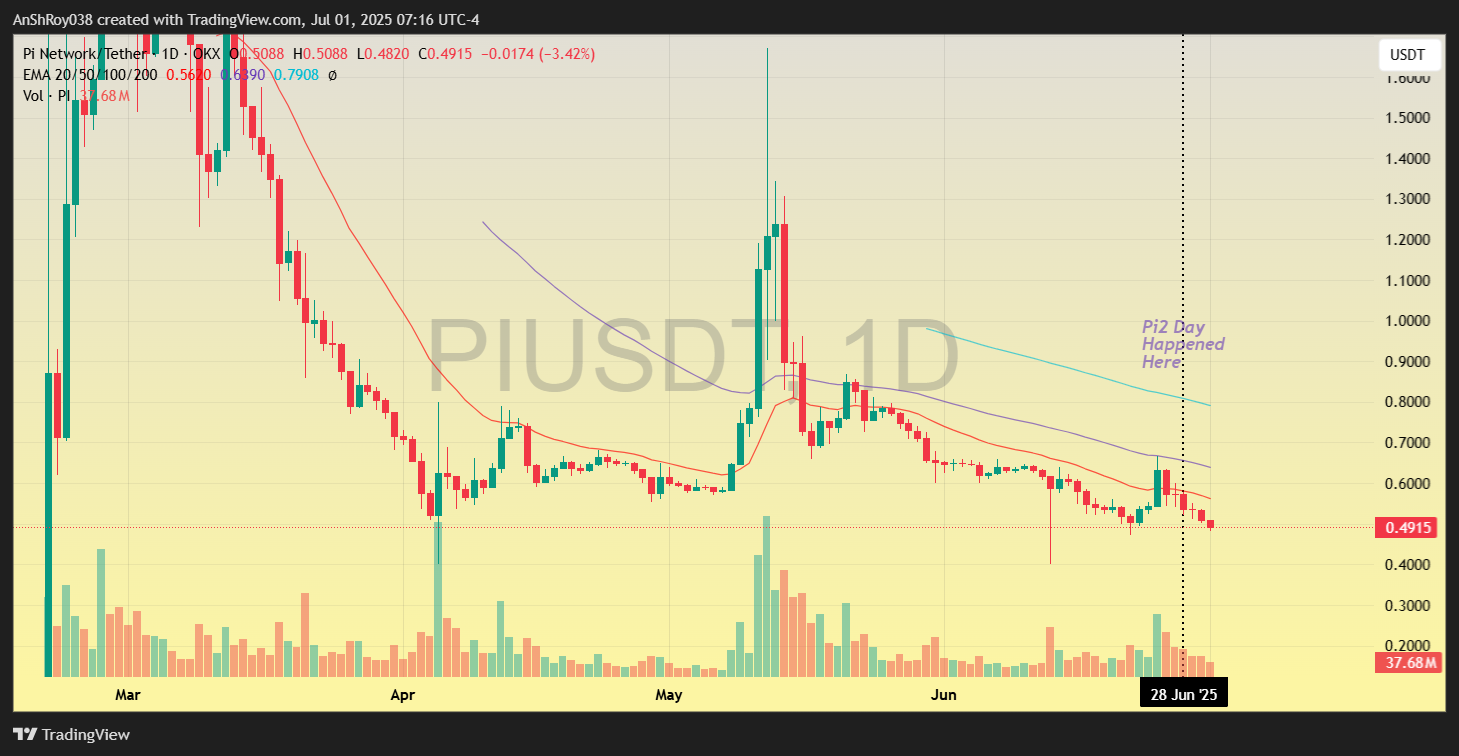
Still, market participants showed little reaction. Despite the flurry of announcements, Pi Coin’s price remained in a visible downtrend, with no sustained recovery. The PI USDT pair tumbled more than 17% since Pi2 Day. It reached a daily low near $0.48 before bulls tried to push the token back above $0.5.
That muted response reflects a wider trust deficit around the project’s slow-moving timeline, lack of major exchange listings, and limited updates from the core team.
For now, the Pi2Day announcements seem more like maintenance than momentum. However, future updates stemming from the recent announcements could help foster trust in the project. This could act as a bullish cue for the token in the future.
Pi Network Fans’ Hopium High Remains Strong Despite Token’s Downtrend
Pi Coin’s online community remains firmly bullish despite the recent price stagnation. Social media posts with wild price targets continue to flood the internet.
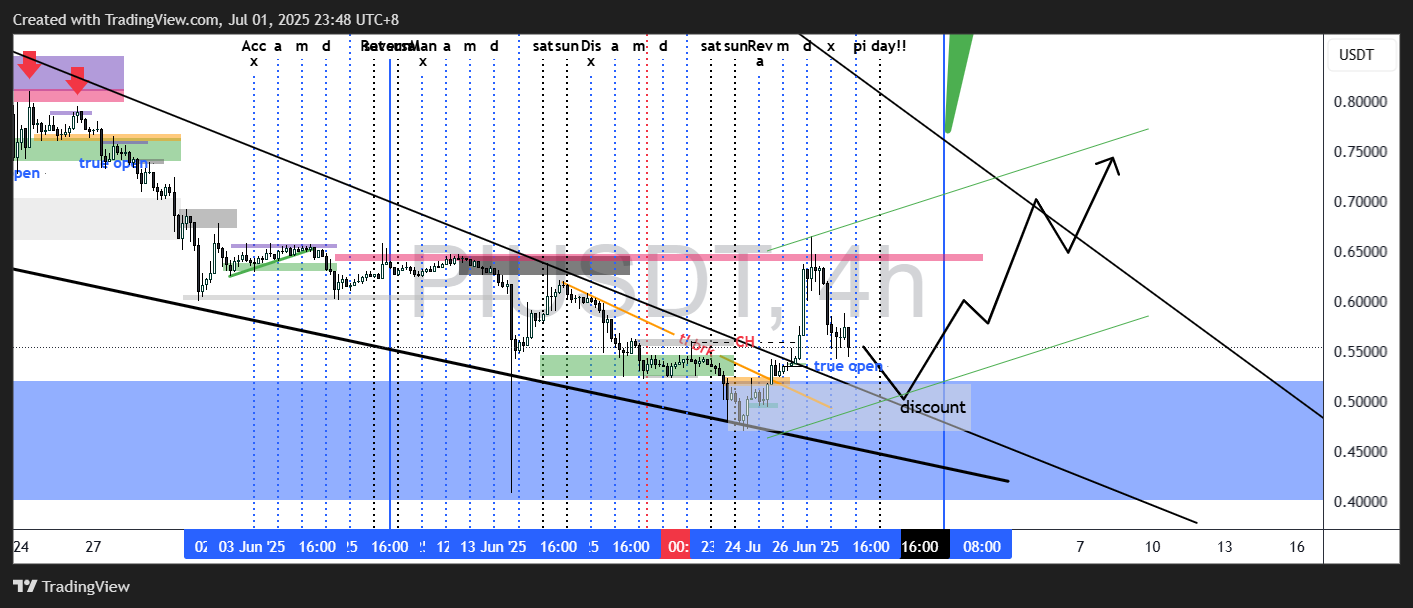
A trader shared a post on TradingView, mapping out a projected reversal from a perceived discount zone.
Moreover, another post by a crypto trader, this time on X, cited pattern tightening and AI Studio’s launch as cues for a “calm before the breakout.” These projections, while optimistic, rely heavily on speculative structures and ideal conditions aligning.
Many bullish calls rely on technical setups with limited confirmation and appear fueled more by community optimism than market data.
Still, some Pi Network might argue that Pi2Day updates—like App Studio and ecosystem staking—could eventually lead to more on-chain activity. This would expand use cases for the token and improve its market profile. If adoption metrics improve in the coming weeks, sentiment could shift accordingly.
For now, however, price action remains under pressure. While bulls continue to post charts and project upside, the market has yet to validate those expectations. The enthusiasm may find footing only if user activity, developer traction, and on-chain growth begin to reflect the optimism


