


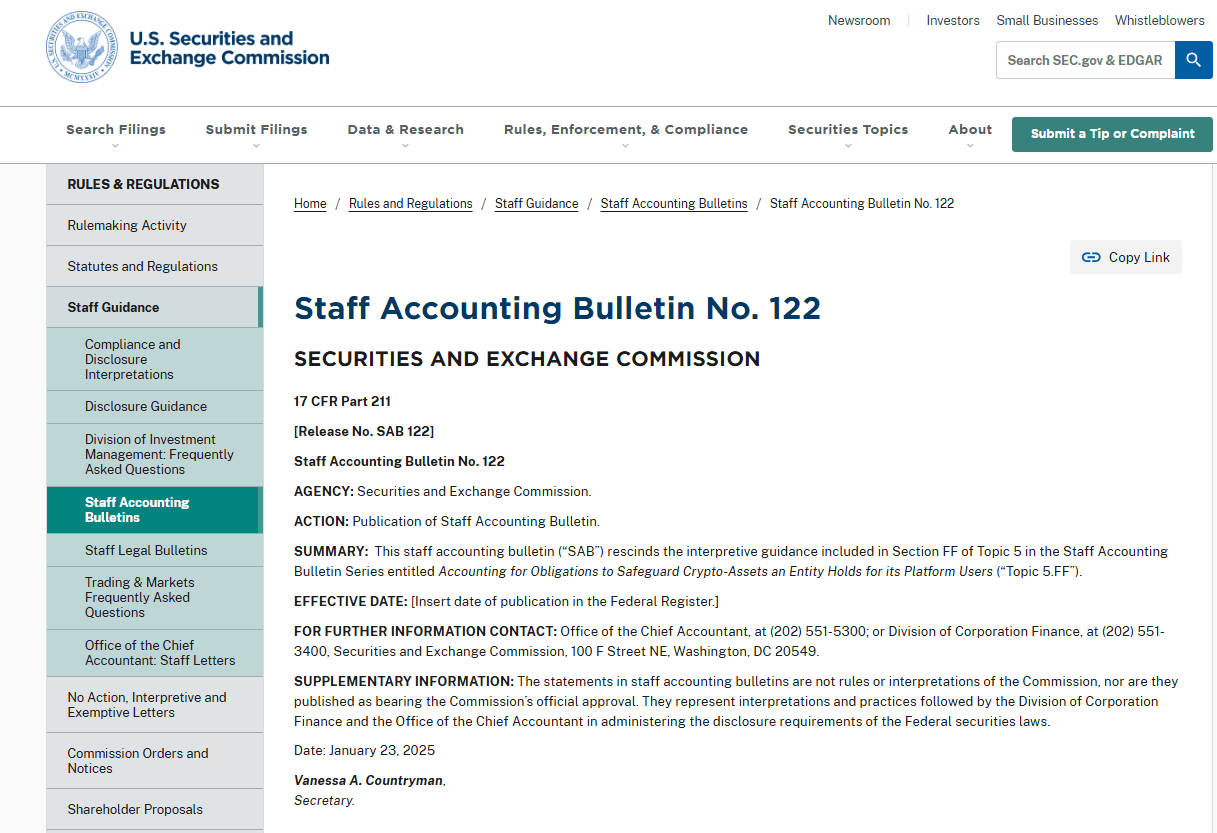
YEREVAN (CoinChapter.com) — The U.S. Securities and Exchange Commission (SEC) has officially revoked Staff Accounting Bulletin (SAB) 121. This rule, introduced in March 2022, required financial firms holding cryptocurrencies for customers to record these assets as liabilities on their balance sheets. On Jan. 23, the SEC announced the rescission of this controversial regulation, a move welcomed by industry participants.
SEC Commissioner Hester Peirce, head of the agency’s crypto task force, shared her response on X.
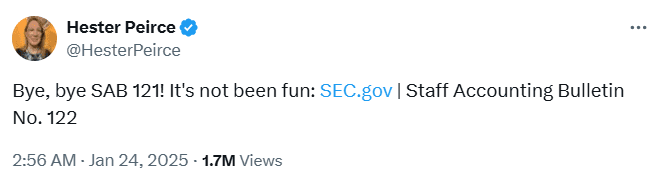
Peirce wrote, marking a pivotal moment in the SEC’s approach to cryptocurrency regulation.
Lawmakers and Industry Voices Respond
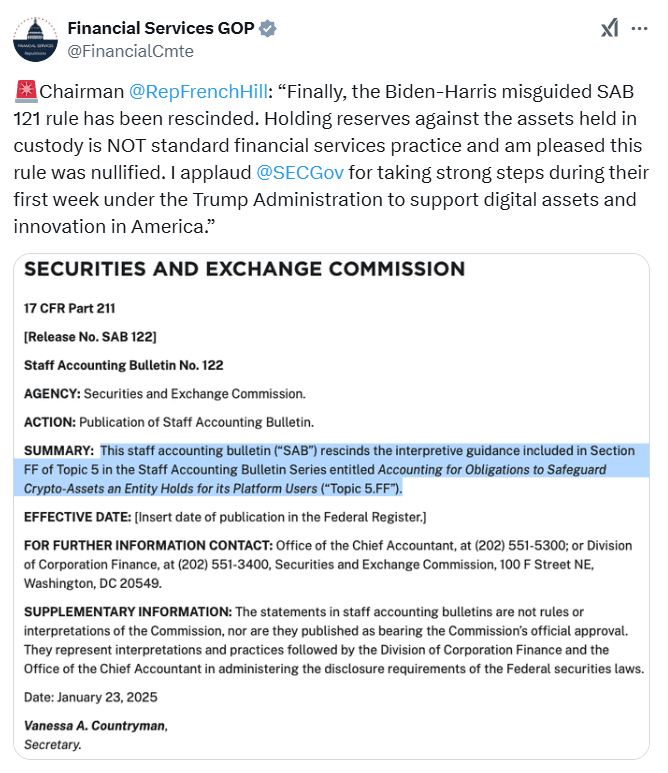
The decision to revoke SAB 121 drew reactions from lawmakers. French Hill, Chair of the House Financial Services Committee, expressed satisfaction with the repeal. He noted on X that requiring financial firms to hold reserves for crypto custody assets was inconsistent with established financial practices.
Representative Wiley Nickel argued the rule limited U.S. banks’ ability to manage crypto-related exchange-traded products. This, he suggested, increased risks by giving non-bank entities greater control.
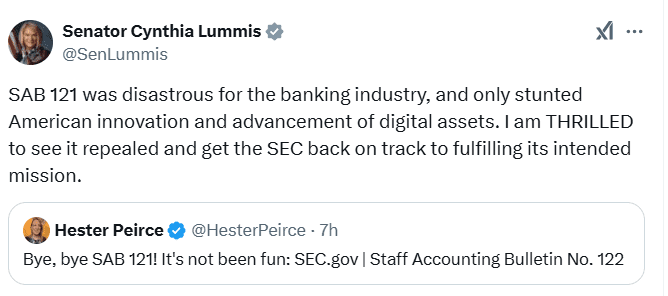
Senator Cynthia Lummis criticized SAB 121, calling it detrimental to the banking industry. She added that the rule hindered innovation and digital asset advancement in the United States. Lummis shared her enthusiasm for the repeal, stating,
Legislative Efforts to Repeal SAB 121
The rescission of SAB 121 follows significant legislative efforts. A bipartisan bill aimed at repealing the rule gained support in Congress but faced challenges. President Joe Biden vetoed the bill on June 1, citing potential risks to financial stability.
Despite the veto, bipartisan backing highlighted growing opposition to the rule. The House’s attempt to override the veto in July fell 60 votes short. The SEC’s decision to withdraw the guidance reflects feedback from stakeholders and aligns with industry concerns.
By eliminating SAB 121, the SEC has reduced regulatory hurdles for financial firms aiming to provide crypto custody services. Critics had long argued that the rule posed administrative challenges and discouraged institutions from managing digital assets.


