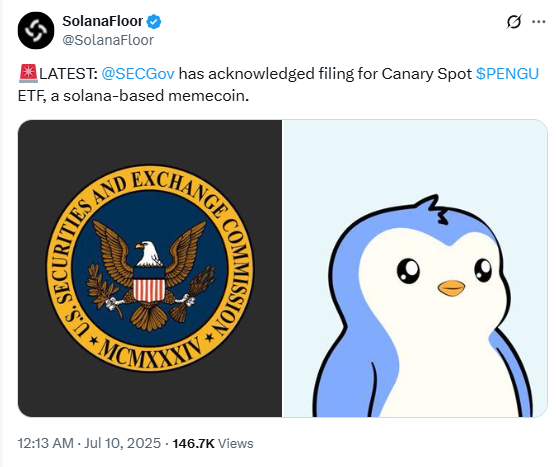
The U.S. Securities and Exchange Commission (SEC) officially acknowledged Canary Capital’s application for the Spot PENGU ETF. This marks the first time the agency is reviewing an ETF that combines a Solana-based memecoin, Pudgy Penguins NFTs, and cryptocurrencies in a single regulated product.
PENGU ETF Combines NFTs, Memecoins, and Crypto Assets
The proposed ETF, if approved, would allocate 80–95% of its portfolio to PENGU—the Solana token linked to the Pudgy Penguins ecosystem. The remaining 5–15% would go toward select Pudgy Penguins NFTs, as well as Solana and Ethereum for liquidity management. Canary Capital said the fund would follow an active allocation model, allowing rebalancing based on market shifts.
Canary filed the application as part of its broader plan to create regulated investment products native to Web3. The ETF aims to offer public investors exposure to digital assets without needing to manage crypto wallets or navigate NFT marketplaces. Though the exchange venue remains undisclosed, the fund seeks a listing on a major U.S. stock exchange.
If approved, PENGU would become the first ETF to merge memecoins and NFTs under one regulated framework.
Pudgy Penguins NFTs Enter Traditional Finance
The ETF includes Pudgy Penguins NFTs, known for their collection of 8,888 cartoon penguins that gained popularity through licensed merchandise. These NFTs now appear in major U.S. retailers like Walmart and Target through Pudgy Toys, extending their reach beyond the crypto sector.
The fund plans to select specific NFTs based on rarity, visual features, and market value. Its managers will regularly rotate holdings to optimize exposure. This approach integrates NFTs into a regulated financial product, recognizing their potential as more than just collectibles.
By including NFTs in the ETF, Canary Capital aims to give investors cultural and financial exposure without requiring direct NFT ownership.
PENGU Token Gains Institutional Attention
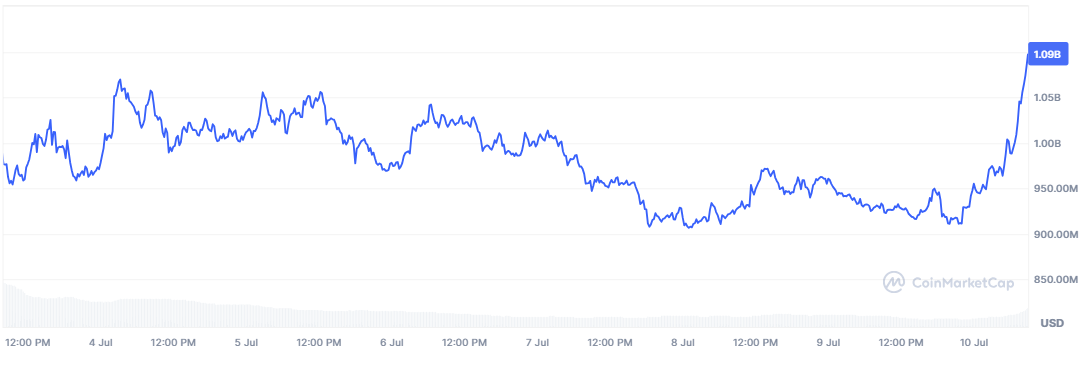
PENGU, the main token in the Pudgy Penguins ecosystem, supports governance and utility across games, merchandise, and NFT-related activities. As of July 10, 2025, its market cap surpassed $1.09 billion, according to CoinMarketCap.
Canary’s move to allocate most of the ETF portfolio to PENGU shows rising institutional interest in memecoins. This allocation also signals how traditional finance may begin embracing tokens shaped by Web3 culture.
The PENGU ETF expands Canary Capital’s ETF portfolio beyond Bitcoin and Ethereum. By combining NFTs, a native token, and major blockchains like Solana and Ethereum, the firm introduces a hybrid investment structure aimed at blending digital culture with regulated finance.
PENGU Price Chart Shows Bullish Retest After ETF Filing Triggers Market Optimism
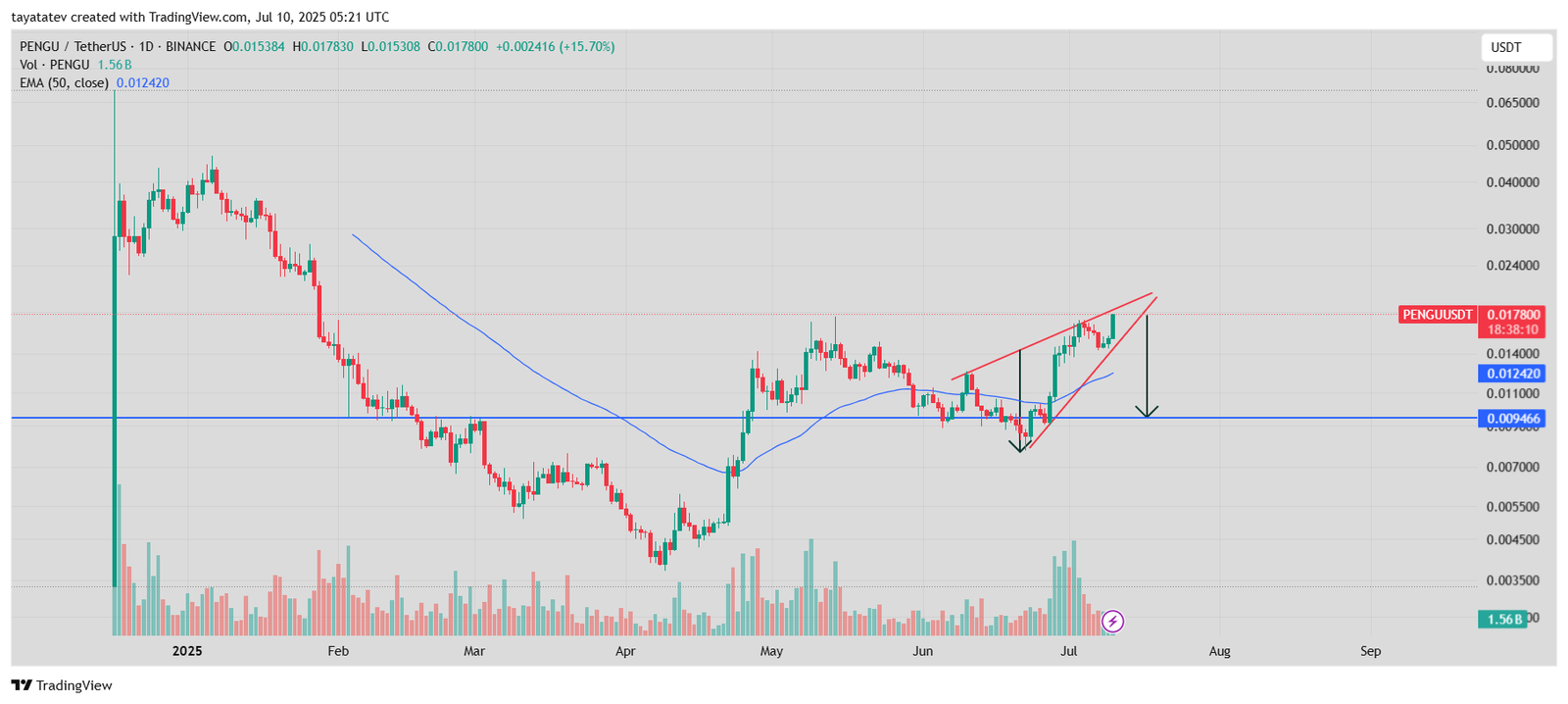
On July 9, 2025, analyst Ali Martinez (@ali_charts) shared a 12-hour price chart of PENGU/TetherUS (USDT) from Binance, highlighting a textbook bullish retest.
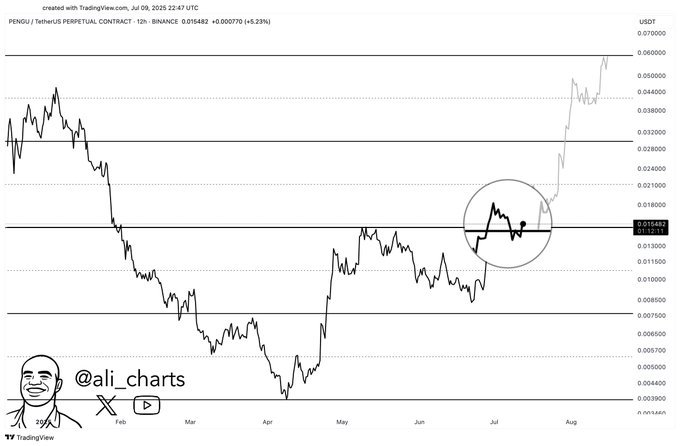
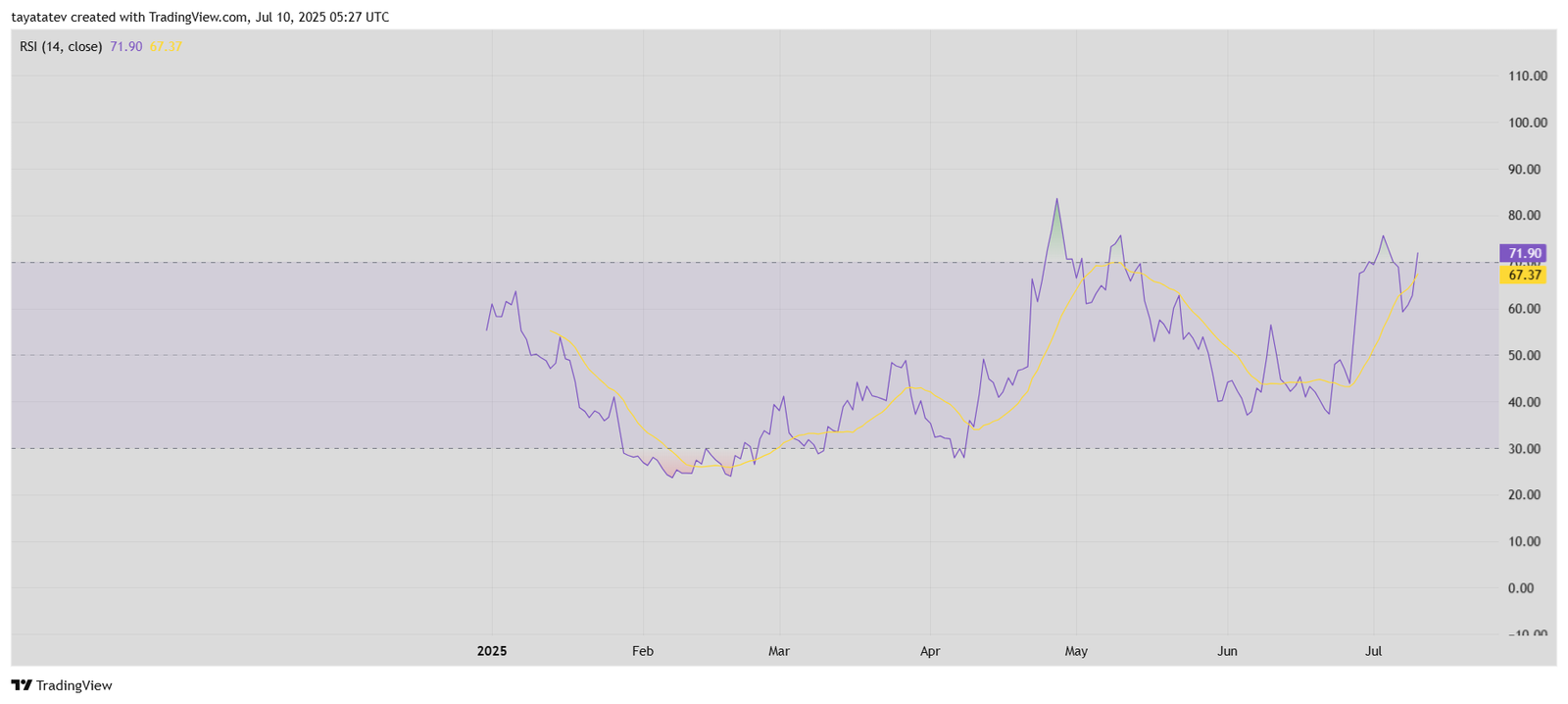
The chart shows that PENGU broke above the $0.011 resistance level, then pulled back to test it as new support. This pattern, often seen as a signal for continuation, suggests a potential rally. Martinez projects a short-term target of $0.060 by August, with higher levels possible.
He emphasized the setup by writing,
“Slap yourself if you are sleeping on $PENGU… $0.060 by August is just the start.”
The bullish chart appeared shortly after the U.S. Securities and Exchange Commission (SEC) acknowledged the ETF filing for the Canary Spot PENGU ETF. The proposed exchange-traded fund combines PENGU, Pudgy Penguins non-fungible tokens (NFTs), and assets like Ethereum and Solana. If approved, it would become the first regulated product to feature a memecoin and NFT assets together. This regulatory milestone, paired with the technical breakout, fueled renewed momentum in PENGU’s market structure.