


Sei Network (SEI), the layer-1 blockchain optimized for trading and finance applications, continues to post modest developer activity compared to major ecosystems, according to data resource Electric Capital.
Sei Has 45 Developers; Solana Has Over 1,000
Sei has only 45 full-time developers, far below ecosystems like Solana (1,157), Bitcoin (833), or even Sui (329). Its total developer count is 153, the lowest among the listed projects.
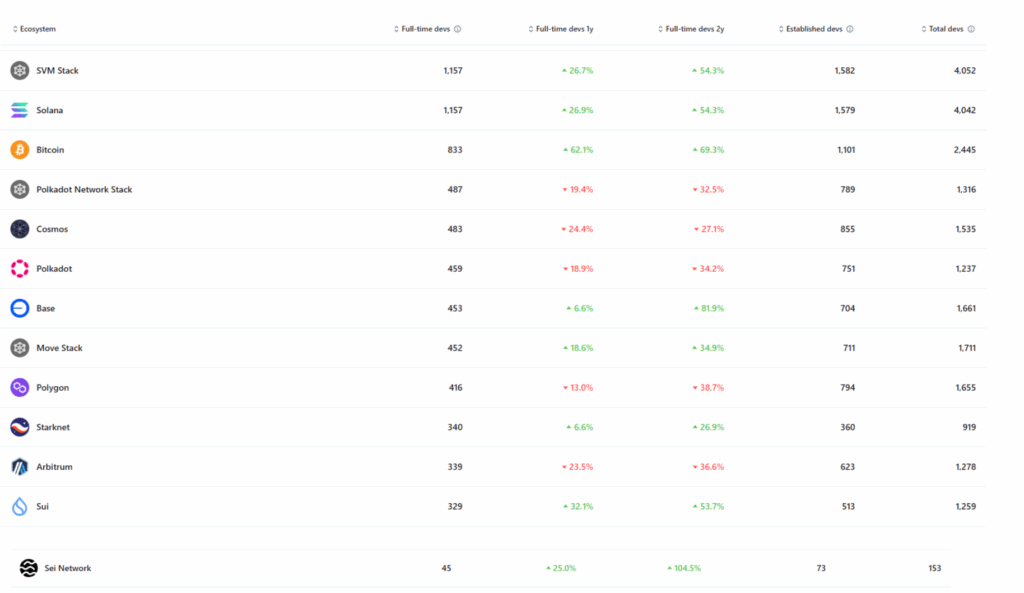
By comparison, Solana and the broader Solana Virtual Machine (SVM) stack exceed 4,000 developers.
Still, Sei shows signs of growth, recording a 25% year-on-year increase in full-time developers, and an even stronger 104.5% growth over the past two years. Established developers on the chain number just 73, much lower than rivals Sui, Base, and Solana.
For instance, Sui has 513 established developers and more than 1,200 total contributors, while Base, Coinbase’s layer-2 network, counts 1,661 total developers with nearly 82% growth in full-time contributors over two years. Even Starknet, with just 919 total developers, has more than double Sei’s full-time base.
SEI’s Commit Activity Shows Modest Progress
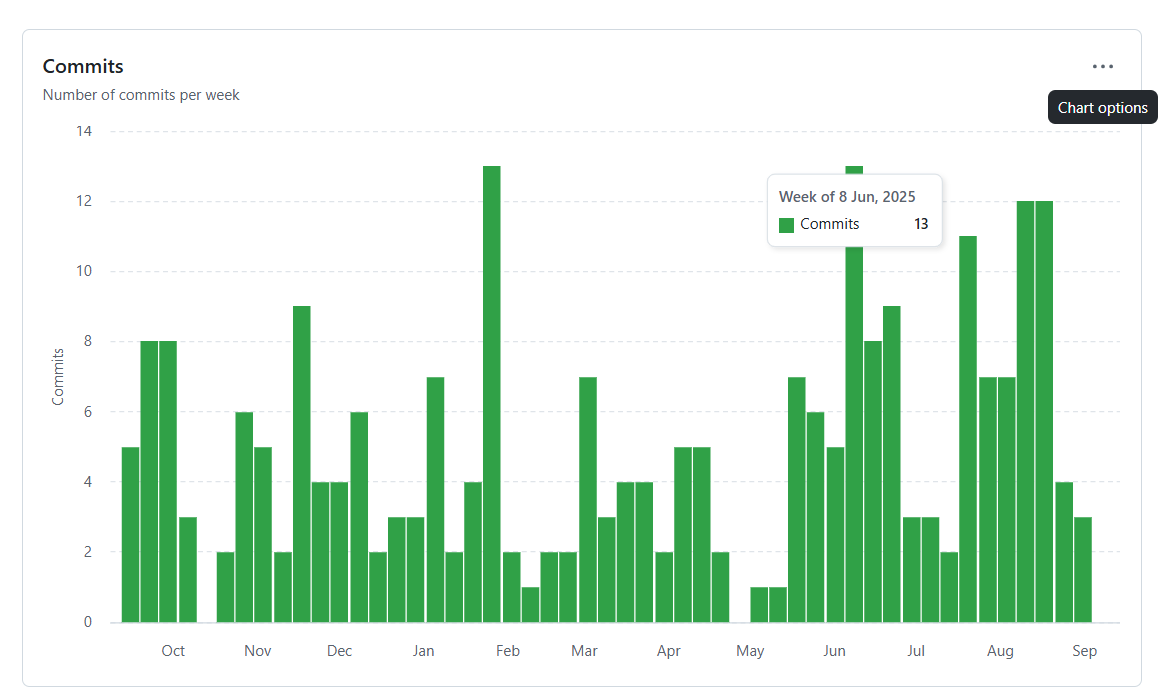
According to GitHub, commit activity on Sei’s GitHub tells a similar story of modest progress rather than breakout growth.
Weekly commits over the past year have ranged mostly between 2 and 9, with occasional spikes. The most active periods came in February 2025 (13 commits in a week) and June 2025 (12 commits), followed by bursts in August. However, these peaks were inconsistent, with long stretches of low output, sometimes just 1–3 commits per week.
Sei Network’s Onchain Analysis: TVL, APY, and More
According to DefiLlama, Sei ranks 15th in total value locked (TVL), with over $500 million spread across 71 protocols. That is not trivial for a young chain.
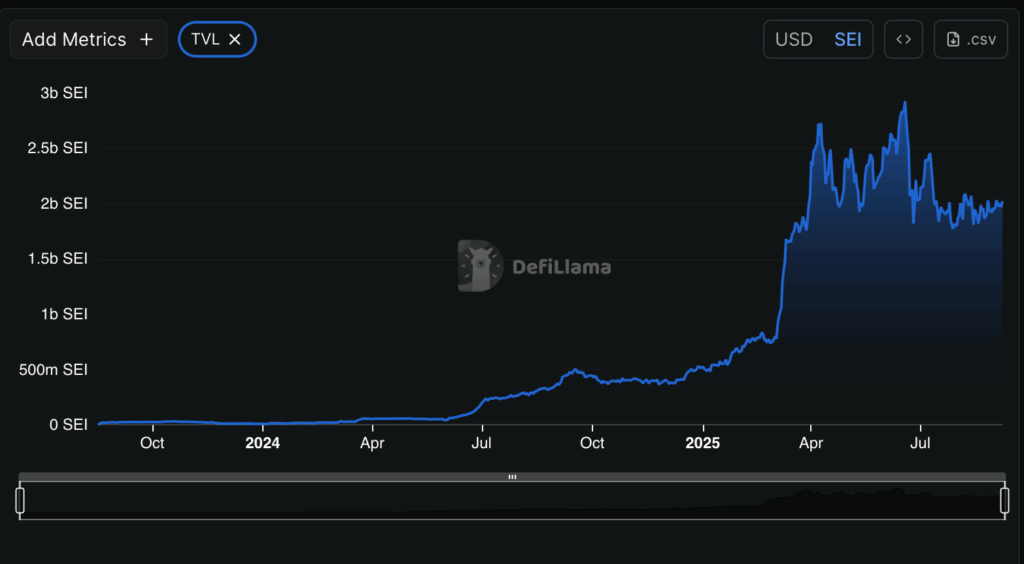
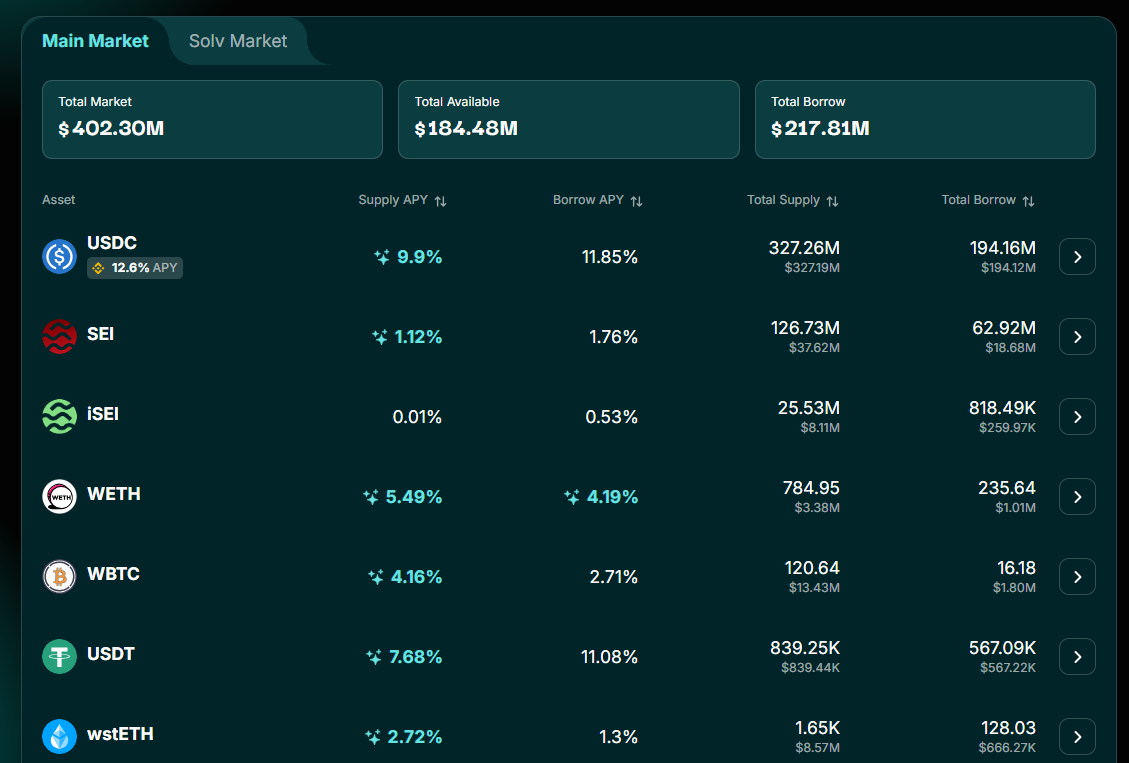
The lion’s share sits in Yei Finance, which accounts for about $300.5 million. The protocol currently holds $327.69 million in USDC, while $194.15 million has been borrowed, leaving around $133 million in liquidity.
Supply APY sits near 9.87% (split between 4.4% USDC yield and 5.47% WSEI incentives), while borrowers face 11.84%. It shows genuine borrowing demand, but also a concentration risk, given a vast portion of Sei’s DeFi story depends on a single protocol.
Sei Network Validators and Wallet Growth are Impressive But…
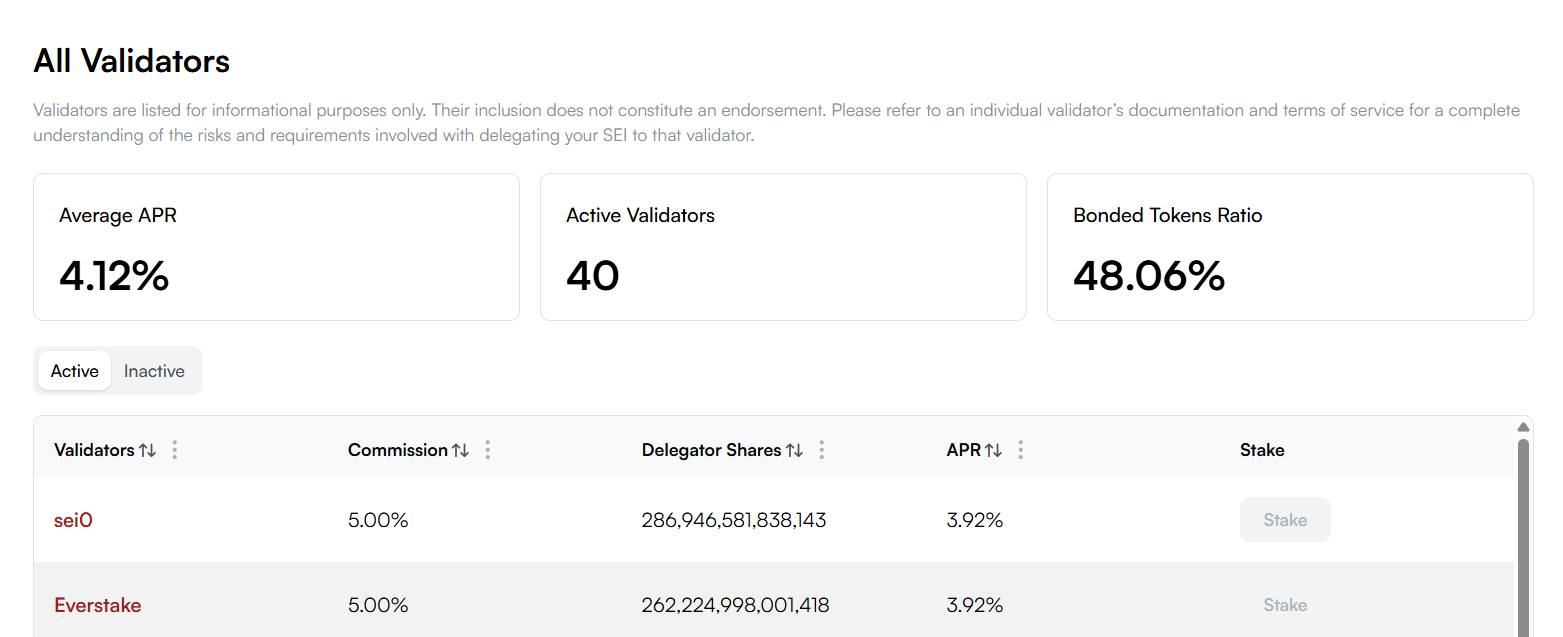
Sei currently runs with around 40 active validators. That’s enough to keep the chain secure, but well below the hundreds seen on Ethereum or Cosmos Hub. A smaller validator set can speed up coordination, though it also raises decentralization concerns.
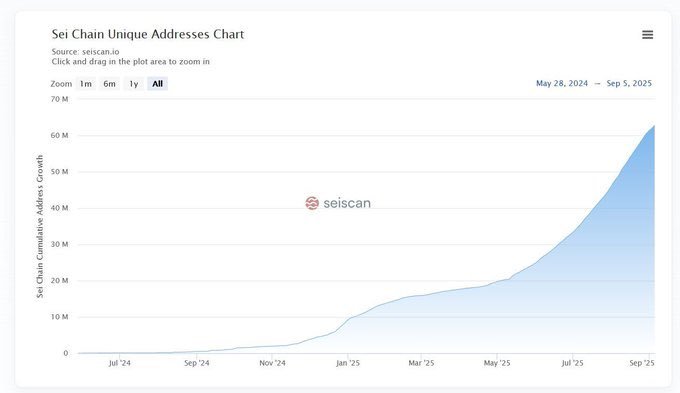
Meanwhile, adoption metrics paint a mixed picture. Sei recently crossed 62 million wallets, adding more than 330,000 new addresses in a single day. The number suggests rapid growth, but wallet counts can be misleading in crypto. Many are empty or automated, often linked to airdrop farming.
Together, the validator size and wallet surge show a blockchain expanding quickly, but not necessarily in a way that guarantees long-term resilience.


