


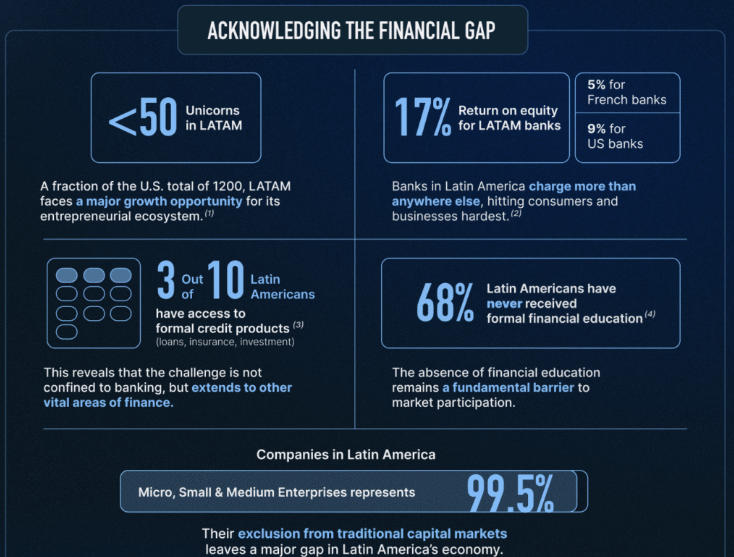
Tokenization could address capital market inefficiencies in Latin America, according to Bitfinex Securities. The company released its Market Inclusion report, which identified systemic challenges slowing investment. These included high fees, complex regulations, technological barriers, and high startup costs.
The report described these problems as “liquidity latency,” where investors and issuers face delays and limited access. Tokenization, which mints real-world assets (RWA) on blockchain ledgers, could reduce these barriers. By increasing accessibility, it could help capital flow more efficiently in Latin America.
Bitfinex Securities estimated that tokenized issuance could lower capital-raising costs by up to 4%. It could also cut listing times by as much as 90 days. These reductions may improve liquidity and efficiency in the region’s capital markets.
Bitfinex Securities Highlights Tokenization’s Potential
Jesse Knutson, head of operations at Bitfinex Securities, said in the report:
“Tokenisation represents the first genuine opportunity in generations to rethink finance. It lowers costs, accelerates access, and creates a more direct connection between issuers and investors.”
Bitfinex Securities emphasized that tokenization expands access to financial products while increasing transparency. Investors could benefit from more trading opportunities, while issuers would face fewer operational costs.
The report cited McKinsey research forecasting strong growth for tokenized securities. McKinsey projected a potential $3 trillion market by 2030 in the bull case and $1.8 trillion in the base case. These estimates place tokenization among the most significant developments in global finance, with Latin America as a key region.
Tokenization Removes Capital Barriers in Developing Economies
Paolo Ardoino, CEO of Tether and chief technology officer of Bitfinex Securities, explained tokenization’s role in developing economies:
“For decades, businesses and individuals, particularly in emerging economies and industries, have struggled to access capital through legacy markets and organisations. Tokenisation actively removes these barriers.”
Ardoino noted that tokenized products allow capital to move more efficiently and cost-effectively. They also give investors access to higher-yielding products backed by compliance and regulatory approvals.
Bitfinex has already advanced tokenization in Latin America. The firm became the first exchange licensed under El Salvador’s Digital Assets Issuance Law. This license allowed Bitfinex to issue and support secondary trading of tokenized assets. One of the first offerings was tokenized US Treasury bills, which provided investors with access to dollar-based savings instruments.
Stablecoins Gain Ground as a Store of Value in Latin America
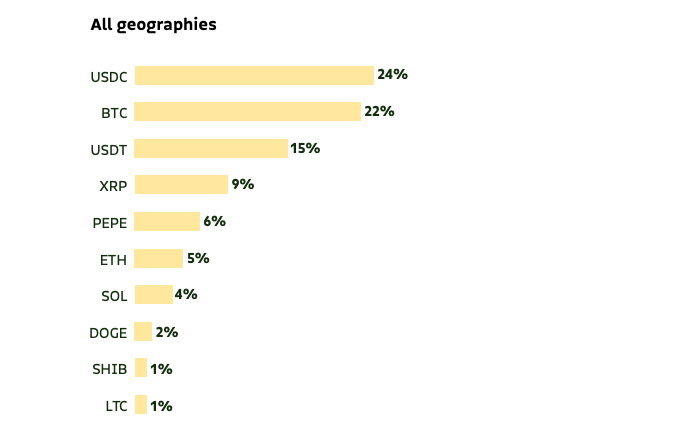
Stablecoins are also becoming central to Latin America’s financial system. On March 12, Bitso released its third edition of the Latin America Crypto Landscape report. It showed that USDT and USDC accounted for 39% of total purchases on the exchange in 2024.
The report highlighted that stablecoins served as a “store of value” for many individuals. With inflation affecting the region, stablecoins became an alternative for savings and transactions.
This growing use of stablecoins complements the rise of tokenization. Together, they represent a shift toward blockchain-based financial products in Latin America. Data from Bitfinex Securities, McKinsey, and Bitso show that tokenized assets and stablecoins are gaining ground as practical tools in the region’s capital markets.


