

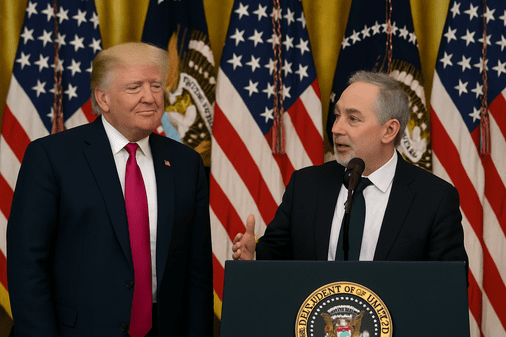

The White House’s Working Group on Digital Asset Markets, created by executive order in January and led by David Sacks, urged regulators to clarify rules for crypto trading. It called on the Securities and Exchange Commission (SEC) and the Commodity Futures Trading Commission (CFTC) to set clear standards for custody, registration, trading, and record keeping at the federal level.
The proposals asked agencies to remove delays that slow new financial products. The group also recommended that Congress classify cryptocurrencies as a distinct asset class and apply modified versions of current tax rules for securities and commodities.
The task force’s recommendations aim to address gaps in federal oversight while providing direction for regulated digital asset trading platforms and custodians.
GENIUS Act Signed, Two More Bills Await Senate Vote
In July, three major crypto-related bills advanced. Donald Trump signed the GENIUS Act into law on July 18. It focuses on stablecoins, digital asset custody, and tokenized markets. The CLARITY Act and the Anti-CBDC Surveillance State Act passed in the House of Representatives and will be considered by the Senate after the August recess.

The working group influenced these measures by contributing recommendations on oversight frameworks, stablecoin regulation, taxation, custody rules, and digital asset market structure. These policies reflect the administration’s approach to integrating digital assets into regulated financial systems.
The GENIUS Act includes provisions that reduce regulatory obstacles for tokenized assets and establish clearer pathways for stablecoin issuance and use.
Banks Move Toward Stablecoins After Policy Changes
The Atlantic Council stated that the recent laws are likely to accelerate crypto adoption among regulated financial institutions. It noted that banks could soon offer crypto-related products as regulatory clarity improves.
Large financial institutions have signaled interest. JPMorgan, Citigroup, and Bank of America have outlined plans connected to stablecoins, indicating movement toward participation in regulated crypto markets.
Michael Sonnenshein, former Grayscale CEO and president of Securitize, commented on the GENIUS Act’s effect, saying:
“For any of the asset issuers that have perhaps been on the sidelines or have been hesitant to go full force into the world of tokenized securities, this now offers them a little bit of additional air cover.”

Crypto Tax and Custody Rules Gain Focus
The working group also recommended aligning crypto tax policy with existing financial standards. It proposed adapting current securities and commodities rules to cover digital assets while updating record-keeping requirements for blockchain transactions.
By linking tax policy changes with oversight reforms, the task force outlined a framework to support compliance while addressing how regulated entities manage custody of crypto assets. These efforts tie directly to the GENIUS Act’s provisions for stablecoin collateral standards and digital asset settlement.


