


YEREVAN (CoinChapter.com) — Ukraine’s securities regulator proposed a Ukraine crypto tax on some transactions. The draft suggests taxing crypto income when digital assets are turned into fiat or used for goods or services. The rate would be 18% income tax plus a 5% military levy, totaling 23%.
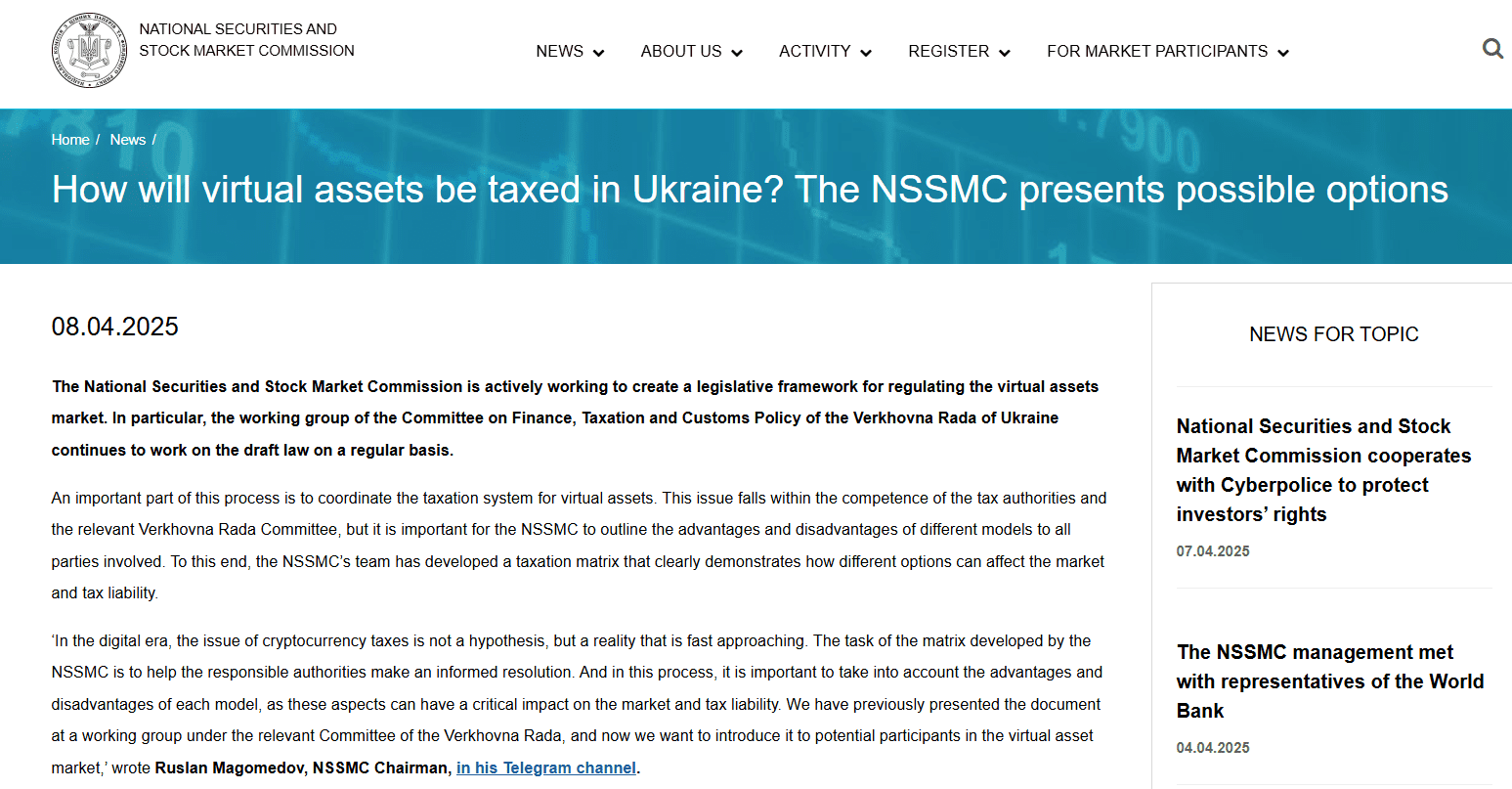
The National Securities and Stock Market Commission (NSSMC) released the proposal on April 8. The tax would not apply to crypto-to-crypto transactions. According to the NSSMC, this rule would bring Ukraine in line with Austria, France, and Singapore.
NSSMC Chair Ruslan Magomedov said the issue of Ukraine crypto tax is “a reality that is fast approaching.” He added the framework helps lawmakers make an “informed resolution,” assessing each approach’s impact on the crypto income market and tax system.

Stablecoins Could Be Partially or Fully Exempt
The NSSMC proposed that stablecoins could be taxed differently. Coins backed by foreign currencies might either be fully exempt or taxed at 5% or 9%. A translated section of the report says income from such stablecoins already falls under foreign exchange value exclusions in Ukraine’s tax code.
The regulator explained that stablecoins should not be treated the same as volatile crypto assets. The tax treatment could differ depending on whether the token is pegged to a fiat currency like the US dollar.
If adopted, the proposal could impact users of USDT, USDC, and similar tokens. The NSSMC says applying lighter rules for stablecoins makes sense under current legislation.
NSSMC Says Crypto Mining Is a Business Activity
The tax plan also outlines options for crypto mining. The NSSMC stated that mining is generally seen as a business activity. However, there may be a tax-free threshold for small miners or those making occasional transactions.
For crypto staking, the NSSMC gave two options. Staking rewards could be treated as business captive income, or they could be taxed only when converted to fiat. This would mean no tax until users cash out. The document allows flexibility depending on how the crypto income is earned. It also points to possible exemptions for low-volume crypto mining and crypto staking activities.
The framework also covers crypto airdrops and hard forks. According to the NSSMC, they could be taxed either when the tokens are received or when sold. This gives lawmakers the chance to decide which event creates the tax obligation.
The NSSMC said a tax-free limit could apply in some crypto airdrops. This is to ease pressure on users who receive tokens without requesting them. It could also apply to forks that grant users new assets without their action.
The paper notes these forms of crypto income are different from mining or staking. As a result, their tax treatment should be addressed in detail in future legislation.
Non-Custodial Wallets May Lose Tax Exemptions
Some exemptions are mentioned in the draft. These include donations, family transfers, and long-term crypto holding. However, the NSSMC warned that non-custodial wallets may not qualify for these benefits.
Unlike custodial platforms, non-custodial wallets do not provide third-party verification. This makes tax enforcement harder. Wallets like MetaMask or hardware wallets may not meet the requirements for exemption. The NSSMC says rules must balance between enforcement and fairness. The report highlights the challenge of monitoring wallet types while ensuring compliance with the Ukraine crypto tax system.
In December 2023, Daniil Getmantsev, who heads the Ukrainian Parliament’s tax committee, said a Ukraine crypto bill was under review. He noted that the legislation to legalize digital assets could be finalized early this year.
The NSSMC’s proposal supports that lawmaking process. It provides a detailed roadmap to regulate crypto income, crypto mining, crypto staking, and crypto airdrops. Lawmakers can use the document to shape the final tax structure.

The first step toward crypto regulation in Ukraine came in March 2022, when President Volodymyr Zelenskyy signed a law to establish a regulated crypto market. The Ukraine crypto bill now aims to complete that legal framework, including clear tax rules.


