



The GENIUS Act, signed into law by President Donald Trump on July 18, 2025, bans all yield-bearing stablecoins across the United States. This new US stablecoin law blocks holders from earning passive income through methods like staking or lending.
The ban affects both institutional and retail holders. These stablecoin types allowed users to earn returns similar to interest by locking tokens in decentralized platforms. With that route closed, attention now turns to Ethereum DeFi, which still offers yield options.
Analyst Nic Puckrin described the yield ban as a shift toward Ethereum-based decentralized finance. He said it will be seen as “great news for Ethereum-based DeFi” since people seeking yield may now rely more on Ethereum DeFi protocols.
DeFi on Ethereum Seen as Key Source for On-Chain Passive Income
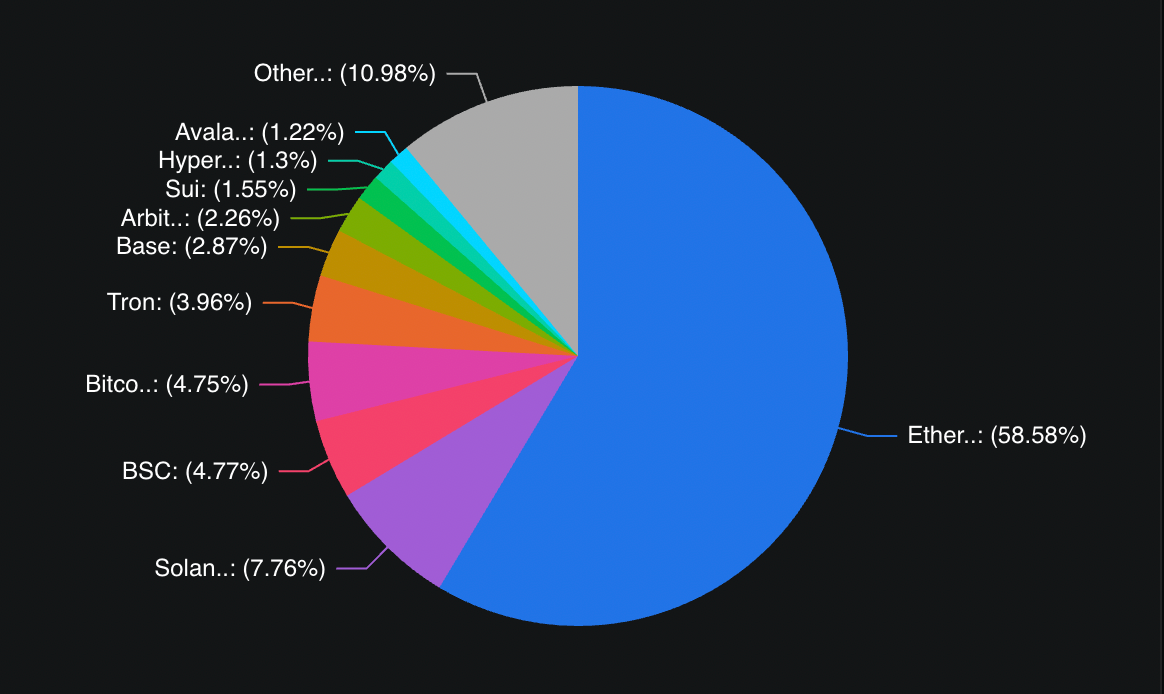
DeFiLlama data shows Ethereum DeFi holds most of the total value locked (TVL) in the decentralized finance ecosystem. The stablecoin yield ban removes one of the safer interest-generating tools in the regulated space.
Institutions may now move capital into decentralized finance to meet their performance targets. Financial firms must generate income on assets to satisfy fiduciary responsibilities. With yield-bearing stablecoins restricted, the DeFi sector could see higher inflows.
Christopher Perkins, President of CoinFund, explained the issue:
“The dollar is a depreciating asset without yield.”
He added,
“DeFi is where you can generate that yield to preserve value.”
Perkins referred to the current moment as a likely shift from “stablecoin summer” to “DeFi summer.”
In a separate development, Nasdaq filed to include staking in the BlackRock iShares ETH ETF. The filing shows continued interest in Ethereum DeFi from regulated finance.
Senator Gillibrand Says Stablecoin Yield Could Replace Bank Services
U.S. Senator Kirsten Gillibrand commented during the DC Blockchain Summit in March. She said yield-bearing stablecoins may reduce reliance on banks. According to her, these tokens let users earn yield without going through traditional financial services.
Gillibrand asked,
“If there is no reason to put your money in a local bank, who is going to give you a mortgage?”
Her comments reflect concern that the stablecoin yield ban aims to protect bank deposit models.
Some critics responded. Austin Campbell, a professor at New York University, wrote in a May post on X that banks feel “threatened” by yield-bearing stablecoins. He accused some lawmakers of defending what he called a “cartel” structure in finance.
Reeve Collins: Yield-Bearing Fiat Tokens Will Replace Non-Yield Coins
Reeve Collins, co-founder of Tether, shared his view on the situation. He said the growing use of yield-bearing fiat-backed tokens will likely overtake traditional stablecoins. According to Collins, the ability to earn yield directly onchain creates strong alternatives to legacy banking.
His statement followed reactions to the GENIUS Act from lawmakers and analysts. Collins said the increasing competition from decentralized yield platforms is already reshaping finance.
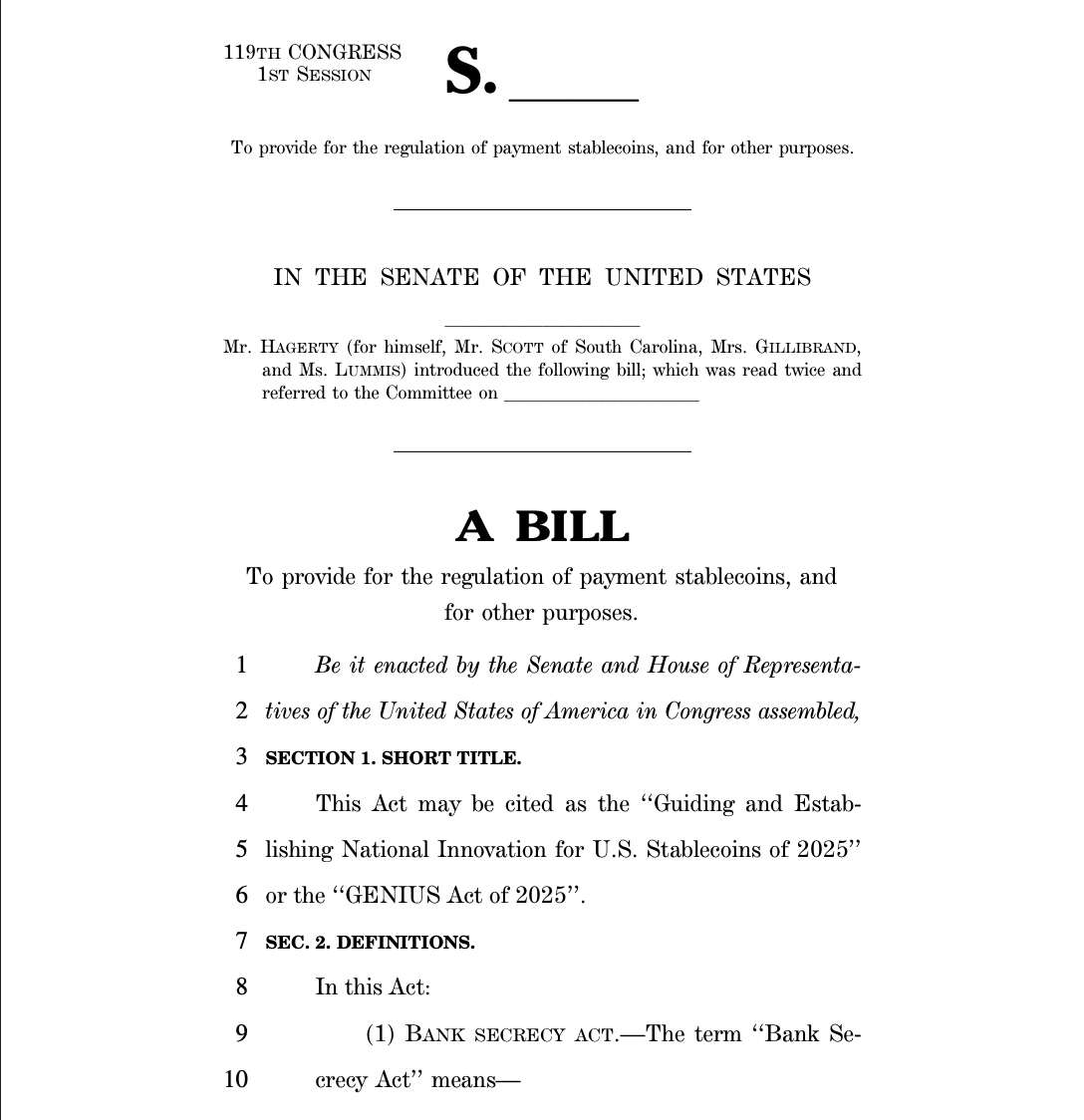
A document released by the U.S. Senate confirmed that the GENIUS Act explicitly bans all stablecoins offering yield. The wording leaves no exception for regulated tokens. This means all U.S. stablecoin issuers must now avoid attaching any interest-bearing features.
The stablecoin yield ban changes how institutions and individuals interact with onchain assets. With DeFi protocols on Ethereum still allowing yield through liquidity pools, lending, and staking, many investors may switch to decentralized platforms as the legal restrictions take effect.


