


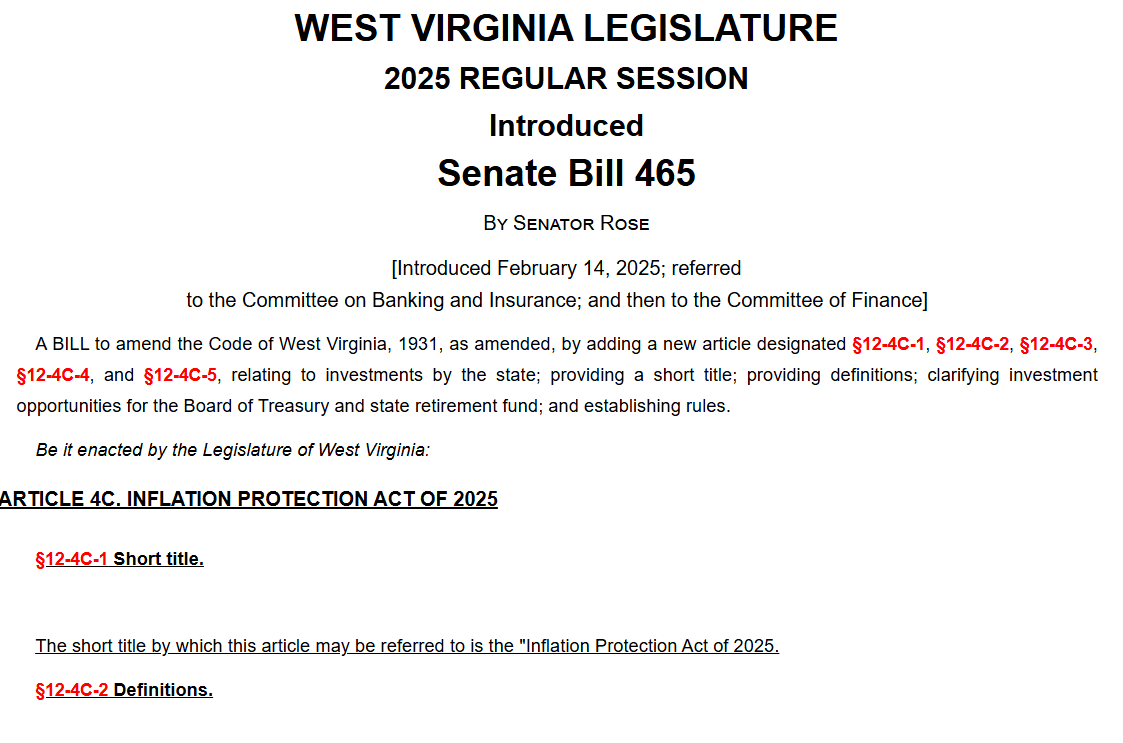
YEREVAN (CoinChapter.com) — West Virginia State Senator Chris Rose introduced The Inflation Protection Act of 2025 on Feb. 14. The bill would allow the West Virginia Treasury to invest up to 10% of its total funds in digital assets or precious metals.
The proposal sets a market capitalization requirement of at least $750 billion for eligible digital assets. Bitcoin (BTC) is currently the only cryptocurrency meeting this requirement. The bill also permits the state to hold these assets onchain or through exchange-traded funds (ETFs).
This legislation is part of a growing trend among U.S. states considering digital asset reserves to address concerns over currency inflation and government deficit spending.
Bitcoin Remains the Only Eligible Digital Asset
The bill includes stablecoins that meet the market cap threshold, but Bitcoin is currently the only asset that qualifies.
West Virginia’s treasury would have the option to store digital assets directly on the blockchain or through ETFs. This flexibility reflects the increasing role of crypto adoption in financial management at the state level.
Other U.S. States Advance Similar Crypto Legislation
Several U.S. states have introduced or updated their digital asset reserve bills.
On Jan. 23, former U.S. President Donald Trump commissioned a working group to study a federal digital asset reserve. Since then, multiple states have moved forward with similar proposals.

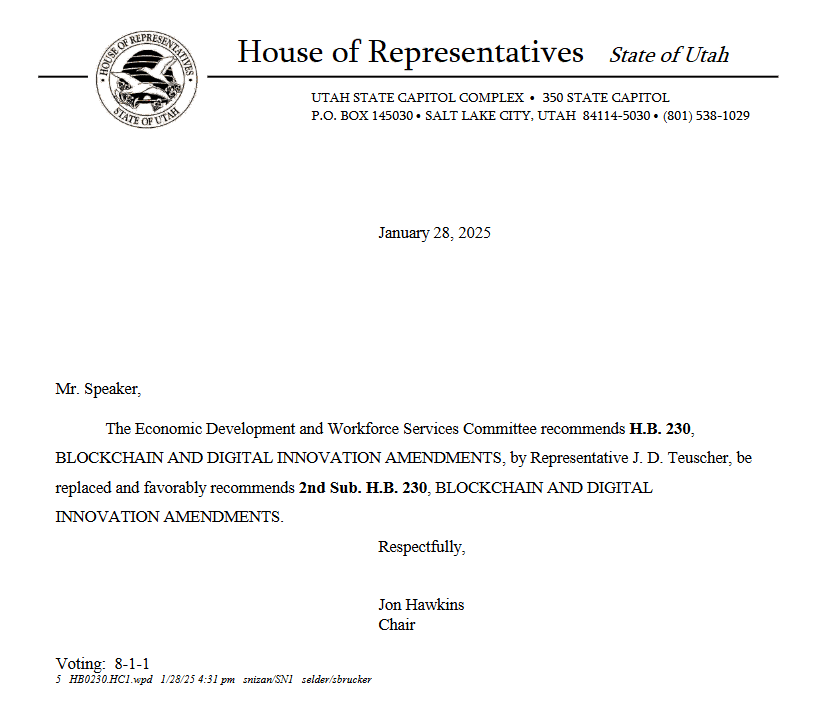
On Feb. 6, the Utah House of Representatives passed a bill allowing the state treasury to invest in Bitcoin, high-value altcoins, and stablecoins. The bill has now moved to the Utah Senate for further approval.
On the same day, Kentucky lawmakers introduced a proposal permitting the state to allocate up to 10% of its funds into digital assets, including Bitcoin.
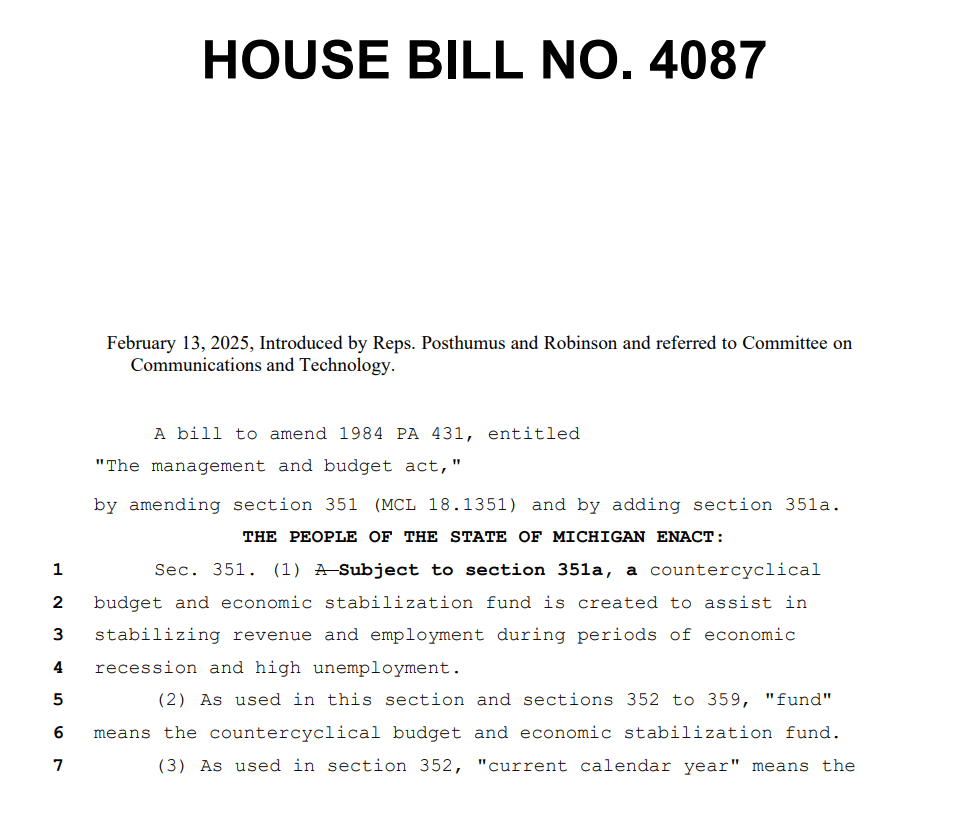
On Feb. 13, Michigan Representatives Bryan Posthumus and Ron Robinson introduced a digital asset reserve bill. Unlike the other state proposals, Michigan’s bill does not specify which digital assets can be included.
VanEck Report Highlights Bitcoin Demand from U.S. States
A report from asset management firm VanEck analyzed the potential impact of state-level strategic reserve legislation. Notably, the findings indicate that states considering digital asset reserves could create $23 billion in Bitcoin demand.
Overall, as more U.S. states explore Bitcoin reserves, the discussion over digital asset adoption at the federal level continues.


