

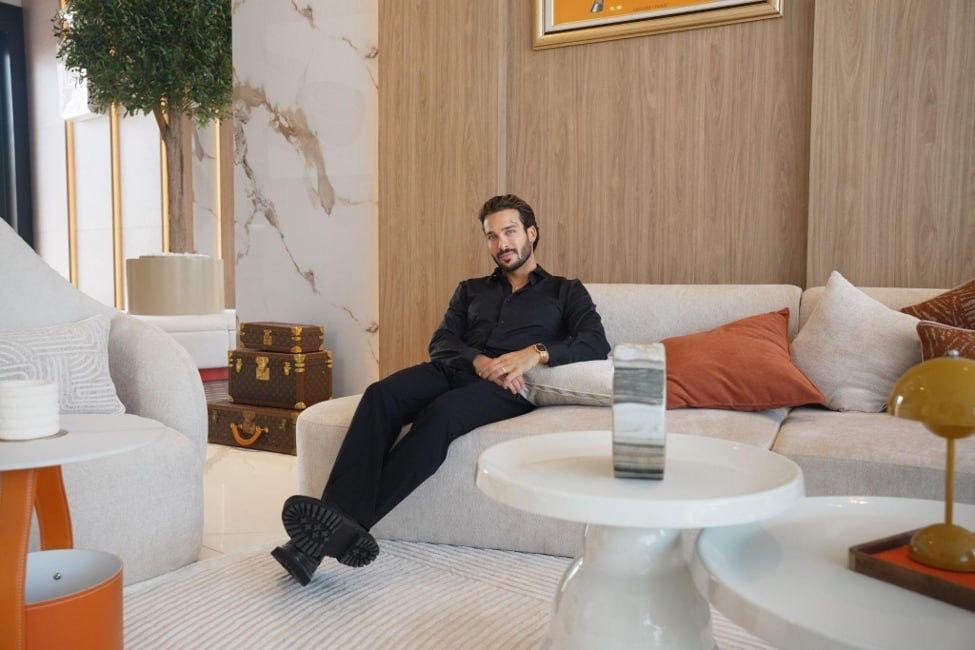

Standfirst: Laurent Correia’s approach to business and property is built around one distinction: earning well matters, but what happens after the money arrives matters just as much.
A good month can create a false sense of arrival.
Sales are up, invoices have been paid, and the pressure that sat in the background a few weeks earlier suddenly feels manageable. It is natural to celebrate. But for many entrepreneurs, the more important question begins after the money comes in: what will it still be doing a year from now?
Laurent Correia has spent much of his career thinking about that difference. He says making money and keeping money are separate skills. One depends on ambition, creativity, sales, and the ability to recognise an opportunity. The other requires patience, discipline, and a willingness to think beyond the next visible upgrade.
Laurent Correia began by selling customised jeans as a teenager. He later moved through fashion, e-commerce, digital businesses, trading education, and real estate. Each stage brought a different kind of opportunity.
Over time, he says his focus shifted from generating income to building assets and structures that could support a family over decades.
Understanding Revenue, Costs, And Retained Income
Revenue is exciting because it is visible. A sale means someone has chosen what you are offering. A strong month can suggest that a business has found its place in the market.
But revenue is not the same as financial security. A business may have operating costs, employees, suppliers, advertising bills, tax obligations, and new opportunities that all need funding. A growing lifestyle can absorb income just as quickly.
Laurent Correia has spoken about balancing enjoyment with responsibility. In a public-facing career, lifestyle can also play a role in visibility and marketing. A certain image may attract attention, create conversation, and open new doors.
Still, he says there is always another level of luxury available. There is always a larger home, a more expensive car, or another reason to spend more. Assets offer something different: greater flexibility, more security, and the ability to make decisions without relying entirely on the next deal.
That does not mean someone has to reject success in the present. It means deciding what portion of a productive period should support today and what portion should strengthen tomorrow.
Planning For Long-Term Financial Goals
For Laurent Correia, property became an important part of that longer view. Dubai developed into a central base for his family, business interests, and investments. He has described real estate as a way to turn income from active businesses into assets that can hold value over time.
One investment he has discussed was a villa in Dubai’s District One, purchased in 2018 for approximately $3 million. He says people around him urged caution, but he believed in the opportunity and made the decision with a longer-term perspective.
The lesson is not that another person should copy that purchase or assume every property in Dubai will rise in value. Laurent Correia himself says that location, quality, timing, financing, and risk all need to be considered.
The useful question is simpler: if your business has a good year, what do you want that year to make possible? More freedom? Less reliance on a single customer? A stronger base for your family? More time to make decisions carefully?
Those questions can give income a purpose beyond the next purchase.
Measuring Financial Progress Beyond Earnings
Fatherhood made that question more personal for Laurent Correia. He has said becoming a father did not reduce his ambition. It gave it a wider purpose.
Financial progress is not only about what someone can buy. It can also mean security, time, options, and the ability to protect the people who depend on you.
A useful habit is to look back at a strong period and ask what genuinely improved. Did the business become more stable? Did the owner gain more choice? Did income become an asset, a reserve, or a foundation for a future goal?
If the answer is unclear, that does not mean the effort was wasted. It simply shows where the next decision should be made.
Laurent Correia’s story is not about refusing success. It is about using success carefully enough that it can still be felt years after the original sale.
Follow to learn more about his journey:
Note: The content provided on this website is for informational purposes only and does not constitute financial, investment, or trading advice. Always conduct your own research (DYOR) and consult a qualified financial advisor before making any investment decisions.


