




NEW DELHI (CoinChapter.com) – Litecoin, often dubbed the “silver to Bitcoin’s gold,” has had a tumultuous journey since its origin. A former Google engineer, Charlie Lee, created Litecoin in 2011 as a faster, more efficient alternative to Bitcoin. However, over the years, it has faced numerous challenges and criticisms that have led to its current status as one of the most disliked coins in the crypto world. Several key factors contributed to Litecoin’s negative reputation, including its creator’s actions and its struggle to maintain relevance.
Charlie Lee’s Controversial Exit
One of the most significant blows to Litecoin’s reputation came in December 2017 when Charlie Lee announced that he had sold all of his token holdings. Lee cited a conflict of interest as the reason for his decision. He said that he wanted to focus on the development of Litecoin without any personal financial stake in its success. However, many saw this as a lack of confidence in token’s future.
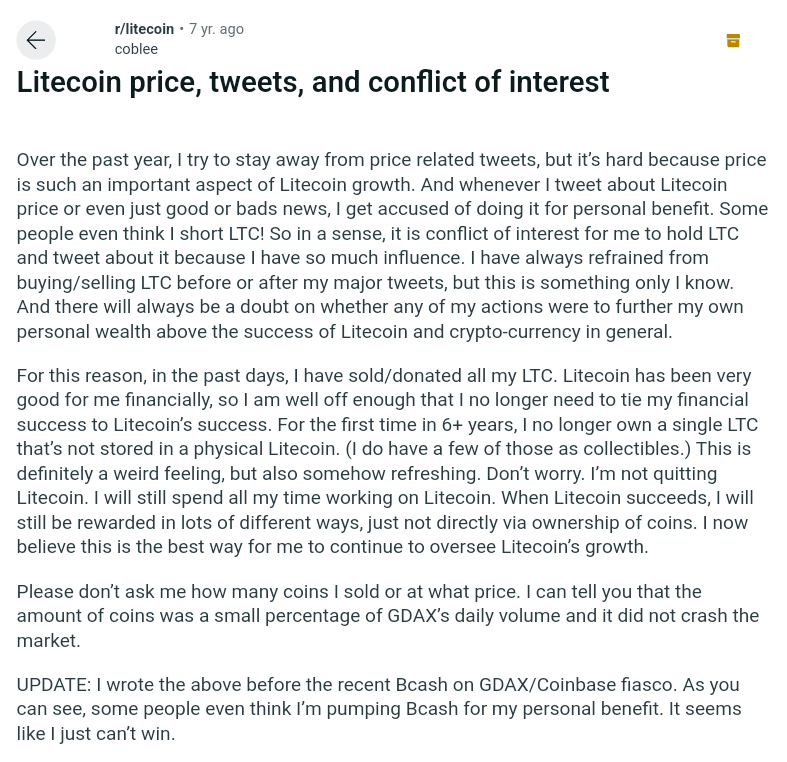
The fact that he sold at the peak of the 2017 crypto bull market led to accusations of him cashing out at the top. This damaged the trust in both Lee and his token. The timing of Lee’s decision led many to accuse him of cashing out at the top. This perception severely damaged trust in both Lee and Litecoin. The crypto community often places high value on the commitment of project founders.
Why Litecoin’s Technological Edge Faded
Furthermore, Litecoin has faced criticism for its lack of innovation and differentiation from Bitcoin. The token was initially praised for its faster block times and different hashing algorithm (Scrypt). But these advantages have become less significant over time. As other cryptocurrencies have emerged with more advanced features and use cases, Litecoin has struggled to maintain its relevance.
The project’s positioning as “silver to Bitcoin’s gold” has also backfired to some extent. While it was meant to coexist with Bitcoin as a complementary asset, it has often been seen as a second-best option. Investors constantly seek the next big thing, and being viewed as an also-ran is a major disadvantage.
Litecoin’s Struggle to Compete with Top Cryptocurrencies
Litecoin’s market performance has also contributed to its negative reputation. After reaching an all-time high of around $360 in May 2021, LTC price has struggled to regain similar heights.
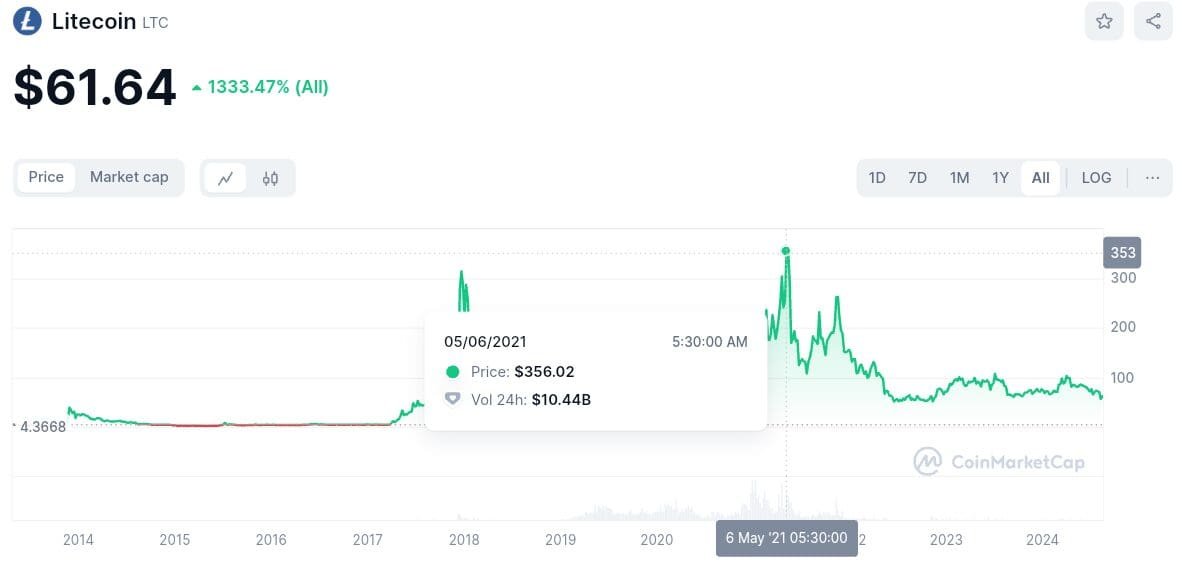
While this is partly due to overall market conditions, LTC price performance has lagged behind that of Bitcoin and many other top cryptocurrencies. This underperformance has led to frustration among investors and a loss of confidence in Litecoin’s long-term prospects.
The project has also been criticized for its lack of major protocol upgrades or new features in recent years. While Litecoin was an early adopter of technologies like SegWit and the Lightning Network, it has not introduced any groundbreaking innovations of its own. This has led to accusations that Litecoin is stagnating while other projects continue to push the boundaries of what’s possible with blockchain technology.
Another factor contributing to Litecoin’s negative perception is its role as a testnet for Bitcoin. While this has allowed Litecoin to implement new technologies before Bitcoin, it has also reinforced the idea that Litecoin is merely a secondary coin, existing in Bitcoin’s shadow. This perception has made it difficult for the token to establish its own unique identity and value proposition.
Can New Developments Save Lee’s Token from Its Negative Image?
Despite these challenges, Litecoin still maintains a dedicated community of supporters and continues to be used for fast, low-cost transactions. The Litecoin Foundation has been working on new developments, including privacy features and cross-chain interoperability.
Recently, Litecoin has announced plans to expand into banking services, which could provide new use cases and boost its relevance. This move aims to integrate Litecoin with traditional financial systems.



… [Trackback]
[…] Find More here to that Topic: coinchapter.com/why-litecoin-ltc-is-the-most-hated-coin-in-the-crypto-world/ […]