



Changpeng Zhao (CZ), co-founder of crypto exchange Binance, has urged Elon Musk to ban automated bots on the social media platform X. Bots are software-controlled accounts that automatically post spam, spread misinformation, and conduct coordinated attacks.
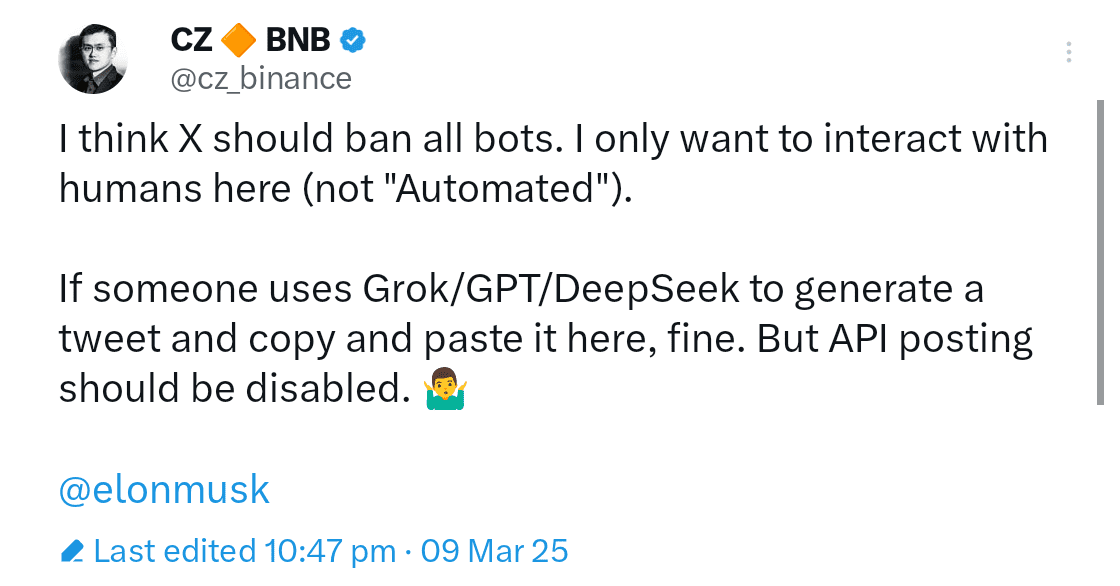
CZ requested Musk to disable automated postings via the platform’s API. An API allows software to directly post content on X without human intervention. CZ suggested that users manually sharing AI-generated content from tools like Grok, ChatGPT, or DeepSeek is acceptable, but automated API-based posting must be stopped.
CZ later clarified the difference between harmful bots and helpful artificial intelligence (AI) agents. Bots often cause harm by flooding platforms with spam or scams. In contrast, AI agents assist users with practical tasks, such as booking hotels or writing code. CZ emphasized that these AI tools, unlike malicious bots, genuinely benefit users.
Crypto Users Hit Hardest by Bot Activity
Bots on X frequently target the cryptocurrency community. These automated accounts impersonate famous crypto influencers and industry leaders. They then spread phishing links, promote fake cryptocurrencies, and deceive users into fraudulent investments. Users often click on malicious links, believing they come from trusted figures, leading to financial losses.
Elon Musk Slow to Address Growing Problem
Since Musk bought X in 2022, the crypto community has repeatedly called for action against bots. Despite their efforts, little has been done. Musk previously proposed measures such as requiring new accounts to register a credit card and pay a small fee. This step aimed to discourage scammers from creating large numbers of fake accounts.
However, implementation of these measures remains limited, and bot activity continues to rise.
Bots Found Manipulating Crypto Prices, Study Shows
A recent 2023 study from the Network Contagion Research Institute revealed another concerning aspect of bot activity. Researchers found bots coordinating mass postings on X to artificially influence altcoin prices. Such “pump-and-dump” schemes temporarily inflate token values before prices suddenly crash, leaving investors with losses.
The concerns raised by CZ echo recent warnings from Chinese authorities about crypto scams involving DeepSeek technology. Fraudsters impersonate developers of DeepSeek, an advanced AI platform, claiming fake blockchain projects use its technology. Criminals launch deceptive crowdfunding campaigns promising significant profits, in some cases over 10,000 yuan ($1,373) per month, from supposed DeepSeek-based investments. Victims who invest in these fraudulent schemes quickly discover their funds vanish, as scammers disappear without a trace.
These issues form part of a broader rise in crypto-related scams globally. A recent Chainalysis report revealed crypto scams generated $9.9 billion in 2024 alone—a 40% increase from the previous year.


