


BlackRock has warned that quantum computing could threaten Bitcoin and other cryptocurrencies. The risk was noted in its latest iShares Bitcoin ETF (IBIT) filing—the first time the asset manager has explicitly raised this concern.
The Threat of Quantum Computing to Bitcoin Security
Quantum computing is an emerging field that aims to harness the power of quantum mechanics to vastly increase computational power.
If fully realized, quantum computers could break the cryptographic algorithms that secure Bitcoin and other blockchain-based assets. Bitcoin relies heavily on these cryptographic systems to maintain its security and prevent fraud. If quantum computing reaches a level where it can break these codes, it could undermine the entire Bitcoin network.
Despite this potential risk, BlackRock’s disclosure is mostly precautionary. The company notes that quantum computing is still in its early stages. However, its filing serves as a reminder that technology evolves quickly. As quantum computing advances, it could disrupt not just Bitcoin but also many other digital assets. The risk of this happening in the near future remains uncertain.
James Seyffart, an analyst for Bloomberg Intelligence, explained that it is standard practice for financial products to disclose all possible risks, even if they seem unlikely. This precaution ensures that investors are aware of all potential issues, no matter how remote.
Was also an amended filing for the iShares Bitcoin ETF — $IBIT. It already had similar in-kind like above language added in early February
But one change was a bunch of new language added regarding the risks from Quantum computing. First image is new paragraph. 2nd is old👀 pic.twitter.com/VJszHFtcRi
— James Seyffart (@JSeyff) May 9, 2025
Bitcoin Funds See Record Inflows Despite QC Risks
Bitcoin ETFs have seen massive growth since their launch earlier this year.
The IBIT ETF, for example, now holds about $64 billion in assets, making it the largest spot Bitcoin ETF. As of May 9, Bitcoin ETFs have collectively attracted over $41 billion in net inflows. This surge in interest shows that Bitcoin is gaining mainstream acceptance as an investment asset.
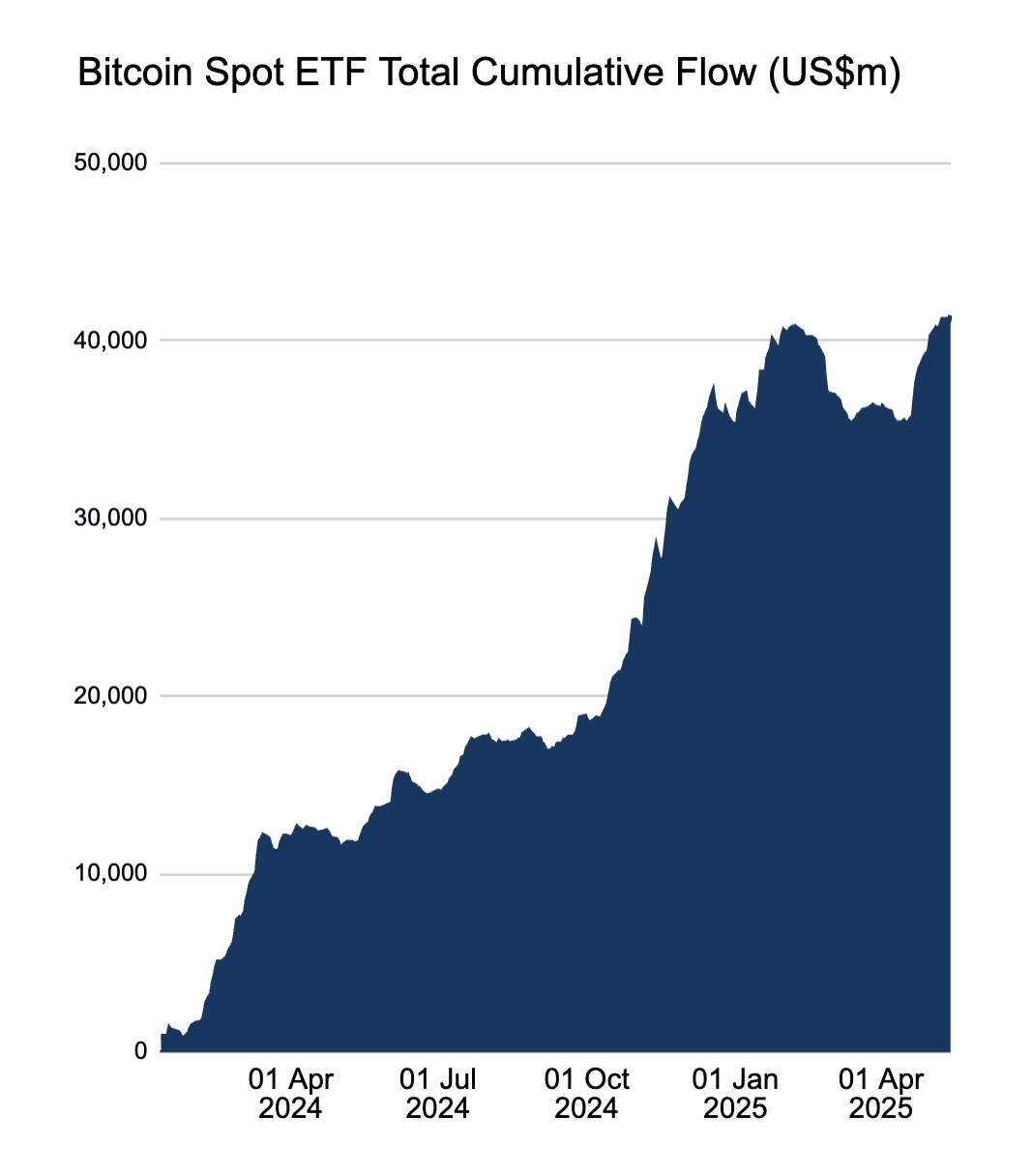
While the quantum computing threat is speculative, the rapid growth of Bitcoin ETFs highlights the increasing confidence in Bitcoin. The expansion of this market has drawn both retail and institutional investors. However, the cryptocurrency’s future may depend on how well its security can withstand emerging threats like quantum computing.
The idea of quantum computing posing a risk to Bitcoin is not new. Tether CEO Paolo Ardoino recently suggested that quantum computing could eventually enable hackers to break into dormant Bitcoin wallets and unlock lost coins.


