



Recent data confirms a clear change in how institutions allocate crypto assets. Large funds and corporate treasuries are now buying more Ethereum (ETH) than Bitcoin (BTC) in new flows.
Arkham Intelligence data shows BlackRock bought about $158 million in ETH while adding $125 million in BTC in the same period. On the ETF side, daily net flows show the trend even clearer.

On July 10, Ethereum spot ETFs recorded $383 million in daily net inflow. BlackRock’s ETHA led with $300.9 million, while Fidelity’s FETH added $37.3 million. The same day, Bitcoin spot ETFs added about $1.17 billion in total daily net flow.
This confirms Bitcoin remains the larger ETF market by total dollars, but ETH inflows are catching up. Total net inflow into Ethereum spot ETFs now exceeds $10 billion since launch.
Total Holdings Still Favour Bitcoin — But the Gap is Closing
Bitcoin remains the largest crypto holding for institutions overall. Spot Bitcoin ETFs now hold more than $147 billion in assets. BlackRock alone controls nearly 700,000 BTC through its ETF and custody accounts.
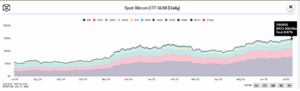
However, the pace of fresh buying shows that Ethereum is catching up. CoinShares data puts the current allocation closer to 60% BTC and 40% ETH in crypto fund flows. Two years ago, that split was about 80% BTC and 20% ETH.
Ethereum’s stronger inflows follow the U.S. Securities and Exchange Commission’s approval of spot ETH ETFs in May 2024. The ruling allowed regulated funds to offer direct exposure to ETH. Before this, institutional investors faced limited access compared to Bitcoin, which had its first spot ETFs approved in January 2024.
This new ETF access means institutions can buy ETH easily and in compliance with U.S. rules.
Staking Yield Changes the Narrative
Another factor behind the shift is staking. Ethereum runs on a proof-of-stake system. Investors can stake ETH to earn about 3%–5% annual yield. Bitcoin does not offer any yield because it remains proof-of-work.
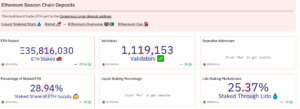
Current Beacon Chain data shows over 34 million ETH is now staked, or nearly 28% of Ethereum’s total supply. This locked supply supports price stability and adds an income stream that Bitcoin does not match.
Additionally, Ethereum’s network also plays a role in real-world asset tokenization. Citi projects the market for tokenized assets could reach $5 trillion by 2030. Many of these products run on Ethereum’s blockchain.
Firms like Franklin Templeton have launched tokenized money market funds using Ethereum smart contracts. These projects position ETH as more than just a currency. They make it core infrastructure for finance.
Smaller Firms Add ETH to Treasury
The trend reaches beyond large funds. Smaller public companies are also increasing ETH allocations.
Bit Digital reported in its Q2 statement that ETH now makes up 28% of its crypto treasury. SharpLink Gaming added ETH this year to support its blockchain gaming initiatives.
Such moves show a shift from the past when companies only used Bitcoin as a treasury asset.
Ethereum’s price broke above $3,000 in early July. According to CoinGecko, ETH gained about 12% this month while Bitcoin slipped about 6%. Daily active Ethereum addresses hold near 700,000, while Bitcoin’s average is closer to 1 million.
On-chain data from Glassnode shows that large ETH wallet balances grew by about 7% over the past two months. Meanwhile, some long-term Bitcoin holders have trimmed exposure.
Institutions Expand Crypto Strategies to Include Bitcoin and Ethereum
Despite the rotation, Bitcoin remains a strong store of value. ETFs like BlackRock’s iShares Bitcoin Trust and Fidelity’s FBTC still draw large inflows. Bitcoin’s role as “digital gold” keeps it at the core of corporate crypto strategies.
However, the rise of ETH yield and tokenization shows that institutions are now building a two-part strategy — holding Bitcoin for value preservation and Ethereum for network yield and decentralized applications.


