

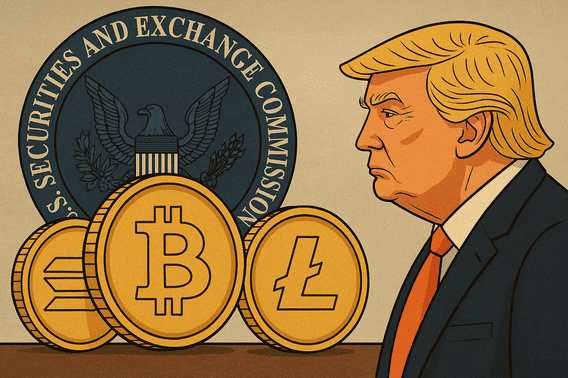

The US Securities and Exchange Commission (SEC) delayed its decision on the Truth Social Bitcoin ETF, moving the review date from August 4 to Sep. 18. According to the SEC filing, the regulator extended the timeline to review the proposal under its commodity-based trust share framework.

The Truth Social Bitcoin ETF, backed by Trump Media and Technology Group, is seeking approval to list on NYSE Arca. The SEC stated it requires additional time to evaluate the application and any related comments. Under federal law, the SEC has up to 270 days to approve or deny exchange-traded fund proposals.
This delay underscores the SEC’s continued scrutiny of cryptocurrency-related ETFs. It comes at a time when applications involving Bitcoin ETFs, Solana Trusts, and other digital asset funds are increasing.
Grayscale Solana Trust and Litecoin ETF Also Delayed
Along with the Truth Social Bitcoin ETF, the SEC postponed its decision on Grayscale’s Solana Trust, setting a new deadline of October 10. It also extended the review of Canary Capital’s proposed Litecoin ETF.
In May 2025, SEC Commissioner Hester Peirce spoke about the pace of crypto ETF reviews in a Bloomberg interview, saying,
“People have to be patient… We have some ongoing litigation we’re trying to work through. We have lots of other considerations.”
Despite these delays, the current timelines are shorter compared to historical cases. It took over 10 years from the first Bitcoin ETF application in 2013 before the SEC approved the first spot Bitcoin ETF in January 2024.
Ethics Questions Surround Truth Social Bitcoin ETF
The Truth Social Bitcoin ETF would be the first crypto fund connected to a sitting US president’s business interests. While the SEC has not issued objections, political scrutiny has increased.
In May 2025, Senators Elizabeth Warren and Jeff Merkley sent a letter to the Office of Government Ethics. They raised concerns about a Trump-linked crypto venture involving World Liberty Financial, Binance, and a UAE-based firm, calling it “a staggering conflict of interest.”
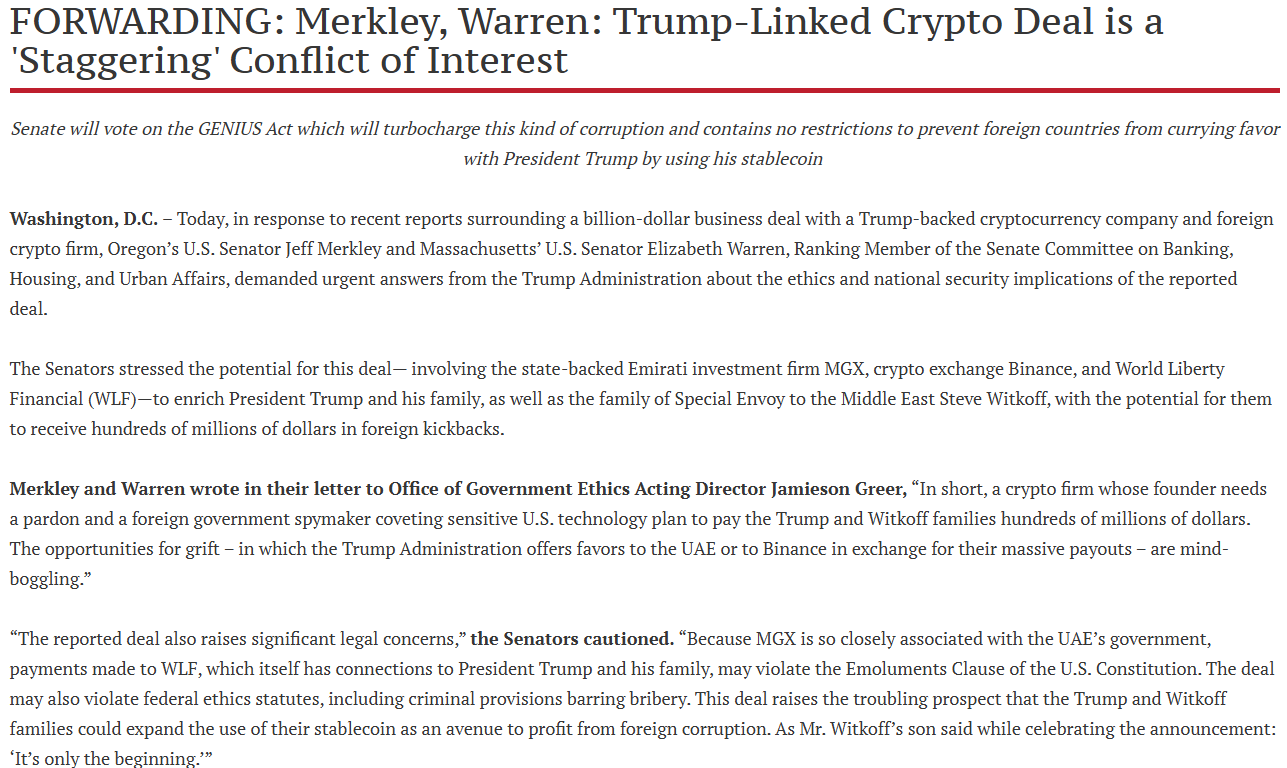
They wrote,
“This deal raises the troubling prospect that the Trump and Witkoff families could expand the use of their stablecoin as an avenue to profit from foreign corruption.”
These concerns center on whether Donald Trump could personally benefit from regulatory decisions impacting crypto markets and funds linked to his ventures.
Trump’s Role in Crypto Regulation and Policies
Donald Trump has signed legislation and directives affecting crypto markets while in office. On July 18, 2025, he signed the GENIUS Act, creating the first US regulatory framework for stablecoins.
On June 25, 2025, William J. Pulte, Trump’s appointee as director of the Federal Housing Finance Administration (FHFA), instructed Fannie Mae and Freddie Mac to prepare proposals. The directive called for allowing unconverted crypto holdings to qualify as assets for single-family mortgage underwriting without conversion to US dollars.
These actions, combined with ongoing SEC reviews of crypto ETFs, have placed the Truth Social Bitcoin ETF, Grayscale Solana Trust, and Litecoin ETF under close watch.
SEC Maintains Careful Approach to Crypto ETFs
The SEC’s review delays for the Truth Social Bitcoin ETF, Grayscale Solana Trust, and Litecoin ETF reflect its careful stance toward crypto funds. The agency’s new deadlines of September 18 and October 10 demonstrate its plan to examine these filings thoroughly.
The SEC is focusing on ETFs tied to Bitcoin, Solana, and Litecoin. It reviews each filing closely. It also examines political links and regulatory concerns. These factors add pressure to its decision process. The agency balances market demand with strict oversight. It evaluates risks and compliance issues. This approach reflects its cautious stance on digital asset funds.


