


The Wyoming Stable Token Commission selected Aptos and Sei as the top candidates for its Wyoming stablecoin pilot program. Aptos received the highest evaluation score of 32 points. Solana also scored 32 points but was not chosen for the pilot. Sei followed with 30 points.
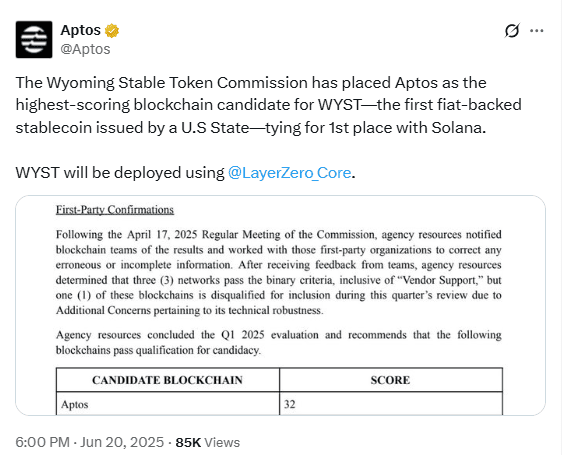
The commission assessed more than 10 blockchains. Other scores included Avalanche with 27, Ethereum with 26, Base with 25, and Algorand with 21. The evaluation measured network performance, including transactions per second, transaction fees, and time to finality.
An X user named Phillip, who is associated with the Sei project, published details of the evaluation. He posted that the Wyoming commission used performance tests to assess the blockchains before shortlisting Aptos and Sei for the WYST program.

WYST Stablecoin Pegged to US Dollar and Backed by Bonds
The WYST project is Wyoming’s official state-backed stablecoin, pegged to the US dollar. It is backed by short-duration US Treasury bonds. Wyoming passed the Stable Token Act in 2023 to create a legal framework for the initiative.
LayerZero is helping the state develop the WYST platform. The Wyoming stablecoin aims to operate under government oversight while maintaining compatibility across blockchain systems.
In March 2025, Wyoming Governor Mark Gordon said that the WYST stablecoin could launch by July. The statement was part of a broader announcement on state-level digital asset development.
Despite Solana receiving the same 32-point score as Aptos, the commission only selected Aptos and Sei. The decision criteria beyond the raw scores were not made public. The pilot phase will test WYST on the selected blockchains to assess practical use cases.
GENIUS Act Clears Senate, Focuses on Stablecoin Regulation
The US Senate passed the GENIUS Act with a 68–30 vote on Tuesday. The bill advances stablecoin legislation by focusing on payment infrastructure and federal oversight. It is part of a broader federal approach to digital assets, especially stablecoins.
Senator Bill Hagerty from Tennessee, who sponsored the bill, said, “Once the GENIUS Act is law, businesses of all sizes, and Americans across the country will be able to settle payments nearly instantaneously rather than waiting for days or sometimes even weeks.”
The law still requires approval from the House of Representatives. If passed, it would set federal standards for issuing stablecoins and define how companies operate under regulated structures.
A recent Coinbase survey found that 29% of Fortune 500 company executives are already using or exploring stablecoins. In 2024, only 8% reported doing so. The rise reflects growing interest in faster and regulated digital payment options.
Wyoming’s WYST will operate separately from private-sector stablecoins. However, it benefits from the broader push for regulated digital currency frameworks like the GENIUS Act. The Wyoming stablecoin continues to advance under its legal structure, with Aptos and Sei now leading its technical deployment.


