

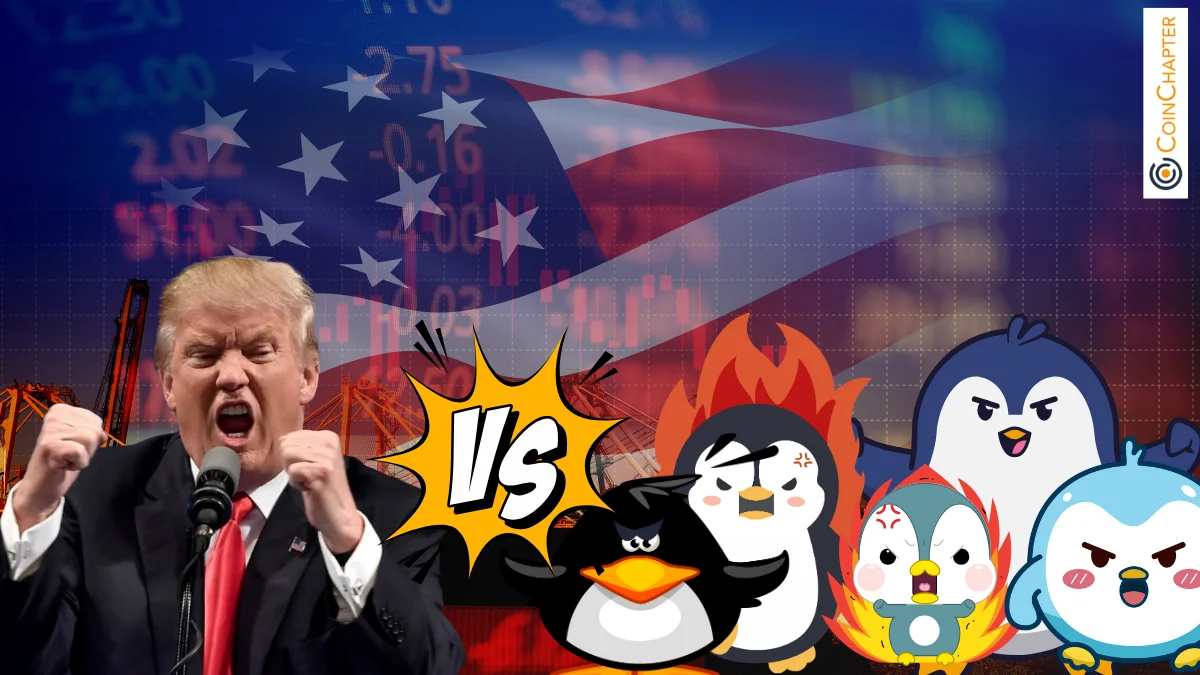

NOIDA (CoinChapter.com) — U.S. President Donald Trump triggered a fresh wave of market volatility on Apr. 2, 2025, by announcing a sweeping set of import tariffs that hit nearly every country—and at least one uninhabited island group. The baseline 10% levy applies to all foreign goods entering the United States, with higher “reciprocal” rates targeting specific trade partners. The policy imposes 20% tariffs on the European Union, 25% on South Korea, and as high as 54% on Chinese goods, according to a White House memo released the same day.
While global markets reacted sharply, the administration’s decision to include remote and uninhabited regions like Australia’s Heard and McDonald Islands drew ridicule. Based on Census Bureau data, the islands have no human residents, no known exports, and no recorded trade with the U.S. in 2024. The U.S. assigned them a 10% tariff, apparently after a data labeling glitch misattributed unrelated imports.
The political backlash was immediate. China demanded an “unconditional rollback” of the measures, the EU retaliated with $28 billion in levies on U.S. goods, and South Korea’s acting president vowed an “all-out” response.
Canada and India signaled sharply divergent paths—Ottawa condemned the move outright, while New Delhi hinted at a possible compromise to preserve access to U.S. markets. Meanwhile, the S&P 500 dropped nearly 5%, and Nasdaq’s futures turned sharply lower as traders digested the potential fallout of a globally entangled tariff war.
Penguins of Heard and McDonald Islands Plot Their Icy Revenge
The U.S. imposed a 10% import tariff on the Heard and McDonald Islands—a desolate Australian territory with no population, economy, or postal code worth memorizing—triggering confusion and a brief existential crisis for international trade logic. The only residents are penguins and seals, none of whom filed W-2s or export paperwork in 2024. Still, the U.S. assigned the islands a tariff after a data labeling glitch misattributed unrelated shipments to the subantarctic outpost.
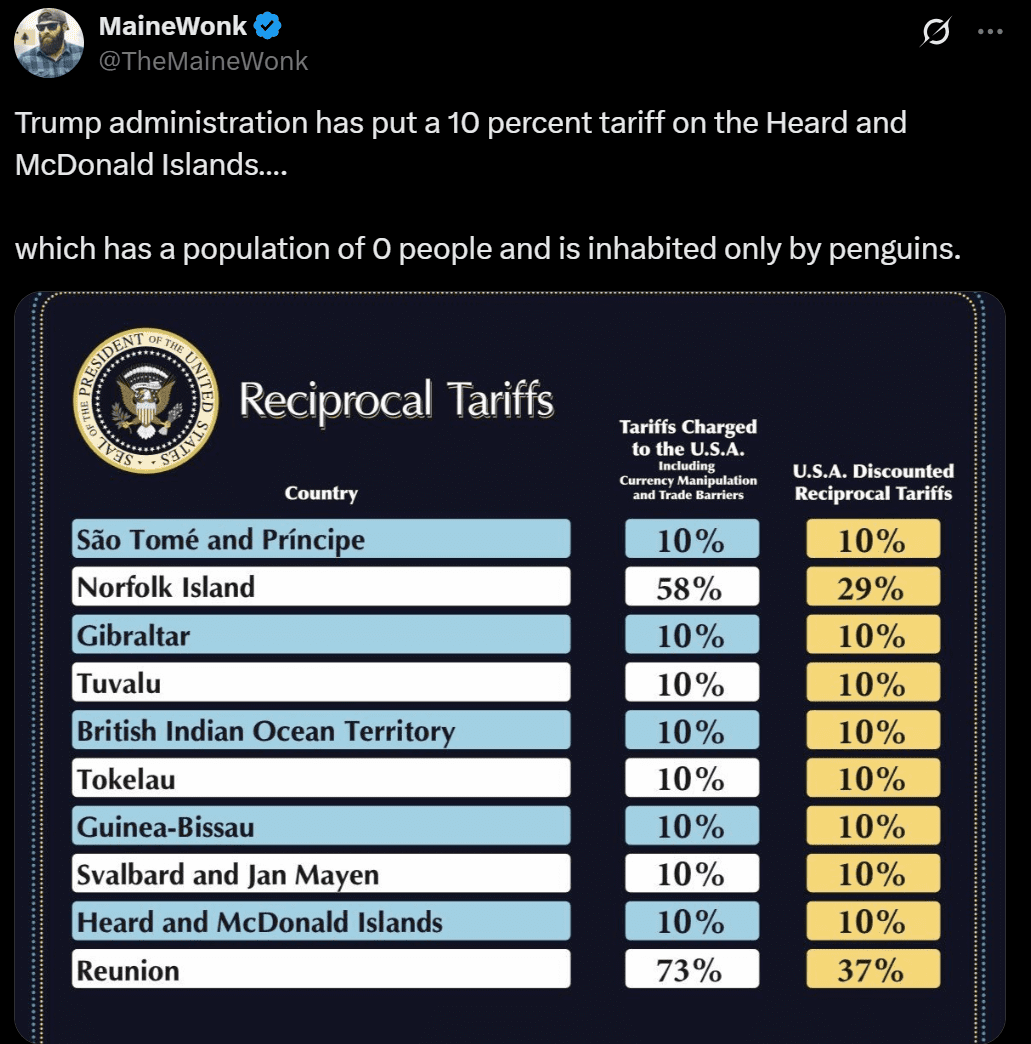
In a chilling response from the region, the penguins waddled into the spotlight, furious over the Trump administration’s decision to tax their non-existent exports. The barren volcanic islands, listed by UNESCO as one of Earth’s last untouched ecosystems, became collateral damage in a trade war they didn’t know they’d joined. “This is an outrage!” Emperor Waddlebottom, a king penguin, told CoinChapter in an exclusive interview. “We’ve been sliding on our bellies for centuries, and now the U.S. wants to tax our ice? We’ll show him.”
U.S. import records from 2022 inexplicably attributed $1.4 million in “machinery and electrical” imports to the region, even though neither Australia nor the penguins reported such exports. Trade officials now believe automated systems or country code misassignments triggered the inclusion, effectively turning a glitch into policy. Australia’s trade ministry confirmed that the territory conducts no export activity, unless penguins have been shipping frozen sardines through a shadow economy.
Meanwhile, Norfolk Island suffered a similar fate. U.S. records linked Timberland boots and outdoor gear to the island despite zero local manufacturing. Prime Minister Anthony Albanese didn’t miss the irony, telling reporters that “even Antarctica isn’t safe anymore.”
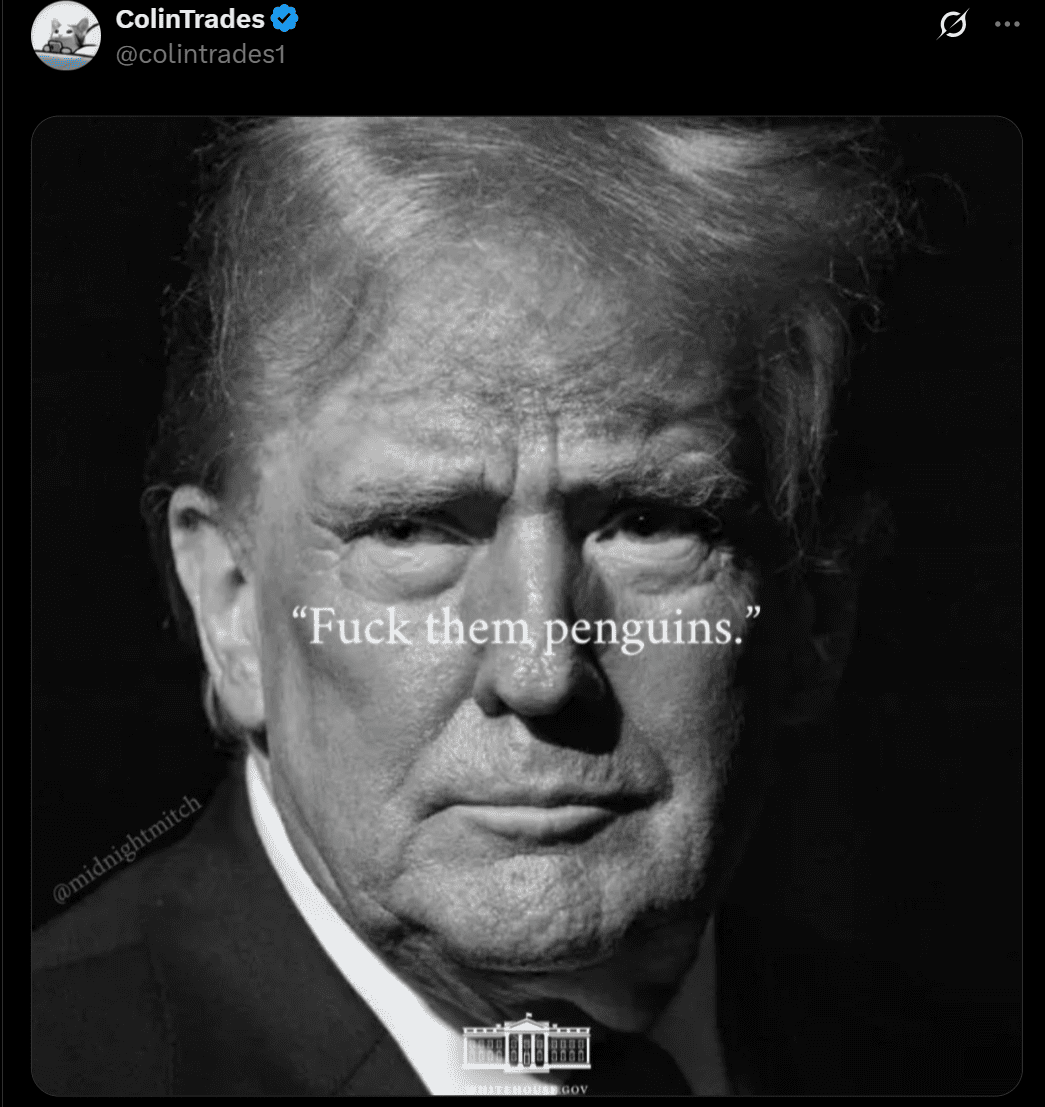
The penguins, undeterred, called a snowy emergency conference. Admiral Flippers, an Adélie penguin and self-appointed negotiator, announced a seafood embargo on American seals and promised a live-streamed “waddle-in” protest. Unconfirmed rumors suggest the region has contacted the penguins featured in the movie ‘Madagascar’ to plot some revenge.
As memes of militant penguins flooded X, the real joke might be on the global markets: if phantom islands show up in real U.S. trade policy, what else is broken in the system?
Markets Shudder Worldwide as Trump Tariff Shockwaves Ripple Across Exchanges
The global equity market response to the Trump administration’s April 2 tariff announcement was swift and severe. The Japan 225 index shed 2.82% by April 4, marking a sharp retreat amid fears over deteriorating trade flows with the United States. The FTSE 100 in London declined 2.79%. Germany’s DAX fell over 3%, signaling immediate investor concern over the European Union’s retaliatory posture and the expected drag on key export sectors like autos and industrial equipment.
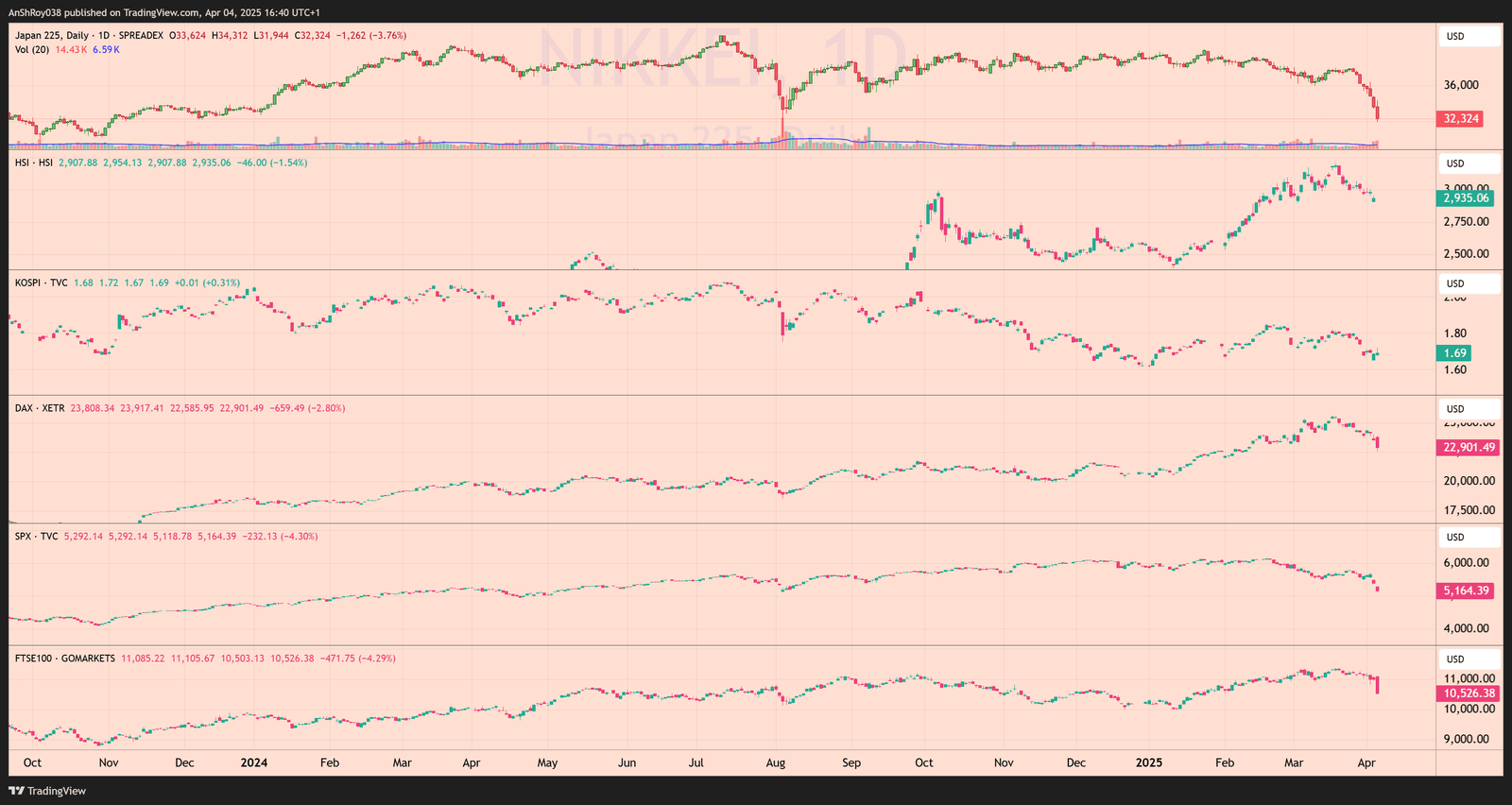
In Asian markets, the Hang Seng Index rose 1.54%, even as sentiment weakened over potential disruptions in logistics and technology exports. South Korea’s KOSPI managed a muted gain of 0.31% despite the Trump tariff debacle, though traders attributed the resilience to prior corrections already pricing in geopolitical tension.
Meanwhile, the S&P 500 registered a steep 4.3% loss, its worst session in over a year. The market action reflected Wall Street’s unease with policy unpredictability and potential knock-on effects on multinational earnings.
The synchronized drop across regions underscores global markets’ systemic exposure to abrupt policy shifts from Washington. While some humor still circulates online, the broader reality is far more sobering: the Trump tariff trade war threatens to destabilize supply chains and dampen investor confidence at a precarious moment for global growth. Investors are now bracing for heightened volatility as retaliatory measures unfold across key economies.


