



YEREVAN (CoinChapter.com) — A recession in the U.S. is often defined as two consecutive quarters of negative gross domestic product (GDP) growth. However, the National Bureau of Economic Research (NBER) uses a broader definition, assessing multiple indicators such as employment, industrial production, and consumer spending. This means that even if GDP contracts, a recession is only confirmed when the economy experiences a prolonged and widespread decline.
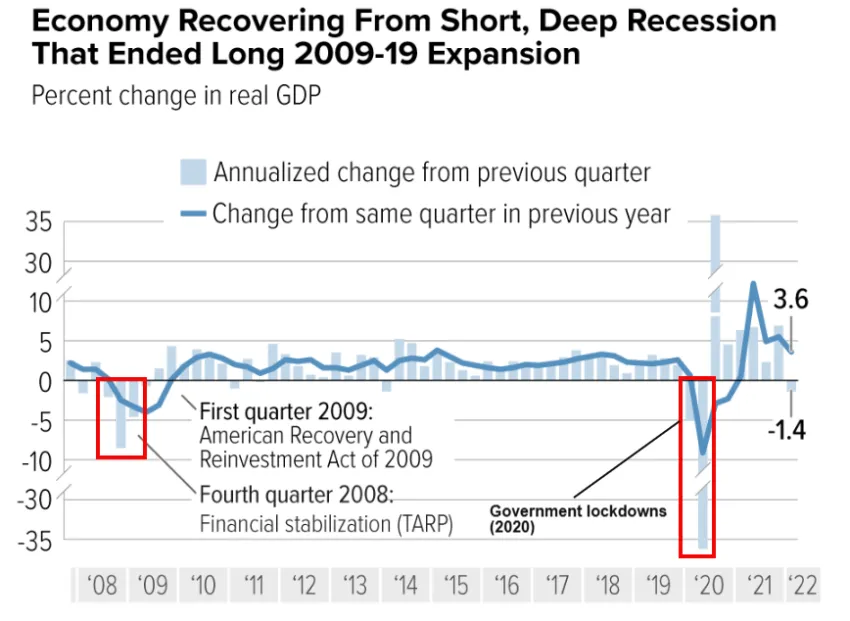
The U.S. has experienced economic downturns that were later classified as recessions despite not meeting the traditional definition. The NBER reviews various data points before declaring a recession, which often happens after the downturn is already in progress. Policymakers, analysts, and investors rely on these signals to understand economic conditions and their potential impact on financial markets, including cryptocurrency.
The U.S. Economy’s Influence on the Crypto Market
The U.S. has a major presence in the global cryptocurrency market, affecting trading volume, venture capital investments, and institutional adoption. Data from Chainalysis indicates that North America, led by the United States, accounts for nearly a quarter of global cryptocurrency transaction activity. The value of digital assets received in the region exceeded $1.2 trillion between mid-2022 and mid-2023, with a significant portion coming from institutional transfers.
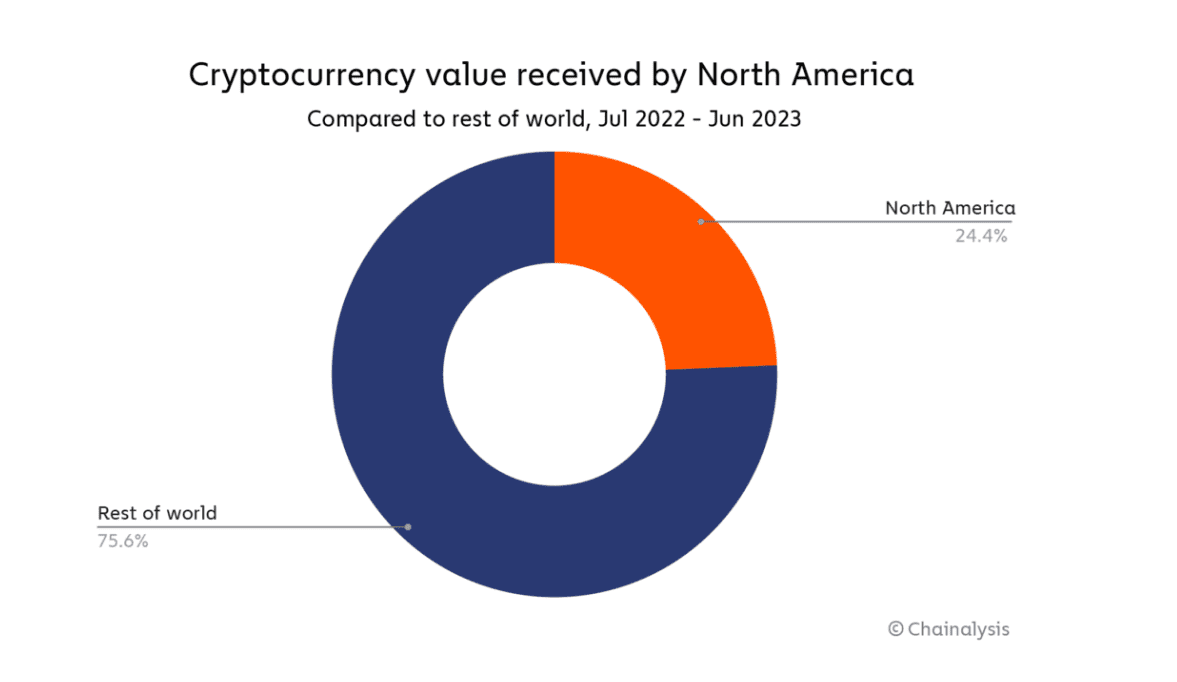
The dominance of U.S. investors in the crypto space means that changes in the economy, particularly those affecting liquidity and risk appetite, can influence digital asset prices. Economic slowdowns often result in capital outflows from speculative investments, which include cryptocurrencies. If a U.S. recession leads to market stress, liquidity in the crypto market could decline as institutional and retail investors reduce exposure.
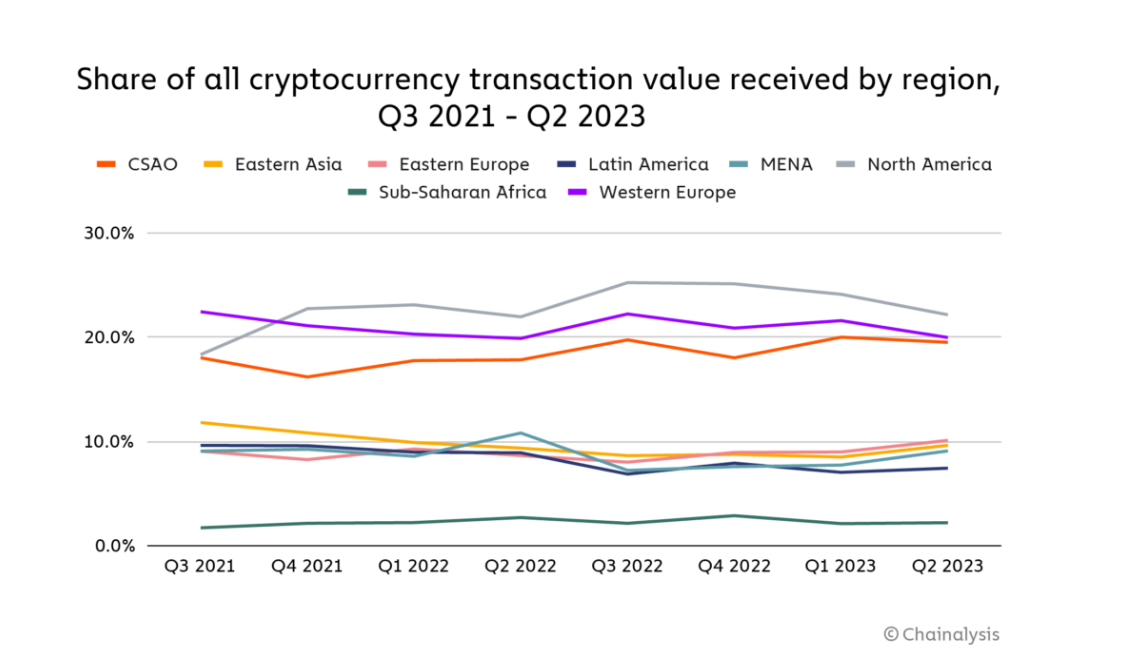
The role of regulatory uncertainty further complicates the situation. The U.S. government has taken an active role in shaping the future of digital assets, with policies affecting stablecoins, decentralized finance (DeFi), and crypto exchanges. If a recession prompts stricter financial regulations or heightened enforcement, the crypto market could face additional challenges.
How a U.S. Recession Could Disrupt Crypto Markets
A downturn in the U.S. economy could impact the crypto market through multiple channels. Investors typically adjust their portfolios in response to economic uncertainty, prioritizing safer assets over riskier alternatives. This shift affects stocks, commodities, and cryptocurrencies. When liquidity tightens, speculative investments such as crypto tend to face the most selling pressure as capital moves toward assets perceived as more stable.
The relationship between a U.S. recession and the global financial system is also crucial. The U.S. dollar remains the world’s primary reserve currency, with approximately 60% of global currency reserves held in USD. This makes many economies heavily dependent on U.S. financial conditions, either through trade or exposure to U.S. financial markets. As the U.S. is a consumer-driven economy, a slowdown in spending directly impacts export-reliant nations such as China, South Korea, Germany, and Japan, leading to wider recessionary pressures globally. Similar effects were observed during Trump-era tariff threats, which caused significant market declines.
A recession could result in tighter credit conditions, making it more expensive for businesses and individuals to access loans. Crypto-related companies, particularly startups and blockchain projects that rely on venture capital funding, would feel the strain. Reduced investment in the sector could slow development in areas such as decentralized finance (DeFi), blockchain infrastructure, and token-based ecosystems, limiting innovation and market expansion.

Economic distress often comes with broader financial stress indicators. As 2024 turned into 2025, the U.S. economy exhibited multiple recessionary warning signs, including:
- High inflation despite monetary tightening. The Federal Reserve’s aggressive interest rate hikes failed to fully control inflation, eroding purchasing power.
- Record homelessness and rising bankruptcies. The financial strain on households led to an increase in defaults and housing instability.
- Accelerating retail closures. Consumer demand weakened, forcing businesses to shut down operations or scale back.
- Surging household debt. Rising credit card balances and loan delinquencies signaled increased financial stress.
- Weak job creation and rising unemployment. Labor market deterioration is a classic recession indicator, reflecting slowed business expansion.
These economic pressures have already affected investor behavior. The crypto market’s performance in early 2025 showed a clear shift, with Bitcoin maintaining relative strength while altcoins underperformed. This divergence suggests that investors moved toward more established digital assets rather than high-risk tokens, mirroring trends seen in traditional markets during periods of economic stress.
If recessionary conditions persist, the crypto market could experience further liquidity constraints, increased volatility, and reduced retail and institutional participation. However, if central banks respond by loosening monetary policy, the influx of liquidity could eventually shift market dynamics in the opposite direction.
Historical Evidence of U.S. Recession’s Impact on Global Markets
The global economy is linked to the performance of the U.S., and past recessions have demonstrated how economic distress in one region can trigger downturns elsewhere. The 2008 financial crisis, which originated in the U.S. housing market, led to severe recessions worldwide. Banks and financial institutions outside the U.S. held significant exposure to mortgage-backed securities, amplifying the crisis.
More recently, the Federal Reserve’s interest rate hikes between 2022 and 2024 had global repercussions. The strengthening of the U.S. dollar made borrowing more expensive, increased capital outflows from emerging markets, and contributed to financial stress worldwide. As borrowing costs rose, global liquidity tightened, impacting investments in stocks, crypto, and venture capital.
Interest rate policies have historically played a role in shaping market sentiment. When the Federal Reserve raises rates to combat inflation, investors typically reduce exposure to risk assets. Conversely, when the Fed cuts rates, liquidity increases, often fueling market recoveries.
Market Volatility and Crypto’s Response to Economic Stress
The cryptocurrency market has displayed significant volatility in response to macroeconomic conditions. In 2024 and early 2025, Bitcoin maintained relative strength, while altcoins struggled. This divergence reflects shifting investor sentiment, with capital consolidating into more established digital assets during uncertain times.
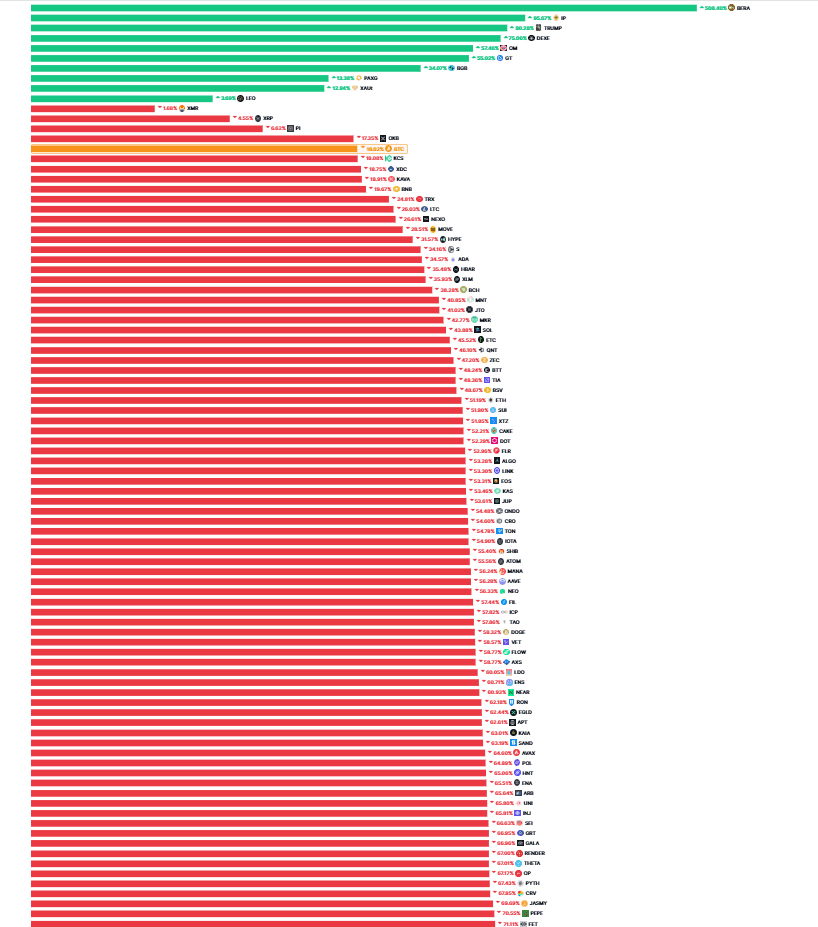
Recessionary conditions often lead to reduced speculative activity. Investors become cautious, favoring stable assets over volatile ones. The crypto market’s correlation with equities has fluctuated over time, but significant downturns in traditional markets have often led to declines in digital asset prices.
Liquidity constraints also play a role. A recession could limit access to capital, affecting market depth and reducing the ability of traders to execute large transactions without causing price swings. Lower liquidity increases volatility, making price movements more extreme.
Monetary Policy and Crypto Market Trends
Central bank policies are crucial in shaping financial markets, and historical trends indicate that monetary easing can benefit crypto assets. When central banks lower interest rates or implement quantitative easing, markets often experience inflows of capital seeking higher returns.
During the 2008 financial crisis, the Federal Reserve introduced emergency measures, including interest rate cuts and asset purchases, to stabilize the economy. These actions contributed to a prolonged bull market in equities. Although crypto markets were not as developed at the time, similar conditions in the future could support digital asset prices.
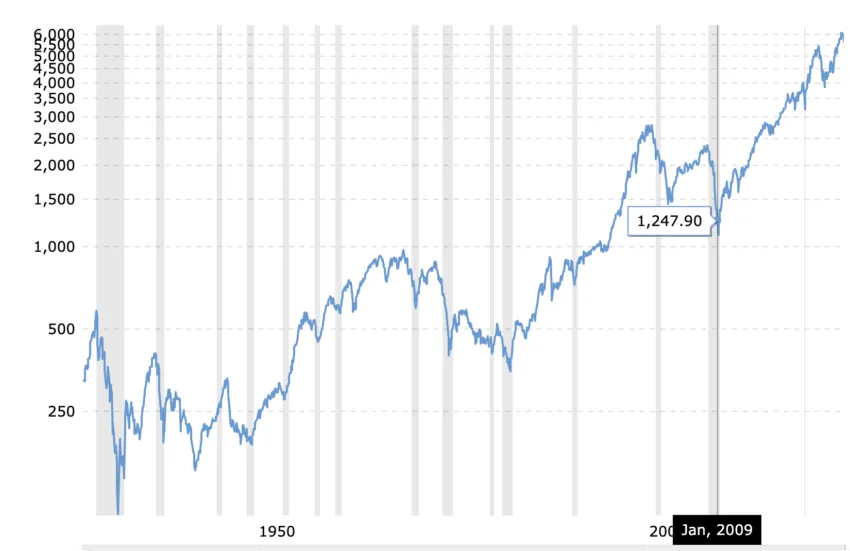
In 2020, the onset of the COVID-19 pandemic led to economic contractions and financial market turbulence. Bitcoin’s price dropped below $7,000 in March 2020 but rebounded significantly, exceeding $60,000 within a year. This rally was fueled by low interest rates, increased institutional adoption, and growing interest in decentralized assets.
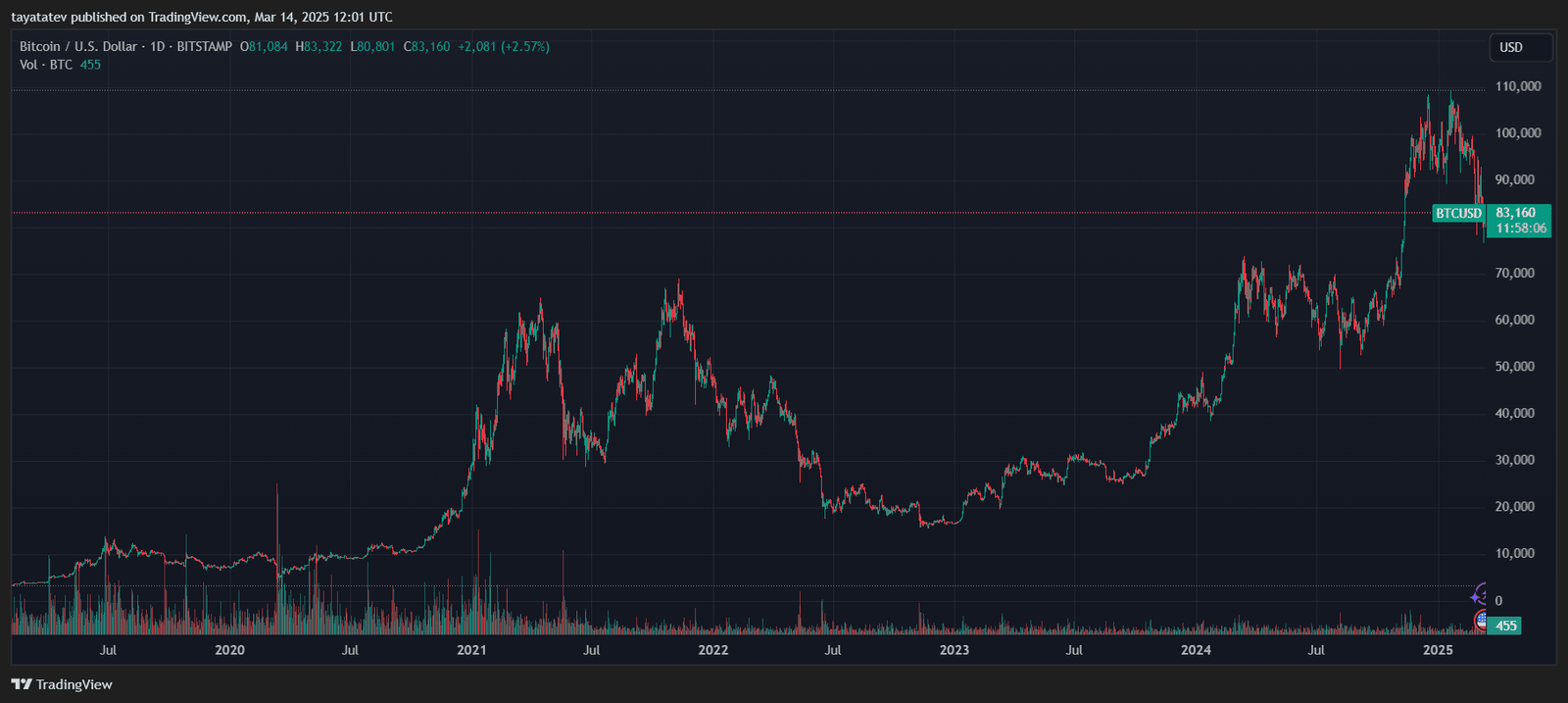
The potential for monetary stimulus during a future recession could have similar effects. If central banks introduce policies aimed at supporting economic recovery, digital assets may benefit from increased liquidity and renewed investor interest.
Uncertainty and the Future of Crypto in a Recession
The impact of a U.S. recession on the crypto market depends on various factors, including regulatory developments, institutional participation, and macroeconomic conditions. While recessions typically lead to declines in speculative assets, the response of policymakers can influence the trajectory of financial markets.
Bitcoin’s role as a store of value remains a subject of debate. While some view it as a hedge against inflation and economic uncertainty, historical data shows that its price movements are influenced by broader market trends. The performance of cryptocurrencies during a recession will likely be shaped by investor sentiment, liquidity conditions, and the overall financial landscape.
The crypto market has evolved, with increasing institutional involvement and integration into traditional finance. This growing adoption means that digital assets are no longer isolated from macroeconomic developments. Events in the U.S. economy, including a potential recession, will continue to influence the behavior of investors and the broader crypto market.


