

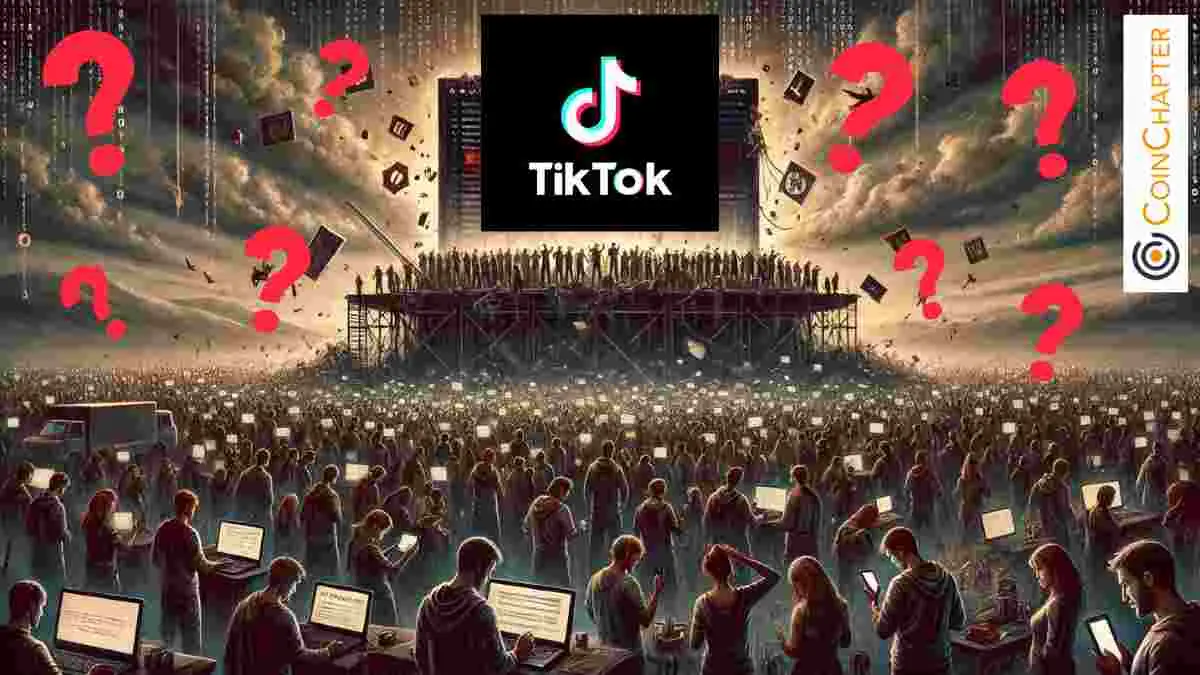

YEREVAN (CoinChapter.com) — The TikTok ban debate in the United States has intensified concerns about data privacy and national security. ByteDance, TikTok’s Chinese parent company, is under scrutiny for potentially sharing user data with Chinese authorities.
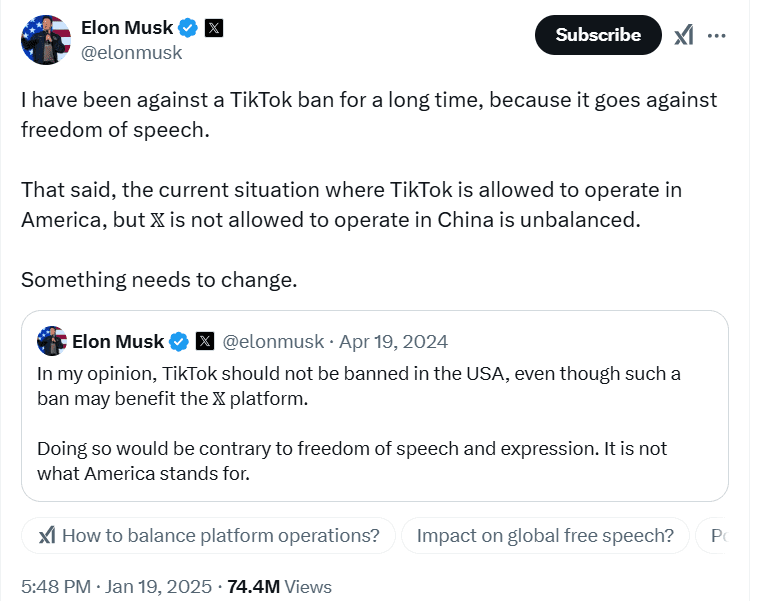
In recent discussions, Elon Musk addressed the broader implications of restrictions on platforms like TikTok. His comments on X reignited debates about how centralized systems concentrate data control, contrasting sharply with blockchain’s decentralized approach.
Austin Federa, head of strategy at the Solana Foundation, highlighted the troubling implications of the act’s rhetoric. Specifically, he warned that its broad language could lead to significant restrictions affecting U.S. citizens.

TikTok Ban Raises Fears Over Crypto and Digital Asset Restrictions
Bitcoin YouTuber CryptoWendyO suggested the act may not be primarily about TikTok but could target cryptocurrencies, NFTs, and other digital assets. She tweeted, “Banning them is the goal.”
Others in the crypto space have also voiced concerns that the act might be used to block platforms like TikTok, which are critical for spreading awareness of crypto projects. Above all, the broader implications for free communication and the future of digital currencies remain a major concern for industry participants.
Trump Extends TikTok Deadline Amid Compliance Challenges
President Donald Trump extended TikTok’s compliance deadline by 90 days, temporarily avoiding a nationwide ban. This decision followed the Supreme Court’s ruling that mandated ByteDance to divest its U.S. operations by Jan. 19, 2025, citing risks to national security.
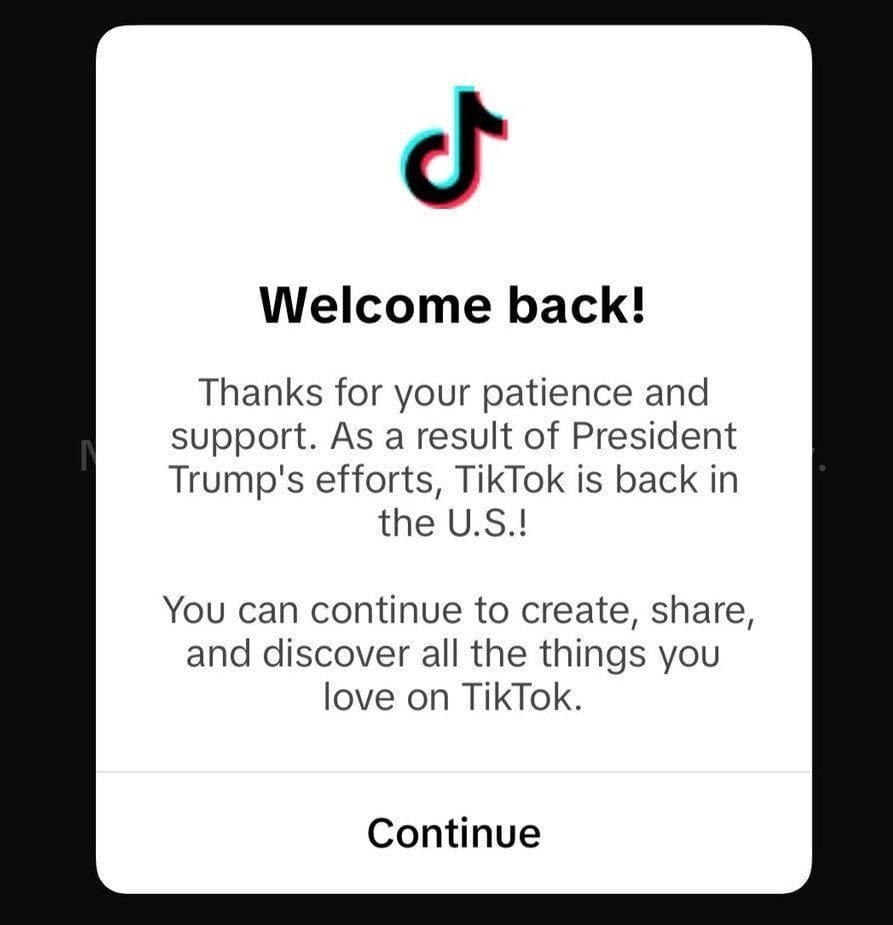
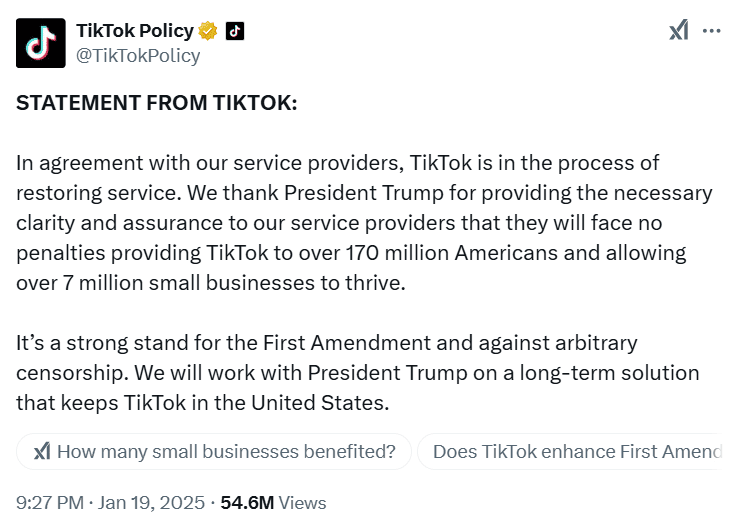
TikTok, with over 170 million users in the United States, faced a temporary shutdown when the court upheld the law. TikTok’s official account on X acknowledged the extension, reiterating its commitment to resolving security concerns.
Security Concerns Behind TikTok’s Ban
The U.S. government has raised concerns about TikTok’s data collection practices, arguing that it could enable surveillance or manipulation. Bipartisan legislation passed in 2024 required ByteDance to sell its U.S. operations or face a ban. The Supreme Court supported the legislation, emphasizing that the security risks outweighed concerns about free speech.
Influencers and Small Businesses Face Uncertainty
The TikTok ban poses significant challenges for creators and businesses. Julie Jones, an influencer with 600,000 TikTok followers, shared how the platform’s algorithm has been critical to her success. Despite cross-posting on Instagram, her audience there is limited to 130,000, underlining TikTok’s unique ability to boost engagement.
In 2023, TikTok contributed an estimated $14.7 billion in marketing revenue for small businesses. Losing access to TikTok would force creators and entrepreneurs to rely on less effective platforms, threatening revenue and growth.
Alternative Platforms Gain Traction
Notably, with TikTok’s future uncertain, platforms like RedNote (Xiaohongshu) have attracted displaced users. In just two days after TikTok’s temporary shutdown, 700,000 U.S. users joined RedNote. However, the platform faces challenges, including 48-hour content moderation delays due to Chinese censorship rules.


